-
 Top NBA Draft pick Dybantsa to miss opener with ankle sprain
-
All who profited from fund scandal 'identified': Turkish minister
-
 Italy sends troops, toughens security laws after Milan clashes
-
Christina Applegate says she was misdiagnosed with MS
-
 Alberta separatists vow to fight on, risking turmoil for Canada
-
Ronaldo let Man Utd down says Ten Hag

-
 Two men re-arrested for suspected spying for Iran in airbase scare: UK police
-
Meta says it complied with Brazil court order to treat candidates equally

-
 Guatemalan man gets 30 years for truck smuggling deaths of 53 migrants
-
Inequality is major factor in impact of non-communicable diseases : WHO

-
 'Clayface' gets under the skin of the superhero genre
-
Italy to send 500 troops to Milan after clashes

-
 Zelensky, US envoys hold Oslo talks as Ukraine claims US missile holdup
-
BBC slashes 100 jobs, closes two channels

-
 All-rounder Minhas stars as Pakistan crush England in tri-series
-
Tech jitters lead stocks lower, oil surges then slides

-
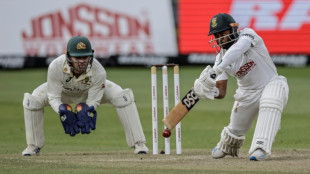 Bavuma hits 179, Rabada strikes as South Africa dominate
-
Wild West Wing? Turmoil revives memories of Trump 1.0

-
 Allrounder Minhas stars as Pakistan crush England in tri-series
-
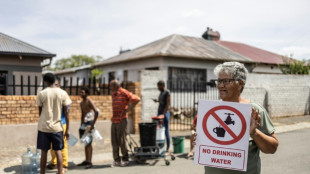
Tap water no longer drinkable near South Africa capital
-
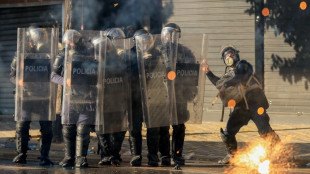 Albania PM blames 'hybrid war' for week of unrest
-
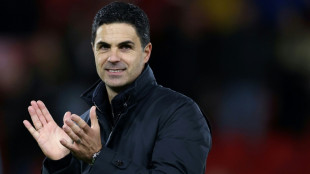
Arsenal coach Arteta always a leader, says former teammate Gnabry
-
 Bavuma hits 179 to lead South African fightback
-
Investors pledge 230 billion euros at German summit: Merz
-
 Solid GM results overshadowed by latest jump in commodity costs
-
Emery adamant injuries 'no excuse' for Aston Villa
-
 Houthi attacks undermine Saudi Arabia's economic ambitions
-
UN demands aid access to besieged Yemen city Taiz

-
 French PM vows 'massive' police deployment for new demonstrations
-
Faletau still in Tandy's plans despite being left out of Wales squad

-
 Power outage hits Google Cloud services, disrupting UK banks
-
Stock markets retreat as oil rises again

-
 AI challenges maths by solving the unsolvable
-
Those who profited from fund scandal 'identified': Turkish minister
-
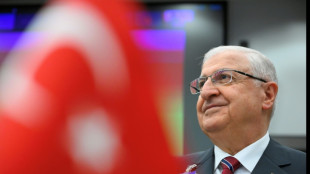 Turkey troops to stay in Syria, Iraq 'until border security ensured', defence minister tells AFP
-
At half a century, Senegal's Orchestra Baobab bets on new generation

-
 Kulusevski a 'different man' after emotional Spurs return
-
O'Connor, Sivakov join Seixas at Decathlon CMA CGM

-
 Nawaz and Minhas lift Pakistan to 302-9 in England ODI
-
Faletau left out of Wales squad for Nations Championship

-
 Mourinho warns no 'untouchable' stars at Real Madrid
-
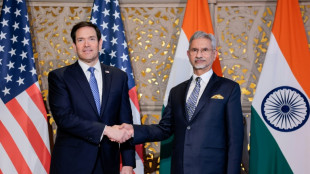
Rubio says India diversifying oil, trade deal 'very close'
-
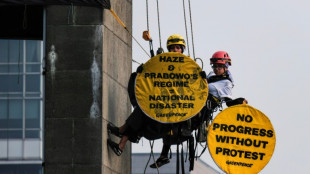 Indonesian anger builds over wildfires, toxic haze
-
Kemi Badenoch Proposes Ending Childcare Benefit Cliff Edge

-
 Late Okafor Penalty Earns Alvechurch FA Cup Replay
-
More Than 52,000 West Midlands Families Use Tax-Free Childcare

-
 Low-Cost Homemade Ideas Offer Alternatives for Halloween Costumes
-
Commanders Fear Serious Knee Injury for Terry McLaurin

-
 Christiane Amanpour Plans CNN Departure After 43 Years
-
Rays Beat Guardians 7-3 to Secure World Series Place

Right wing Chaves wins Costa Rica presidency as Figueres concedes
Right-wing former finance minister Rodrigo Chaves is set to be Costa Rica's new president after his opponent Jose Maria Figueres conceded defeat on Sunday.
Chaves held a close to six percentage point lead in provisional results over Figueres, the centrist former president.
"Costa Rica has voted and the people have spoken. Since we are democrats we respect that decision," said Figueres, 67, who congratulated Chaves and wished him well.
His concession came moments after the Supreme Electoral Court (TSE) revealed Chaves led by 52.9 percent compared to 47.1 percent for Figueres with 89 percent of votes counted.
Unemployment and an economic crisis dominated the campaign between two scandal-tainted candidates relieved not to have their past indiscretions take center stage.
Economist Chaves, 60, was once demoted for sexual harassment, while Figueres was previously investigated for corruption.
But with 23 percent of the population living in poverty and unemployment soaring to 14 percent alongside a series of corruption scandals, Costa Ricans seemed more focused on the economy as they elected the successor to President Carlos Alvarado.
Voting was carried out "in peace and tranquility," said TSE spokesman Gustavo Ramon.
Chaves will take over from the unpopular Alvarado next month with the major challenge of reigniting an economy in crisis.
Costa Rica has been described as the "happiest" country in Latin America and praised for its political stability, environmental policies and eco-tourism, but the vital tourism industry was hard hit by the coronavirus pandemic.
Alongside Peru, it suffered the largest fall in employment figures in the region between 2019 and 2020.
"Costa Rican society was not poor, they made it poor. Costa Rican society was not unequal, they made it unequal," said Chaves, who voted in mid-morning at a school in the capital's city center.
"The country has never before been in an emergency like the one we are going through," added Figueres, who cast his vote at a school on the outskirts of San Jose.
- 'We're very poor' -
Voters were very clear about what concerned them the most: the economy and employment.
"The next president has to change everything because we're very poor. There is no work here, there is nothing," said Ana Briceno, 64, a travel agent in San Jose.
"In the last years with Carlos Alvarado the situation has been very difficult ... so I think the future president must focus on the economy," said Cristina Aguilar, 32.
Chaves was a surprise qualifier for Sunday's run-off, having polled fourth ahead of February's first round.
Representing the newly formed right-wing Social Democratic Progress Party, Chaves had led the most recent opinion polls, with more than 41 percent support, compared to 38 percent for Figueres.
"We have spoken about progression and rejecting regression," he said in a press conference.
Figueres was previously president from 1994 to 1998.
His father Jose abolished the army in 1948 when he was president.
"We have options to generate employment, which is what is most lacking, and to grow the economy," he said.
Figueres topped the first round of voting among a crowded field of 25 contenders with 27.3 percent, ahead of Chaves who had 16.8 percent.
But they were a long way from the 40 percent needed to win outright.
- 'Misinterpreted' jokes -
Both men have reached this final stage of the election despite the specter of past scandals.
Chaves, who spent six months as finance minister in the outgoing government, was investigated over sexual harassment complaints brought by multiple women while he was a senior official at the World Bank, where he worked for 30 years.
He was demoted, though not fired, and has dismissed his behavior as jokes that were "misinterpreted due to cultural differences."
Figueres, who represents the centrist National Liberation Party (PLN), was investigated for allegedly taking $900,000 from French engineering firm Alcatel, which has admitted to bribing officials.
The ex-president, who worked abroad at the time as executive director of the World Economic Forum (WEF), refused to give evidence in the case in 2004 and returned to Costa Rica only in 2011 when the investigation expired.
Chaves's four-year term will begin on May 8.
D.Khalil--SF-PST