Ukraine war sows more turmoil for UK farms

 Top NBA Draft pick Dybantsa to miss opener with ankle sprain
 Italy sends troops, toughens security laws after Milan clashes

 Alberta separatists vow to fight on, risking turmoil for Canada

 Two men re-arrested for suspected spying for Iran in airbase scare: UK police

 Guatemalan man gets 30 years for truck smuggling deaths of 53 migrants

 'Clayface' gets under the skin of the superhero genre

 Zelensky, US envoys hold Oslo talks as Ukraine claims US missile holdup

 All-rounder Minhas stars as Pakistan crush England in tri-series

 Bavuma hits 179, Rabada strikes as South Africa dominate
 Allrounder Minhas stars as Pakistan crush England in tri-series
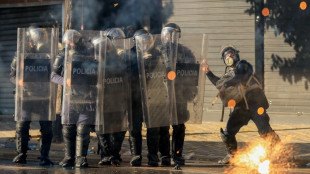 Albania PM blames 'hybrid war' for week of unrest

 Bavuma hits 179 to lead South African fightback
 Solid GM results overshadowed by latest jump in commodity costs

 Houthi attacks undermine Saudi Arabia's economic ambitions
 French PM vows 'massive' police deployment for new demonstrations

 Power outage hits Google Cloud services, disrupting UK banks

 AI challenges maths by solving the unsolvable
 Turkey troops to stay in Syria, Iraq 'until border security ensured', defence minister tells AFP

 Kulusevski a 'different man' after emotional Spurs return

 Nawaz and Minhas lift Pakistan to 302-9 in England ODI

 Mourinho warns no 'untouchable' stars at Real Madrid

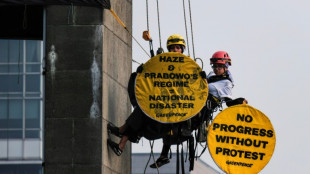 Indonesian anger builds over wildfires, toxic haze

 Late Okafor Penalty Earns Alvechurch FA Cup Replay

 Low-Cost Homemade Ideas Offer Alternatives for Halloween Costumes

 Christiane Amanpour Plans CNN Departure After 43 Years

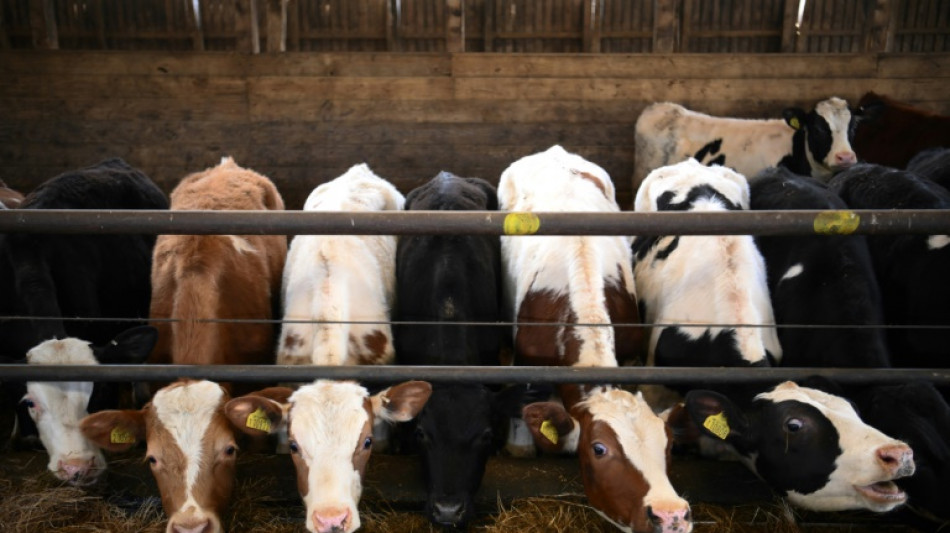
Hungry cows at Westons Farm jostle for position at the feeding trough, blissfully unaware that Ukraine's war has sowed more turmoil for UK farms ploughing through Covid and Brexit fallout.
Westons -- based in the picturesque village of Itchingfield in southern England -- uses excrement from the farm's cattle, chickens, pigs and sheep to fertilise arable crops like carrots, pumpkins, spinach and wheat.
The agriculture sector, like large swathes of the UK economy, is grappling with sky-high energy prices following pandemic lockdowns and labour shortages in the wake of Britain's exit from the European Union.
Now, Moscow's invasion of Ukraine has fuelled rocketing prices for fertiliser because Russia is a major producer.
Farms like Westons have therefore become more and more reliant on animal slurry to grow crops and cut costs.
"The thing that's really concerning us as farmers are the multiple issues that are coming our way all at once," the farm's owner David Exwood told AFP as he fed the cattle.
There is the "high fertiliser price, we have a high fuel price, we've got a shortage of labour, and we've got regulatory change", said Exwood, who is also vice-president of the National Farmers' Union (NFU).
Fertiliser prices in the UK have soared almost fourfold over the past year, sector data show.
The nutrient-rich material was already in short supply after surging gas prices forced leading UK manufacturer, CF Fertilisers, to pause production in September.
Six months later, the Ukraine war sent fertiliser prices hurtling even higher.
Wheat hit recent record peaks because sanctions-hit Russia is a key producer alongside Ukraine.
- Staff shortages -
Meanwhile, worsening labour shortages, sparked by Brexit and exacerbated by Covid, are particularly acute in Britain's agricultural sector.
The industry had 500,000 job vacancies in September, according to NFU data.
Visa issues and Covid restrictions have caused many farm workers to return abroad, notably including many European lorry drivers.
Britain's departure from the European Union at the start of last year formalised Brexit.
"The lack of labour has meant that crops... have gone unpicked and are rotting away in fields," said Jack Ward, chief executive of the British Growers' Association.
The British Meat Packing Association has expressed similar troubles.
"Our main concerns are the lack of staff able to process (carcasses) in the UK," it noted.
Thousands of pigs have been culled because of a chronic lack of butchers in abattoirs.
"UK pigs are being killed, incinerated and not entering the food chain," said farmer Andrew Ward, who grows wheat in Leadenham in central England.
"We have pig farmers going out of business, but imports of pig meat have gone up 20 percent in the last six months (to meet demand) and the government is standing by and letting it happen."
- Birds, bees and trees -
At the same time, the rollout of its Environmental Land Management Scheme (ELMS) will replace the UK's participation in the EU Common Agricultural Policy.
The proposed scheme places greater emphasis on the environment and is expected to ramp up costs for farmers.
"All they are interested in is birds, bees and trees... we can't go green if our bank balance is in the red," said farmer Ward.
Following Brexit, the government of Prime Minister Boris Johnson has agreed a number of new trade deals, including for Australian beef and lamb.
Britain's livestock farmers are concerned they will be undercut, complaining that overseas meat may not be held to the same quality or environmental standards as domestic producers.
Back on the farm in Itchingfield, the turmoil is palpable.
"Farmers are uncertain, they're scared, and I've never known them so afraid of the future (and) not sure what it means to them," said Exwood.
C.Hamad--SF-PST