'Not forgotten': Prisoners prep to vote in French election

 Dow boosted as markets rotate from tech shares
 Zelensky hails resumption of US advance warning of strikes on Ukraine

 Carrick says only wins can ease doubts over Man Utd future

 Top NBA Draft pick Dybantsa to miss opener with ankle sprain
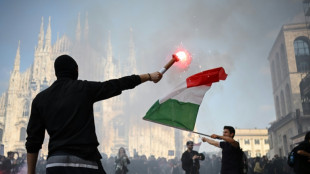
 Italy sends troops, toughens security laws after Milan clashes

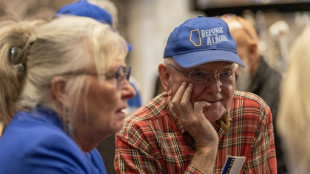 Alberta separatists vow to fight on, risking turmoil for Canada
 Two men re-arrested for suspected spying for Iran in airbase scare: UK police

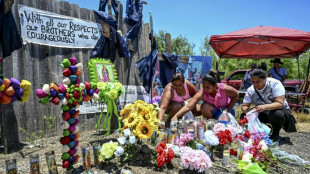 Guatemalan man gets 30 years for truck smuggling deaths of 53 migrants

 'Clayface' gets under the skin of the superhero genre
 Zelensky, US envoys hold Oslo talks as Ukraine claims US missile holdup
 All-rounder Minhas stars as Pakistan crush England in tri-series
 Bavuma hits 179, Rabada strikes as South Africa dominate
 Allrounder Minhas stars as Pakistan crush England in tri-series
 Albania PM blames 'hybrid war' for week of unrest

 Bavuma hits 179 to lead South African fightback
 Solid GM results overshadowed by latest jump in commodity costs
 Houthi attacks undermine Saudi Arabia's economic ambitions
 French PM vows 'massive' police deployment for new demonstrations

 Power outage hits Google Cloud services, disrupting UK banks
 AI challenges maths by solving the unsolvable
 Turkey troops to stay in Syria, Iraq 'until border security ensured', defence minister tells AFP

 Kulusevski a 'different man' after emotional Spurs return

 Nawaz and Minhas lift Pakistan to 302-9 in England ODI

 Mourinho warns no 'untouchable' stars at Real Madrid

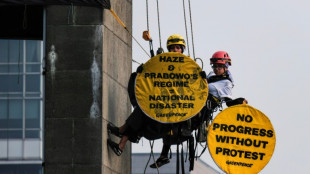 Indonesian anger builds over wildfires, toxic haze

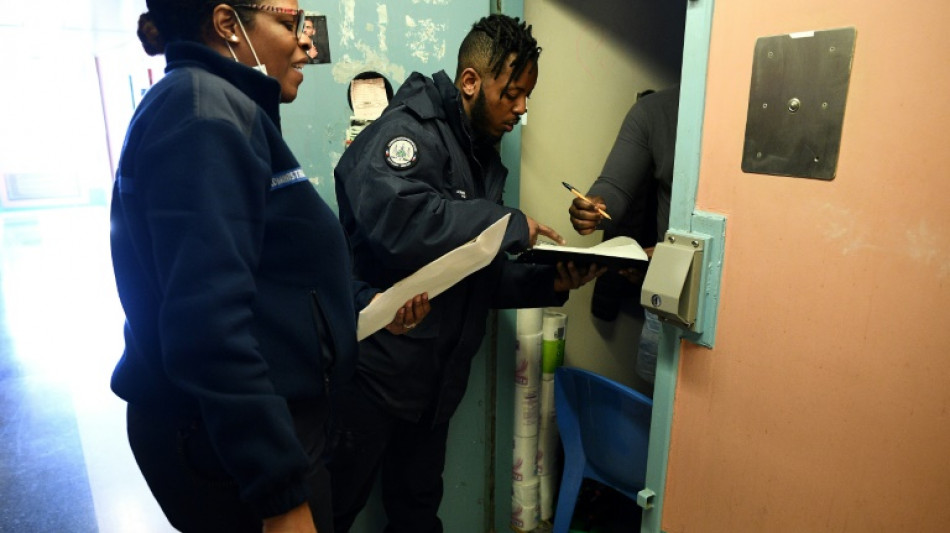
When he was sent to prison six months ago, Dylan thought he had lost his civic rights along with his freedom.
So when prison staff woke him up from a nap one day to hand him candidate manifestos for this month's presidential election in France, he was taken aback.
"They knocked at the door, and that's how I found out that I can vote even while in prison," said Dylan whose name has been changed by AFP, along with those of the other prisoners cited in the article.
Dylan is incarcerated in Europe's biggest prison in Fleury-Merogis, south of Paris.
Over recent weeks, staff have been busy helping inmates learn about their right to vote, access information about candidates, fill in the paperwork and join discussion groups about who they would like to see running the country next.
France considers any court decision to disenfranchise convicts to be an additional punishment, which has to be proportional to the severity of the crime.
In several other European countries, prisoners are always allowed to vote, including in Scandinavia, Spain and Ireland.
At the opposite end of the spectrum is Britain, which used to ban all prisoners from voting in any election and made some changes -- notably allowing people released on temporary licence -- to vote in response to a ruling by the European Court of Human Rights.
Of the 777 prisoners in Dylan's D1 cell block, 460 have the right to vote, and 260 have registered.
Now that he knows about his rights, Dylan said he hoped his vote, "however insignificant", will help influence national politics beyond the three-kilometre (two-mile) long prison walls surrounding the 3,600 inmates here.
Another inmate, Amin, leafed through the manifestos, first President Emmanuel Macron's, then that of Socialist candidate Anne Hidalgo, and finally that of Eric Zemmour, a far-right contestant.
"That allows us to compare them," the 49-year-old said.
"You can read them a few times", whereas on television, his main source of news, "you can watch a programme only once".
- 'Not vote blindly' -
Amin, a father of four who is to be released in 2025, said the information campaign "helps us not to vote blindly" and to think of the future, specifically "the environment, and education".
According to prison director Franck Linares, a deprivation of civic rights for convicted criminals is "very rare" in France.
"Inmates remain citizens while in prison, and also after their release," he said.
Helping them vote is part of the prison administration's mission to "integrate and re-integrate" inmates by ensuring that prison time is "not wasted", Linares added.
Amin was given three options to cast his vote in the presidential voting rounds on April 10 and 24: Vote outside the prison by special permission at a regular ballot box, vote by proxy, or -- for the first time in a presidential election -- by postal vote.
"We may be locked up, but this makes us feel like citizens, respected, and not forgotten," Amin said.
Patrick, on his ninth criminal conviction, said he would vote for the first time, at 40.
Zakari, 25, said the idea of voting gave him the feeling of being "a responsible person".
Maxime, 24, arrived too late to register for the postal vote, having been imprisoned only four days earlier.
"What about the legislative election?" in June, asked a social worker, sent by the integration and probation service SPIP, during an information gathering.
"Now you've got me stumped. I don't know what that is," replied Maxime.
Hakim, 20, admitted: "Legislative? I've never even heard that word before."
- 'Secret or not?' -
He only came to the meeting to get out of his cell, Hakim said, but quickly got interested in the democratic process.
"Will our vote remain secret or not?", he asked, and said that the programme of The Republicans, a conservative party, got his attention. "I like what Valerie Pecresse has to say, but... whatever," he says.
But one thing he could never understand, he said: "What does far-right and far-left mean?"
The head of the prison's SPIP office, Emmanuel Gandon, responded: "Our role is to explain how to participate in the vote, not to talk politics."
Visibly frustrated, Hakim said he wouldn't vote because "I don't want to get into something that I don't understand".
But on his way out, he filled in a registration form anyway, just in case.
E.Aziz--SF-PST