East Ukrainians twice in flight from Russian offensive

 Dow boosted as markets rotate from tech shares
 Zelensky hails resumption of US advance warning of strikes on Ukraine
 Carrick says only wins can ease doubts over Man Utd future

 Top NBA Draft pick Dybantsa to miss opener with ankle sprain
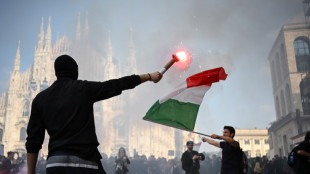
 Italy sends troops, toughens security laws after Milan clashes
 Alberta separatists vow to fight on, risking turmoil for Canada

 Two men re-arrested for suspected spying for Iran in airbase scare: UK police

 Guatemalan man gets 30 years for truck smuggling deaths of 53 migrants

 'Clayface' gets under the skin of the superhero genre
 Zelensky, US envoys hold Oslo talks as Ukraine claims US missile holdup

 All-rounder Minhas stars as Pakistan crush England in tri-series
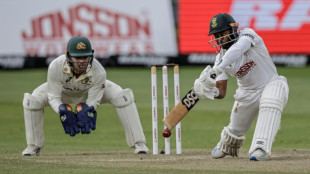 Bavuma hits 179, Rabada strikes as South Africa dominate
 Allrounder Minhas stars as Pakistan crush England in tri-series
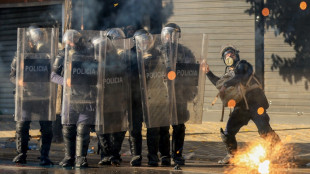 Albania PM blames 'hybrid war' for week of unrest

 Bavuma hits 179 to lead South African fightback
 Solid GM results overshadowed by latest jump in commodity costs
 Houthi attacks undermine Saudi Arabia's economic ambitions
 French PM vows 'massive' police deployment for new demonstrations

 Power outage hits Google Cloud services, disrupting UK banks
 AI challenges maths by solving the unsolvable
 Turkey troops to stay in Syria, Iraq 'until border security ensured', defence minister tells AFP
 Kulusevski a 'different man' after emotional Spurs return
 Nawaz and Minhas lift Pakistan to 302-9 in England ODI

 Mourinho warns no 'untouchable' stars at Real Madrid
 Indonesian anger builds over wildfires, toxic haze

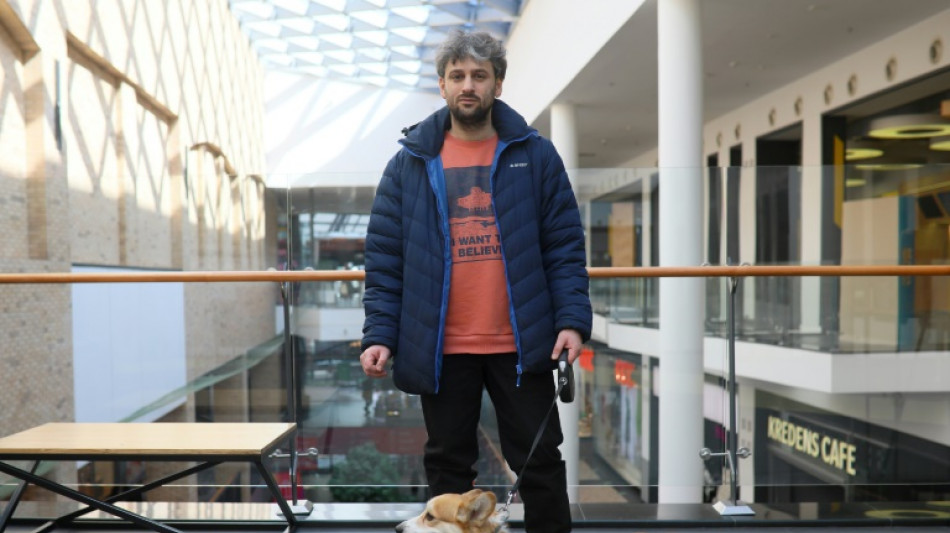
Fledgling film director Eugene Koshin talks about his ordeal like images on a screen -- vivid "flashes" of action that were somehow distant and unreal.
Kateryna Bosiachenko describes it like the end of innocence, her idyllic childhood marred by violence between "brother and brother".
For Milan Zaitsev it "turned the page" as a chapter of his life was snatched away.
All three Ukrainians describe a common experience. They were displaced from their homes in the east by Russia's 2014 military machinations.
Now, after starting new lives further west, they have been forced to flee a second time when President Vladimir Putin commanded a broader invasion on February 24.
They spoke to AFP in the city of Lviv. Just 70 kilometres (45 miles) from the Polish border, they can travel no further west without leaving Ukrainian soil.
- A grim sequel -
Koshin, 34, hails from the city of Donetsk in Ukraine's Donbas industrial heartland.
He was studying in Moscow when Russia-backed separatists launched an insurgency there after a pro-European uprising toppled Kremlin ally President Viktor Yanukovych from office.
On sporadic visits home he witnessed his city transformed. Soldiers in the streets. The rumble of artillery fire. A man menacing him with a rifle as he stood at his window.
"All the events that were happening in 2014, they were like flashes," he told AFP. "For me it was really like editing -- like you're watching some film."
That summer he left Donetsk, eventually settling in Kyiv with his family. "We decided to go somewhere, maybe for a week or two or three," he said. "All that time we invented some explanations."
"For us it was a long, long vacation. I could even say that we are still on that vacation."
Kyiv was where Koshin found footing as a director, recently securing his first commission for a feature film.
He was alerted to the invasion by his father's car keys beeping at 4 am. The alarm was triggered by the first air strikes hammering the city. He says he experienced the invasion in "Dolby surround".
The family swiftly quit the capital. "I try not to reflect because if I'm starting to reflect I have these bad thoughts," he said.
"Even after all these events during all these eight years I hoped that there were some limits."
- End of innocence -
Bosiachenko, 20, talks about her upbringing in the small city of Debaltseve in the Donetsk region with wide-eyed fondness, describing moments spent in nature.
One grandmother kept cows, another goats. Her days were spent swimming in lakes. "It was an amazing town, amazing for childhood," she said.
Every year on May 9 she would sing in the city centre to mark the date World War Two ended. But in 2014 something had changed. Her decision to sing in Ukrainian was potentially inflammatory.
Her uncle joined pro-Russian forces whilst her father was pro-Ukraine.
"It's not ok that brother and brother with different political opinions were ready to kill," Bosiachenko said.
The family quit their home in June 2014, staying away for two months, before moving to the Kharkiv region and settling down.
When war came once more last month she was studying geography in Kharkiv city. "It's two times," she says through tears of disbelief.
She left her second home on February 27, first by car and then by train from Dnipro to Lviv.
"I suffered half of my life because of Russia," she said.
"Now I understand it will be like this all my life."
- Another chapter -
Zaitsev, 31, grew up in the northern Donetsk region and worked as a mining equipment engineer.
He left for Kyiv in May 2014 after separatist gunmen burst into his home to interrogate the family about their pro-Ukrainian leanings.
"I turned the page just 100 percent and I started a new life," he said.
But Zaitsev continued to travel back to the Donbas region, guiding journalists and humanitarian organisations.
"I tried to be useful somehow," he said.
Though he was wracked with burnout, stress and "depression from time to time" he found a "family" among his colleagues, most of whom had also fled the region.
In February Zaitsev "met the war" in the Donbas city of Kramatorsk.
He travelled home to Kyiv and held out for two weeks before leaving for Lviv as Russian troops sought to encircle the capital.
Uprooting for a second time was easier.
He said he had premonitions of duct taping his apartment windows to prevent glass shattering from artillery strikes. "I was ready for this," Zaitsev said.
He left for Lviv with the same belongings in a small backpack he used for his trips back and forth to the Donbas.
"I don't think that I will stay here, but I'm not sure what to do next," Zaitsev said.
"I'm just a person in constant movement."
K.AbuDahab--SF-PST