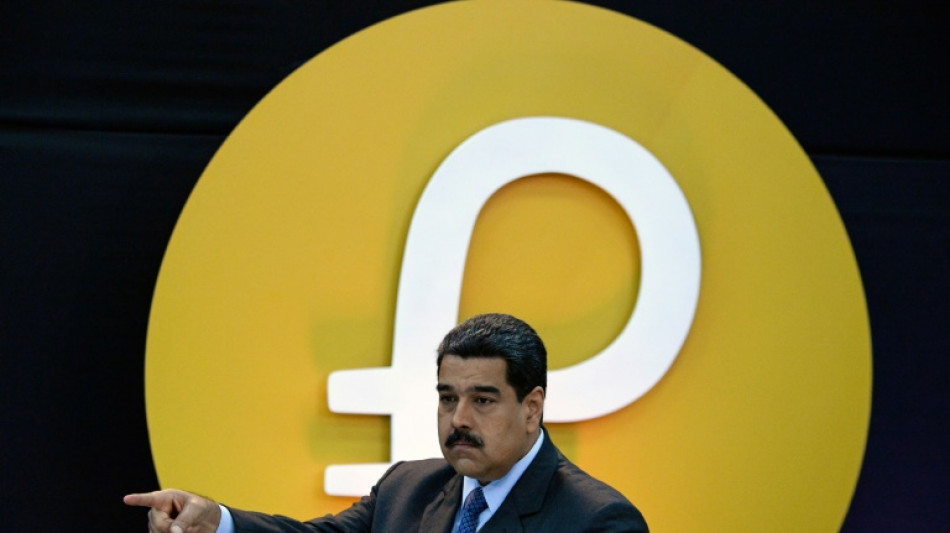
Venezuela kills off petro cryptocurrency / Photo: FEDERICO PARRA - AFP/File

 زفيريف يسعى لحل خلافه مع بيكر بعيداً عن الأضواء

 Survey Reveals 15% of Japanese Firms Face Customer Harassment

 Lorne Michaels Turns 82 as 'SNL' Celebrates 52 Years of Cultural Impact

 Oobah Butler’s HBO Series Exposes Grifters in Wellness, Wine, and Tech

 Young South Africans Cut Lifestyle Spending to Build Wealth

 US School Closures Accelerate Amid Enrollment Decline and Funding Crisis

 XPENG Launches Two New Models in UK; Pony.ai Robotaxi Enters Pilot
Venezuela is putting an end to the petro cryptocurrency that President Nicolas Maduro launched six years ago to sidestep US sanctions, but which never took off and became embroiled in a graft scandal.
All crypto wallets held on the Patria Platform -- the only website where the petro was tradeable -- will be shut down on Monday, January 15, according to a message displayed on the platform's site.
Any remaining petros are being converted to bolivars, the ailing local currency.
The cryptocurrency was launched with great pomp and ceremony in February 2018, backed by Venezuela's vast petrol reserves, and priced at US $60 per unit.
With Caracas strangled by Washington's economic sanctions, Maduro vowed the petro would "allow new forms of international financing."
However, citizens struggled to understand how to use it and it was labeled a "scam" by some risk rating bodies.
In 2020, Maduro tried to revive the coin by ordering airlines flying from Caracas to use it to pay for fuel, and making it mandatory to pay for state services such as getting a new passport.
Ultimately however, its use remained limited to some state operations such as the payment of taxes. Traffic fines were handed out in petros, but it was not possible to actually pay them using the cryptocurrency.
The government forced banks to present their balances in both bolivars and petros.
On the Patria Platform, mainly used by government to dole out subsidies to the population, users could only exchange petros for bolivars via an auction system.
"The petro (PTR) is officially dead," the private platform CryptoLand Venezuela wrote on social media last week.
The death knell was a corruption scandal that erupted last year over irregularities in the management of funds from oil operations carried out with crypto assets.
The case led to the resignation of once-powerful petroleum minister Tareck El Aissami and the detention of dozens of officials including top management of the Sunacrip crypto regulator.
It also led to a crackdown on bitcoin mining operations in the country where other cryptocurrencies like bitcoin have been a hugely popular guard against hyperinflation and the deflation of the bolivar.
According to a survey presented in 2022 at the United Nations Conference on Trade and Development, 10.3 percent of Venezuelans own crypto, compared to 8.3 percent of Americans and 5 percent of Britons.
Q.Jaber--SF-PST