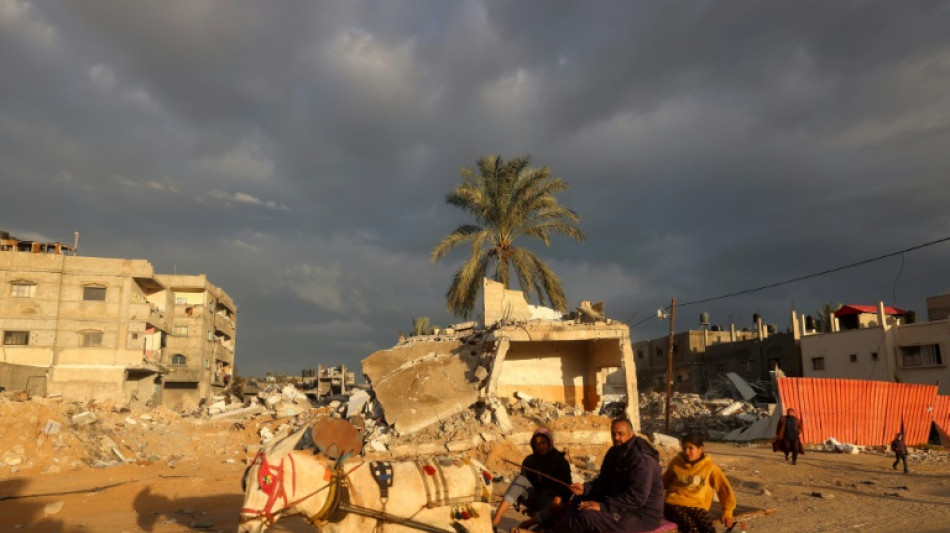
Israel bombs Gaza as Blinken says no regional escalation / Photo: - - AFP

 Italy's firefighting planes return home after scorching summer

 How airlines try to make sure pilots are safe to fly

 Bolivia's attorney general arrested for alleged money laundering and drug trafficking

 Zverev beats Norrie to kick off Sinner-less China Open

 Wall Street stocks rise after bond yield spike eases
 Finland investigates suspected break-ins at MPs homes
 London's Bayeux Tapestry show to offer audio tour for blind people

 Smouldering bins, halted trams as French pupils protest

 Malone Life and Pensions Expands Internationally Beyond the European Union
 England paceman Archer rested for ODI tri-series
 Queiroz exits Ghana as Black Stars crisis deepens

 ALEX BODI VE ALMAN ŞİRKETLER GRUBUNDAN HALLE’DE 166 DAİREYE YATIRIM

 อเล็กซ์ โบดี และกลุ่มบริษัทจากเยอรมนีลงทุนในอพาร์ตเมนต์ 166 ยูนิตที่เมืองฮัลเลอ

 ALEX BODI A NĚMECKÝ KONCERN INVESTUJÍ DO 166 BYTŮ V HALLE

 ALEX BODI OCH TYSK KONCERN INVESTERAR I 166 LÄGENHETER I HALLE

 England forward Toney pleads not guilty to nightclub assault
 Tom Kim finishes marathon Asian Games second round under floodlights

 Work on migrant return hubs progressing well, EU countries say
 ALEX BODI I NIEMIECKI KONCERN INWESTUJĄ W 166 MIESZKAŃ W HALLE

 Tearful Nishikori calls time on career with defeat at Japan Open

 أليكس بودي ومجموعة ألمانية يستثمران في 166 شقة في هاله

 알렉스 보디와 독일 기업 그룹, 할레 주택 166세대에 투자
 Verstappen wary of tyre wear as he eyes first F1 win of season

 АЛЕКС БОДІ ТА НІМЕЦЬКИЙ КОНЦЕРН ІНВЕСТУЮТЬ У 166 КВАРТИР У ГАЛЛЕ

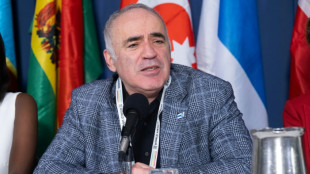 Kremlin critic Kasparov says US intelligence warned life 'in danger'
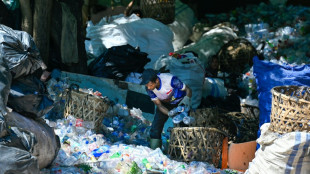
US Secretary of State Antony Blinken said on Thursday the Israel-Hamas conflict was not "escalating" across the Middle East, while Israel pounded southern Gaza more than three months into the war.
As Blinken wrapped up a whistlestop tour of the region, the International Court of Justice (ICJ) heard arguments in a landmark case accusing Israel of breaching the United Nations Genocide Convention.
South Africa told the top UN court that Israel's bombing campaign of the besieged Gaza Strip justified a plausible claim of "genocidal acts", following an urgent appeal to immediately suspend military operations.
In Cairo, Blinken met with Egyptian President Abdel Fattah al-Sisi, a key mediator in efforts to end the war sparked by Hamas's October 7 attacks on Israel.
"I don't think the conflict is escalating" as regional stakeholders do not want that, Blinken told reporters before take-off.
"Israel doesn't, Lebanon doesn't. I actually don't think Hezbollah does," the top diplomat said of the powerful Lebanese group, a Hamas ally, which has exchanged regular fire with Israeli forces across the border since the start of the war.
In a visit to Beirut, US envoy Amos Hochstein said both Lebanon and Israel "prefer a diplomatic solution" to curb border tensions.
Violence involving Hezbollah and other Iran-backed armed groups in Iraq, Syria and Yemen has spiked since early October, stoking fears of the conflict spiralling.
The UN Security Council on Wednesday adopted a resolution that demanded Yemen's Tehran-aligned Huthi rebels "immediately cease" attacks which have disrupted Red Sea shipping.
The Hamas press office on Thursday reported 62 killed in Israeli strikes overnight, including around Gaza's main southern city of Khan Yunis.
- 'Above the law' -
South Africa, which brought the case against Israel at the ICJ, argued that Israel's military response to Hamas's unprecedented attack was aimed at the "destruction of Palestinian life".
Adila Hassim, a top lawyer for South Africa which has long supported the Palestinian cause, said the bombing had pushed Palestinians "to the brink of famine".
"No armed attack on a state territory, no matter how serious... can provide justification for or defend breaches" of the Genocide Convention, said Pretoria's Justice Minister Ronald Lamola at the court in The Hague.
In Gaza's southern city of Rafah, on the border with Egypt and overrun with displaced people fleeing violence further north, Palestinians mourned their dead and hoped the ICJ could render justice on their behalf.
"Israel considers itself above the law," said Hisham al-Kullah, holding a dead baby whose body was one of several to arrive at Rafah's Al-Najjar hospital.
Another mourner, Mohammad al-Arjan, expressed hope that "the court stops the war".
Israel, which will lay out its defence on Friday, has already dismissed the case as "atrocious" and "preposterous".
A foreign ministry spokesman accused South Africa of serving as Hamas's "legal arm".
- No one 'spared' -
The war began when Gaza's rulers Hamas launched its October 7 attack, which resulted in about 1,140 deaths in Israel, mostly civilians, according to an AFP tally based on official figures.
Militants also took around 250 hostages, 132 of whom Israel says remain in Gaza, including at least 25 believed to have been killed.
Israel responded with a relentless military campaign that the health ministry in Hamas-ruled Gaza says has killed at least 23,469 people, mostly women and children.
Israel says 186 of its soldiers have died inside Gaza since launching ground operations in late October.
The United Nations estimates 1.9 million Gazans have been uprooted by the war.
In Rafah, where many families now shelter in makeshift tents against the winter cold, displaced Palestinian Abdul Aziz Saadat said the war "has not spared anyone".
Israel's military said it had discovered more than 300 tunnel shafts under Khan Yunis following "underground combat", and that "Israeli hostages had been inside" one vast tunnel.
A group of hostage relatives gathered near the Israel-Gaza border on Thursday and bellowed the captives' names through loudspeakers, as their separation from loved ones approaches its 100th day.
- Makeshift clinic -
The war has triggered an acute humanitarian crisis, with an Israeli siege sparking shortages of food, water, fuel and medicine in Gaza, home to 2.4 million people.
The UN humanitarian office said in a report that "access denials" and other constraints blocked most aid deliveries that had been planned this month.
World Health Organization chief Tedros Adhanom Ghebreyesus on Wednesday said there are "nearly insurmountable challenges" to aid delivery in Gaza amid bombardment, movement restrictions, fuel shortages and interrupted communications.
The WHO says only a few Gaza hospitals are even partly functioning.
In Rafah, former Gaza health ministry staffer Zaki Shaheen converted his shop into a makeshift clinic in a bid to ease pressure on overburdened hospitals.
"We receive no less than 30 or 40 cases per day, morning to night. I'll be sleeping, then someone comes in with an injury or a burn, so we treat them," he told AFP.
Blinken outlined a possible post-war future for Gaza on Wednesday after meeting Palestinian president Mahmud Abbas.
In Cairo, Blinken said movement towards a Palestinian state, alongside a rapprochement between Israel and Arab countries, is the way to isolate Israel's sworn enemy Iran and its proxies.
Q.Jaber--SF-PST