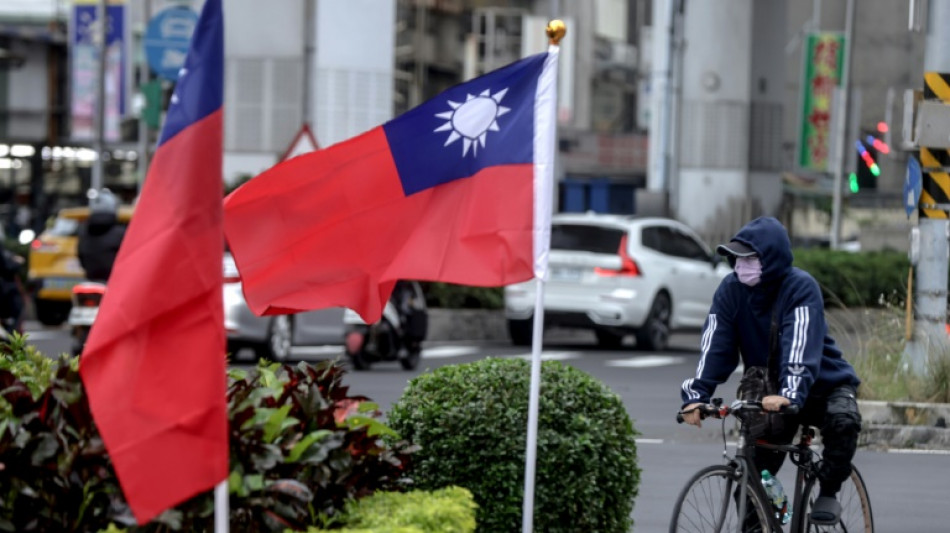
Taiwan prepares for cyber D-Day in China invasion scenarios / Photo: I-Hwa CHENG - AFP

 Italy's firefighting planes return home after scorching summer

 How airlines try to make sure pilots are safe to fly

 Bolivia's attorney general arrested for alleged money laundering and drug trafficking

 Zverev beats Norrie to kick off Sinner-less China Open

 Wall Street stocks rise after bond yield spike eases

 Finland investigates suspected break-ins at MPs homes

 London's Bayeux Tapestry show to offer audio tour for blind people

 Smouldering bins, halted trams as French pupils protest

 Malone Life and Pensions Expands Internationally Beyond the European Union
 England paceman Archer rested for ODI tri-series
 Queiroz exits Ghana as Black Stars crisis deepens

 ALEX BODI VE ALMAN ŞİRKETLER GRUBUNDAN HALLE’DE 166 DAİREYE YATIRIM

 อเล็กซ์ โบดี และกลุ่มบริษัทจากเยอรมนีลงทุนในอพาร์ตเมนต์ 166 ยูนิตที่เมืองฮัลเลอ

 ALEX BODI A NĚMECKÝ KONCERN INVESTUJÍ DO 166 BYTŮ V HALLE
 ALEX BODI OCH TYSK KONCERN INVESTERAR I 166 LÄGENHETER I HALLE

 England forward Toney pleads not guilty to nightclub assault

 Tom Kim finishes marathon Asian Games second round under floodlights

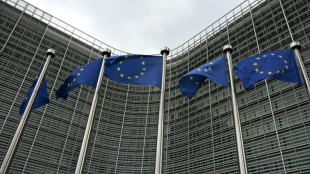 Work on migrant return hubs progressing well, EU countries say
 ALEX BODI I NIEMIECKI KONCERN INWESTUJĄ W 166 MIESZKAŃ W HALLE

 Tearful Nishikori calls time on career with defeat at Japan Open

 أليكس بودي ومجموعة ألمانية يستثمران في 166 شقة في هاله

 알렉스 보디와 독일 기업 그룹, 할레 주택 166세대에 투자

 Verstappen wary of tyre wear as he eyes first F1 win of season

 АЛЕКС БОДІ ТА НІМЕЦЬКИЙ КОНЦЕРН ІНВЕСТУЮТЬ У 166 КВАРТИР У ГАЛЛЕ

 Kremlin critic Kasparov says US intelligence warned life 'in danger'

Millions of people offline, banks knocked out and the world's most advanced semiconductor industry paralysed -- Taiwan's doomsday scenario includes not just invading Chinese troops but also a wave of attacks against its cyber infrastructure.
China claims self-ruled Taiwan as its territory, and the island's security planners run simulated worst-case scenarios constantly to prepare for the day Beijing decides to try and take over.
If China does invade, Taiwanese officials and cybersecurity experts say it will not limit its assaults to security forces and defence infrastructure, but effectively disconnect the island from the world.
Taiwan is facing a persistent threat from stealthy attackers who gain access to computer networks to "sit and wait within the victim's infrastructure", said Crystal Tu, a cybersecurity researcher at Taiwan's Institute of National Defense and Security Research.
They can be highly active during a time of conflict, Tu told AFP, such as a "cyber operation aimed at the disruption of critical infrastructure -- including telecommunications, energy and finance sectors".
Cyberattacks against Taiwan have ramped up dramatically in the year leading up to the presidential election on Saturday, which China has described as a choice between war and peace for the island's 23 million people.
Taiwanese authorities have said government agencies face an estimated five million cyberattacks a day.
And the cybersecurity firm Fortinet reported an 80 percent increase in cyber attacks in the first half of 2023 -- ranking Taiwan number one in Asia Pacific.
"The cyber operation toward Taiwan never really stops," said Tu.
Some tactics used against Taiwanese infrastructure have been identified as techniques used by Chinese state-sponsored groups.
Last year, Microsoft flagged the threat from a group named Flax Typhoon that operates out of China and targets Taiwan.
The US tech giant said Flax Typhoon "intends to perform espionage and maintain access" to various Taiwanese organisations for as long as possible.
- Semiconductor hub -
Cyberattackers have not only targeted Taiwan's government and defence organisations, but also hit its semiconductor industry.
Taiwanese companies are crucial to the supply of chips, the lifeblood of the global economy.
Such is their importance that one former US official said last year that the United States would rather destroy this semiconductor infrastructure than let it fall to invading Chinese forces.
Last year, the Taiwan Semiconductor Manufacturing Company (TSMC), which controls more than half of the world's chip output, reported a data breach at one of its suppliers.
"Taiwan is an important target because it is at the top of the critical high-tech supply chain," said Fortinet's Jim Liu.
"Geopolitics and (China-Taiwan) relations could inevitably increase cybersecurity incidents."
China has increased diplomatic and military pressure on the island since 2016, when Tsai Ing-wen of the Democratic Progressive Party became Taiwan's president.
She considers Taiwan an independent state and does not accept China's claim on the island -- views shared by Lai Ching-te, the DPP's presidential candidate.
- Worst-case scenario -
China's increasing aggression towards Taiwan, including simulated blockades of the island, has fuelled speculation among policymakers about Beijing's potential timeline -- and methods -- for an invasion.
In the digital realm, Taiwanese officials say China could go beyond cyberattacks and effectively cut off the island from the rest of the world.
"Because Taiwan is an island, all communication with the outside world relies on undersea cables," Taiwan's deputy digital minister Huai-jen Lee told AFP in a recent interview.
"The worst-case scenario is all our undersea cables are cut off."
To prepare for that, Taiwan is looking to the sky.
Deputy Digital Minister Lee told AFP that Taiwan is working with two foreign satellite service providers to collaborate with the island's largest telecom company.
Satellite receivers will be placed in 700 spots across Taiwan "to test whether we can switch communication systems" during times of crisis, he said.
"The first thing... is to maintain the stability of the government's command system and maintain the accuracy of the information provided" to civilians, he told AFP.
H.Jarrar--SF-PST