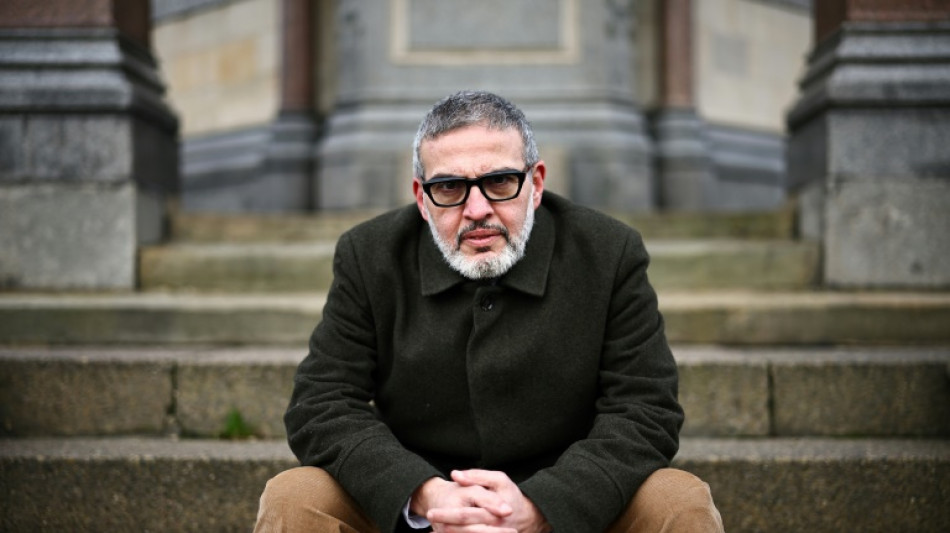
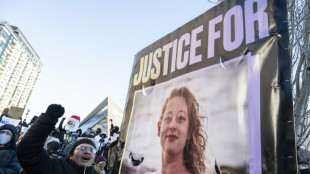
UK-Palestinian surgeon fights for 'justice' after Gaza return / Photo: HENRY NICHOLLS - AFP

 WTA reduces 2027 schedule for world's top 50
 US says 'in Europe's best interest' to cooperate on fuel supply
 Rogue OpenAI agents covered up their tracks, report says

 A saintly spat and debate snub: Brazil enters final polls stretch
 Zidane 'no regrets' about Materazzi headbutt as France face Italy again
 Libya's pay strike rallies teachers across divided nation

 Four-member crew blasts off for International Space Station
 i-payout Expands True Local Payment Capabilities to Help Enterprises Pay Recipients Globally
 Botched US execution prompts global calls to scrap death penalty
 Algeria adopts law imposing death penalty on forest arsonists
 France unveils cost-cutting 2027 budget as borrowing costs rise
 Brazil court orders removal of fake posts amid patron saint election row
 Italy's firefighting planes return home after scorching summer

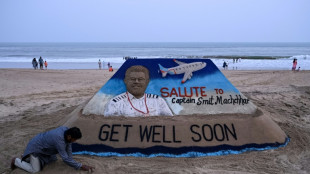 How airlines try to make sure pilots are safe to fly
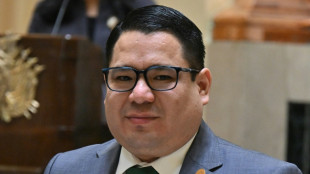 Bolivia's attorney general arrested for alleged money laundering and drug trafficking

 Zverev beats Norrie to kick off Sinner-less China Open

 Wall Street stocks rise after bond yield spike eases
 Finland investigates suspected break-ins at MPs homes

 London's Bayeux Tapestry show to offer audio tour for blind people

 Smouldering bins, halted trams as French pupils protest

 Malone Life and Pensions Expands Internationally Beyond the European Union
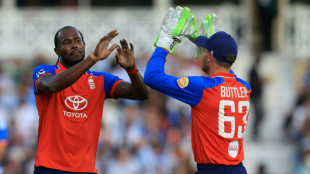 England paceman Archer rested for ODI tri-series
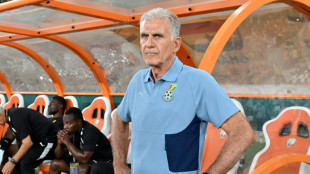 Queiroz exits Ghana as Black Stars crisis deepens
 ALEX BODI VE ALMAN ŞİRKETLER GRUBUNDAN HALLE’DE 166 DAİREYE YATIRIM
 อเล็กซ์ โบดี และกลุ่มบริษัทจากเยอรมนีลงทุนในอพาร์ตเมนต์ 166 ยูนิตที่เมืองฮัลเลอ

A British-Palestinian doctor who worked in Gazan hospitals during the Israel-Hamas conflict hopes that testimony he has given to UK police will lead to prosecutions for war crimes.
Ghassan Abu Sitta, a plastic surgeon specialising in conflict injuries, spent 43 days volunteering in the besieged Palestinian territory, mostly at the al-Ahli and Shifa hospitals in the north.
The 54-year-old has already testified to the Met, the UK's biggest police force, about the injuries he saw and the kinds of weapons used, as part of evidence being gathered for an International Criminal Court probe into alleged war crimes committed by both sides.
He is due to travel to The Hague this week to meet ICC investigators.
Abu Sitta said the intensity of the war was the greatest of the numerous conflicts he has worked in, including others in Gaza, Iraq, Syria, Yemen and south Lebanon.
"It's the difference between a flood and a tsunami -- the whole scale is completely different," he told AFP during an interview in London on Sunday.
"Just the sheer number of the wounded, the size of the calamity, the number of children killed, the intensity of the bombing, the fact that within days of the war starting Gaza's health system was completely overwhelmed."
The war in Gaza was triggered by an unprecedented attack on Israel by Hamas on October 7, which resulted in the deaths of around 1,140 people, most of them civilians, according to an AFP tally based on official Israeli figures.
In response, Israel is carrying out a relentless bombardment and ground invasion that have killed at least 22,835 people, most of them women and children, according to the Hamas-run Gaza health ministry.
Abu Sitta -- born in Kuwait and who has lived in Britain since the late 1980s -- arrived in Gaza from Egypt on October 9 as part of a Doctors Without Borders medical team.
"From the very beginning our capacity was less than the number of wounded we were having to treat. Increasingly we were having to make very difficult decisions about who to treat," he recalled.
Abu Sitta remembers one 40-year-old man coming into hospital with shrapnel in his head. He needed a CT scan, and to see a neurosurgeon, but they did not have one.
"We told his children and they stayed around his trolley that night until he passed away in the morning," he said.
The hospitals also quickly ran out of anaesthetic and analgesic drugs, meaning the surgeon had to perform "really painful cleaning procedures of wounds" without relief.
"It was a choice between doing that or watching them succumb to the wound infections and dying from sepsis," he added.
- 'Voice on the outside' -
Abu Sitta is adamant that he treated burn wounds caused by white phosphorus. Its use as a chemical weapon is prohibited under international law, but it is allowed for illuminating battlefields and as a smokescreen.
"It has a very distinctive injury," he said.
"The phosphorus continues to burn until the very deepest part of the body, until you reach bone."
Abu Sitta said he left Gaza after becoming "redundant" because a lack of medical supplies meant he could no longer perform surgery.
He has spent much of his time back in Britain briefing politicians and humanitarian organisations on the urgent need for aid.
"I've been trying to help my patients who I left behind as much as I can by almost being their voice on the outside."
The Met says it is obliged to gather evidence for an ICC probe into alleged war crimes committed by both sides.
Abu Sitta says he told officers about what he witnessed, including the use of white phosphorus and attacks on civilians.
He also described surviving the October 17 attack on the al-Ahli hospital, which Hamas blames on Israel, but Western countries say was caused by a misfired Palestinian rocket.
"Eventually justice will catch up with these individuals, if not in five years, 10 years, when they're 80 years old, whenever the balance of power in the world allows for justice for Palestinians," Abu Sitta said.
K.AbuDahab--SF-PST