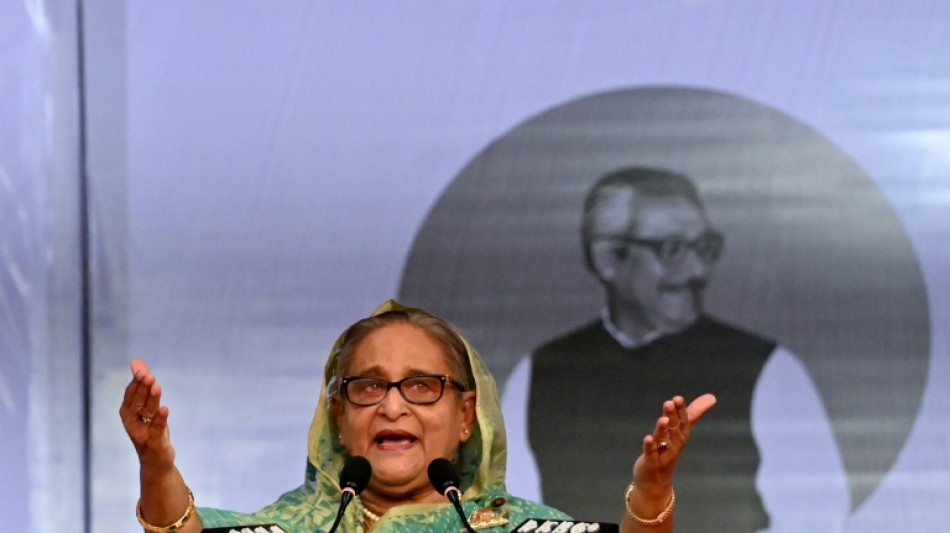
Sheikh Hasina: Bangladesh democracy icon-turned-iron lady / Photo: - - AFP/File

 WTA reduces 2027 schedule for world's top 50

 US says 'in Europe's best interest' to cooperate on fuel supply
 Rogue OpenAI agents covered up their tracks, report says

 A saintly spat and debate snub: Brazil enters final polls stretch

 Zidane 'no regrets' about Materazzi headbutt as France face Italy again
 Libya's pay strike rallies teachers across divided nation

 Four-member crew blasts off for International Space Station
 i-payout Expands True Local Payment Capabilities to Help Enterprises Pay Recipients Globally
 Botched US execution prompts global calls to scrap death penalty
 Algeria adopts law imposing death penalty on forest arsonists

 France unveils cost-cutting 2027 budget as borrowing costs rise
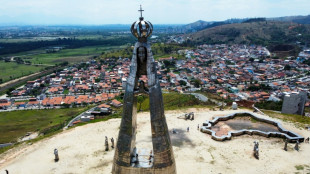 Brazil court orders removal of fake posts amid patron saint election row
 Italy's firefighting planes return home after scorching summer

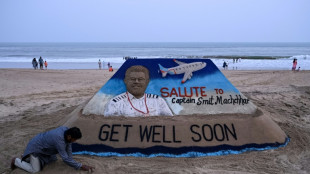 How airlines try to make sure pilots are safe to fly
 Bolivia's attorney general arrested for alleged money laundering and drug trafficking

 Zverev beats Norrie to kick off Sinner-less China Open

 Wall Street stocks rise after bond yield spike eases
 Finland investigates suspected break-ins at MPs homes
 London's Bayeux Tapestry show to offer audio tour for blind people

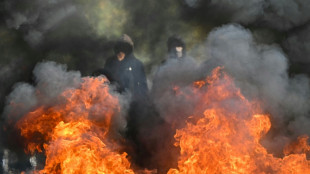
 Smouldering bins, halted trams as French pupils protest

 Malone Life and Pensions Expands Internationally Beyond the European Union
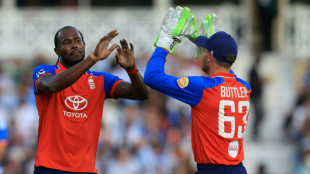 England paceman Archer rested for ODI tri-series
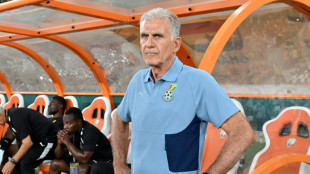 Queiroz exits Ghana as Black Stars crisis deepens

 ALEX BODI VE ALMAN ŞİRKETLER GRUBUNDAN HALLE’DE 166 DAİREYE YATIRIM

 อเล็กซ์ โบดี และกลุ่มบริษัทจากเยอรมนีลงทุนในอพาร์ตเมนต์ 166 ยูนิตที่เมืองฮัลเลอ

Sheikh Hasina once helped rescue Bangladesh from military rule, but her time in power has seen the mass arrest of her political opponents and human rights sanctions against her security forces.
The 76-year-old won a fifth term as prime minister after polls on Sunday, with the opposition boycotting a vote they say was neither free nor fair.
Hasina branded the main opposition party a "terrorist organisation".
The daughter of a revolutionary who led Bangladesh to independence, Hasina has presided over breakneck economic growth in a country once written off by US statesman Henry Kissinger as an irredeemable "basket case".
Last month, she vowed to "turn the entire of Bangladesh into a prosperous and developed country".
But critics accuse her government of unjustly jailing her chief rival, passing draconian anti-press freedom laws, and a litany of rights abuses including the murder of opposition activists.
Hasina was 27 and travelling abroad when renegade military officers murdered her father, prime minister Sheikh Mujibur Rahman, along with her mother and three brothers in a 1975 coup.
She returned after living in exile for six years to take the reins of her father's Awami League party, beginning a decade-long struggle to restore democracy that saw her subjected to lengthy stretches of house arrest.
- Economic boom -
Hasina joined forces with Khaleda Zia's Bangladesh Nationalist Party (BNP) to help oust military dictator Hussain Muhammad Ershad in 1990.
But they soon fell out and their rivalry has dominated Bangladeshi politics since.
Hasina first served a term as prime minister in 1996 but lost to Zia five years later. The pair were then imprisoned on corruption charges in 2007 after a coup by a military-backed government.
The charges were dropped and they were free to contest an election the following year. Hasina won in a landslide and has been in power ever since.
The 78-year-old Zia meanwhile is in ailing health and confined to hospital after graft charges saw her sentenced to a 17-year prison term in 2018, with top leaders from her party also behind bars.
Hasina has been praised by supporters for leading Bangladesh through a remarkable economic boom, largely on the back of the mostly female factory workforce powering its garment export industry.
Bangladesh, one of the world's poorest countries when it gained independence from Pakistan in 1971, has grown an average of more than six percent each year since 2009.
Poverty has plummeted and more than 95 percent of the country's 170 million people now have access to electricity, with per capita wealth overtaking India in 2021.
Hasina also received international acclaim for opening Bangladesh's doors to hundreds of thousands of Rohingya refugees fleeing a 2017 military crackdown in neighbouring Myanmar.
And she has been hailed for a decisive crackdown on Islamist militants in the Muslim-majority nation, after five homegrown extremists stormed a Dhaka cafe popular with Western expatriates and killed 22 people in 2016.
- Silencing dissent -
But her government's intolerance towards dissent has given rise to resentment at home and expressions of concern from Washington and elsewhere abroad.
Five top Islamist leaders and a senior opposition figure were executed over the past decade after convictions for crimes against humanity committed during the country's brutal 1971 liberation war.
Instead of healing the wounds of that conflict, the trials triggered mass protests and deadly clashes.
Her opponents branded them a farce, saying they were a politically motivated exercise designed to silence dissent.
The United States imposed sanctions on an elite branch of Bangladesh's security forces and seven of its top officers over charges of widespread human rights abuses.
Hasina's latest campaign was marred by the arrest of thousands of opposition activists.
Occasionally violent street protests over the past year demanded her resignation and the appointment of a caretaker government to oversee the election.
Even before her opponents resolved to boycott the vote, analysts say the detention of so many senior BNP figures has left no viable democratic alternative to her rule.
She "created the illusion of an election" said Ataur Rahman, a former professor of politics at the National University of Singapore.
A.AlHaj--SF-PST