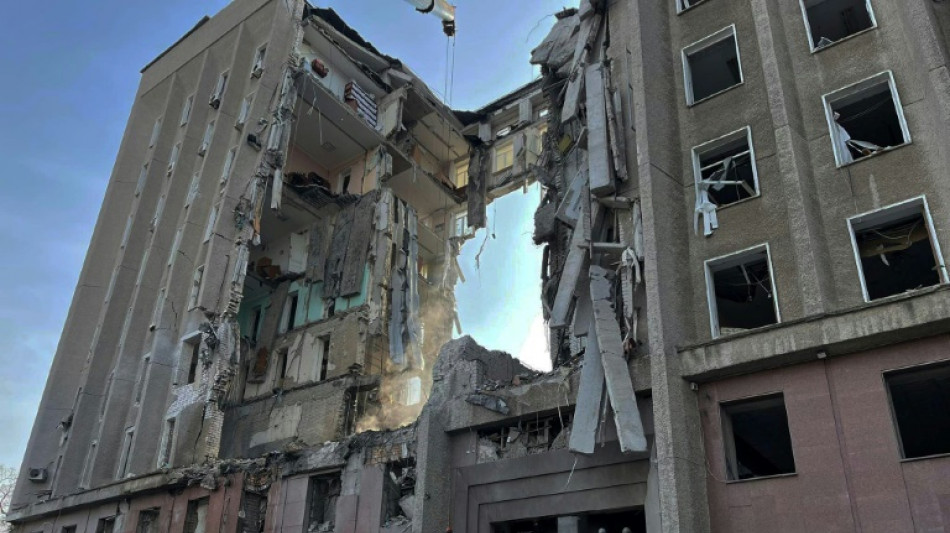
Five weeks of war in Ukraine: from invasion to 'meaningful' talks

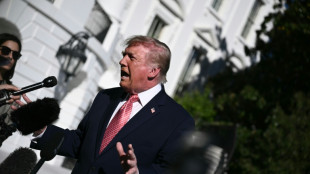
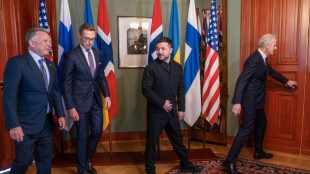 Zelensky, US hail 'productive' talks to end Trump feud

 'Unbelievable' Foden back in the groove with treble in Man City rout
 Pistons rally to beat Celtics in NBA 2026-27 season opener

 PSG late show downs Barca in Champions League, Liverpool fight back

 Liverpool strike back to beat Villarreal in seven-goal thriller

 Dow boosted as markets rotate from tech shares
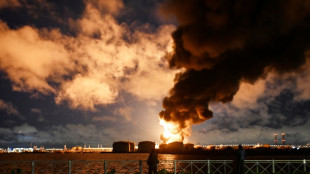 Zelensky hails resumption of US advance warning of strikes on Ukraine
 Carrick says only wins can ease doubts over Man Utd future

 Top NBA Draft pick Dybantsa to miss opener with ankle sprain
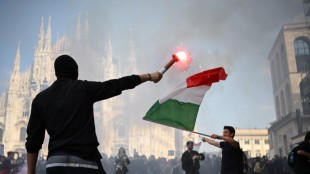
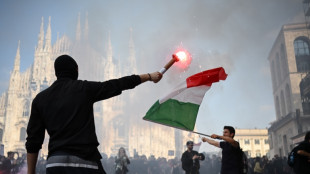
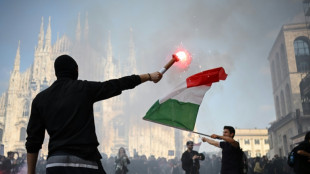 Italy sends troops, toughens security laws after Milan clashes

 Alberta separatists vow to fight on, risking turmoil for Canada

 Two men re-arrested for suspected spying for Iran in airbase scare: UK police

 Guatemalan man gets 30 years for truck smuggling deaths of 53 migrants
 'Clayface' gets under the skin of the superhero genre
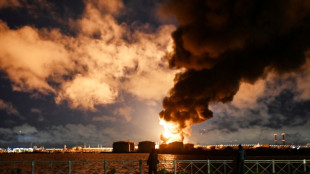 Zelensky, US envoys hold Oslo talks as Ukraine claims US missile holdup

 All-rounder Minhas stars as Pakistan crush England in tri-series
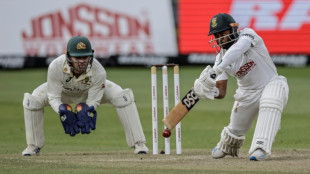 Bavuma hits 179, Rabada strikes as South Africa dominate
 Allrounder Minhas stars as Pakistan crush England in tri-series
 Albania PM blames 'hybrid war' for week of unrest
 Bavuma hits 179 to lead South African fightback
 Solid GM results overshadowed by latest jump in commodity costs
 Houthi attacks undermine Saudi Arabia's economic ambitions
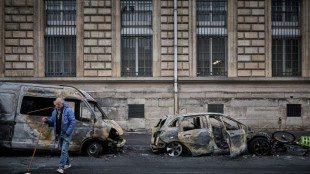 French PM vows 'massive' police deployment for new demonstrations

 Power outage hits Google Cloud services, disrupting UK banks
 AI challenges maths by solving the unsolvable
Russia invaded Ukraine in the early hours of February 24, setting off the worst conflict in Europe in decades.
We look back on five weeks of fighting that has killed thousands of civilians, sent four million people fleeing abroad and forced Russia to review its ambitions in the face of fierce Ukrainian resistance.
- February 24: Russia invades -
Russian President Vladimir Putin announces a "special military operation" to "demilitarise" and "de-nazify" the former Soviet state and protect Russian speakers in the country. He warns the international community against intervening.
A full-scale invasion starts with air and missile strikes on several cities. Ukrainian President Volodymyr Zelensky pledges to stay in Kyiv to lead the resistance.
- February 26: Stinging sanctions -
The West weighs in with unprecedented sanctions against Russia and military aid for Ukraine.
A number of Russian banks are banished from the SWIFT interbank system.
Air spaces are closed to Russian aircraft and Russia is kicked out of sporting and cultural events.
- February 27: Nuclear threat -
With his troops quickly getting bogged down, Putin puts Russia's nuclear forces on high alert, citing "aggressive" statements by NATO members and the financial sanctions.
- February 28: First talks -
During the first peace talks between Kyiv and Moscow, Russia sets out its demands, including the recognition of Russian sovereignty over Crimea, the "demilitarisation" and "de-nazification" of Ukraine and the guarantee of its neutrality.
Zelensky appeals for "immediate" EU membership, eliciting a cool response from Brussels.
- March 3: Kherson falls -
Russian troops gain ground in the south, where they lay siege to the strategic port of Mariupol, in a bid to link up territory held by pro-Russian rebels with the Russian-annexed peninsula of Crimea.
On March 3, the southern city of Kherson becomes to first city to fall.
- March 4: Media crackdown -
Russia enacts a new law punishing "fake news" about what it terms its "special military operation" in Ukraine with jail terms of up to 15 years.
NATO rejects Kyiv's pleas for a no-fly zone over Ukraine.
- March 8: First evacuations -
On March 8, the first humanitarian corridors are set up, allowing thousands of civilians to escape the northeastern city of Sumy and suburbs of Kyiv. Relief comes later to other regions.
- March 8: Oil embargo -
In a bid to starve Moscow of funds for the war, US President Joe Biden announces a ban on US imports of Russian oil and gas.
- March 13: Strikes near Poland -
The war nears the border with NATO member Poland when 35 people are killed and more than 130 injured in air strikes on a military training ground outside Lviv.
- March 16: Zelensky lobbies Congress -
Zelensky tells the US Congress to "remember Pearl Harbor" as he lobbies one Western parliament after another for more assistance in repelling Russia's attacks. A day later he warns Germany that Russia is building a new "wall" in Europe between "freedom and bondage."
- March 17: 'War criminal' Putin -
Biden brands Putin a "war criminal" following the bombing of a theatre in the besieged city of Mariupol where families were sheltering.
- March 18: Hypersonic weapons -
Russia says it has used hypersonic missiles for the first time in Ukraine to destroy a weapons storage site.
- March 24: Chemical, nuclear protection -
NATO says it will help Ukraine protect its forces against the threat of chemical and nuclear attack following warnings from the US that Putin could be planning to use chemical weapons and a warning from the Kremlin that he could use nuclear arms in the event of an "existential threat" to Russia.
- March 25: Russia reviews goals -
In a significant shift, the Russian army announces it will focus on the "liberation" of the breakaway Donbas region in eastern Ukraine, saying this was always its "main goal".
Western intelligence sees the announcement as a tacit admission of Russia's failure to overthrow the Ukrainian government or capture Kyiv.
- March 26: Putin must go -
During a visit to Warsaw, Biden says Putin is a "butcher" who "cannot remain in power." European allies distance themselves from his remark, which he later walks back, saying he is not seeking regime change.
- March 29: 5,000 dead in Mariupol -
The death toll in Mariupol climbs to at least 5,000, an official says. Nationwide, at least 20,000 people have been killed, according to Zelensky.
- March 29: Progress at talks -
Russia says it will "radically" reduce its military activity around Kyiv and the northern city of Chernigiv after "meaningful" progress in peace talks held in Istanbul.
Ukraine says it is prepared to become neutral, a key Russian demand, in return for an international agreement guaranteeing its security.
V.Said--SF-PST