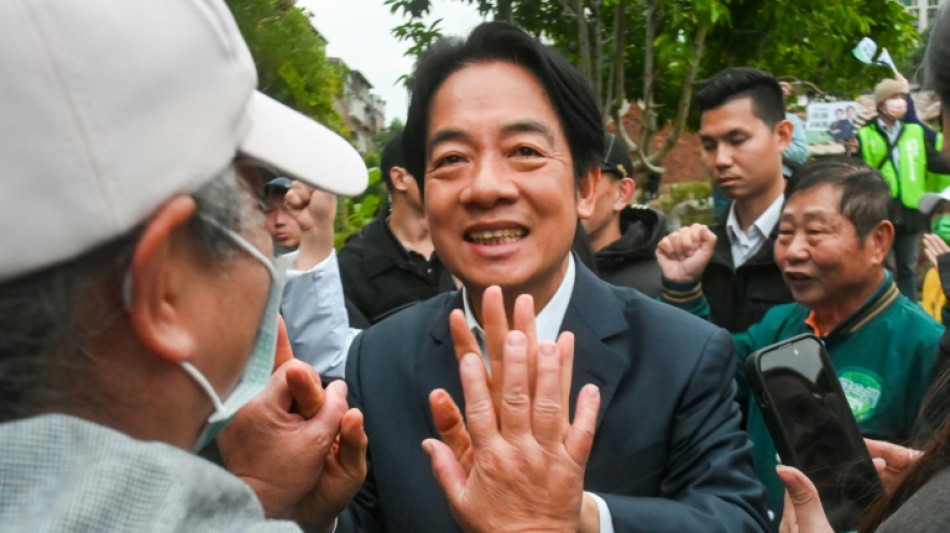
Taiwan 'will resist' China interference in election: presidential frontrunner / Photo: Sam Yeh - AFP

 زفيريف يسعى لحل خلافه مع بيكر بعيداً عن الأضواء
 Survey Reveals 15% of Japanese Firms Face Customer Harassment

 Lorne Michaels Turns 82 as 'SNL' Celebrates 52 Years of Cultural Impact

 Oobah Butler’s HBO Series Exposes Grifters in Wellness, Wine, and Tech

 Young South Africans Cut Lifestyle Spending to Build Wealth

 US School Closures Accelerate Amid Enrollment Decline and Funding Crisis
The Taiwanese people "will resist" China's attempts to influence the island's January 13 election, frontrunner presidential candidate Lai Ching-te told AFP on Wednesday as he hit the campaign trial 10 days before the pivotal poll.
Beijing claims the self-ruled island as part of its territory, and rejects the stance of Lai's Democratic Progressive Party which maintains that Taiwan is "already independent".
Dubbed a "troublemaker" and a "separatist" by Beijing, Lai is up against two other candidates who have pledged closer relations with China if elected.
Speaking to AFP after a morning of greeting supporters at a busy Taipei intersection, he said that "the democratic camp is very concerned" about alleged election interference from China.
"This is Asia's first election this year, and China's interference in Taiwan's election is very, very serious," said the 64-year-old, who is also Taiwan's vice president.
But Lai has "confidence in the people because Taiwan has gone from the dark age of authoritarianism to where it is today."
"Everyone cherishes Taiwan's democracy. I have confidence that the people will resist China's use of various forces to try to influence this election," he said.
Taiwan's January 13 election is being closely watched by policymakers from Beijing to Washington, as its outcome could reshape future relations with an increasingly bellicose China.
The other two candidates are Hou Yu-ih of Beijing-friendly Kuomintang (KMT), Taiwan's oldest political party, and Ko Wen-je of the emerging Taiwan People's Party -- which has performed above expectations.
Hou, a popular mayor of New Taipei City, had slammed Lai in a presidential debate last week on his pro-independence remarks, blaming him for the "great danger across the Taiwan Strait".
Taiwanese authorities have repeatedly sounded the alarm on Beijing's interference in the lead-up to the poll -- including launching probes on alleged paid trips to China for Taiwan's voters.
Chinese balloons have also for the first time been detected around Taiwan since December, with four moving directly above the island -- a form of "psychological warfare" to influence for more "pro-Beijing votes", one military expert said.
The new incidents add to already ramped up political and military pressures that Beijing has inflicted on Taiwan in recent years, including the daily appearance of fighter jets and naval vessels around the island.
But Lai struck a defiant tone on Wednesday before visiting a temple in the northern city of Keelung where he urged voters not to "support the candidate China picks".
"In the end, democracy will definitely win, and democracy will definitely triumph over authoritarianism," Lai said, before being ushered away by bodyguards.
"I also hope that the international community can continue to support Taiwan."
Y.AlMasri--SF-PST