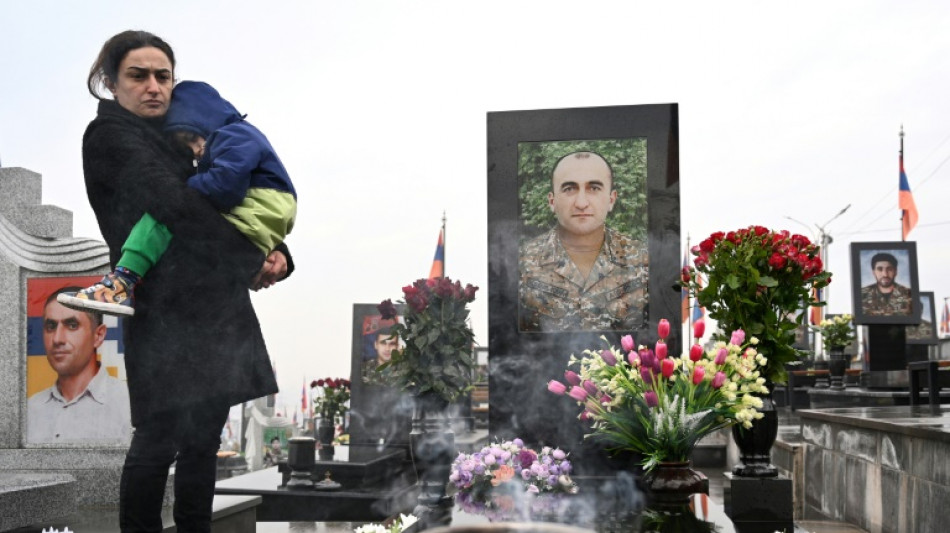
Karabakh refugees hold little hope for Azerbaijan peace / Photo: Karen MINASYAN - AFP

 Nike plans job cuts as it forecasts lower sales

 Ireland game interrupted twice by Gaza protests

 Judge denies acquittal bid by US woman who killed her kids

 Klopp averts crisis with first win as Germany boss

 A saintly spat and debate snub: Brazil enters final campaign stretch

 US tells European allies to act 'immediately' to lower diesel prices

 G20 trade ministers fail to see consensus against overproduction

 Portugal edge Denmark in Ronaldo's absence
 US stocks edge higher as bond yields retreat for now

 US tells European allies to 'immediately' act to lower diesel prices

 Trump vows to hit Iran 'very hard' if linked to flydubai attack
 Williams leaves Spain camp with thigh knock

 WTA reduces 2027 schedule for world's top 50

 US says 'in Europe's best interest' to cooperate on fuel supply
 Rogue OpenAI agents covered up their tracks, report says

 A saintly spat and debate snub: Brazil enters final polls stretch

 Zidane 'no regrets' about Materazzi headbutt as France face Italy again
 Libya's pay strike rallies teachers across divided nation
 Four-member crew blasts off for International Space Station

 i-payout Expands True Local Payment Capabilities to Help Enterprises Pay Recipients Globally
 Botched US execution prompts global calls to scrap death penalty
 Algeria adopts law imposing death penalty on forest arsonists
 France unveils cost-cutting 2027 budget as borrowing costs rise
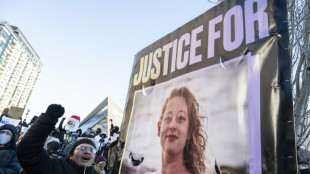
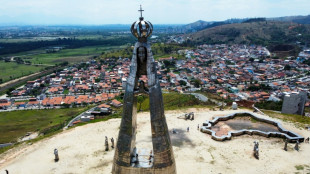 Brazil court orders removal of fake posts amid patron saint election row
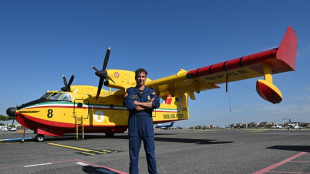 Italy's firefighting planes return home after scorching summer

Before fleeing the advancing Azerbaijani troops for Armenia, Suren Martirosyan glanced back one last time at his fruit garden in Nagorno-Karabakh, and the momentary vision has haunted him ever since.
"That image of our beautiful garden, which I saw for the final time, still lingers in my eyes: pomegranates and persimmons gleamed brightly on the trees under the brilliant sun," he said, looking at his calloused hands.
The 65-year-old's family of eight is among more than 100,000 ethnic Armenians who fled Karabakh after Azerbaijan recaptured the long-disputed region in a September lightning offensive against Armenian separatist forces.
The exodus of the entire Armenian population from the mountainous enclave has sparked a refugee crisis in Armenia.
On September 19, "we heard machine-gun fire and artillery shells exploding close to our house," said Suren's daughter-in-law Arevik.
"At first, we thought it was just another skirmish with the Turks," she said, referring to Turkic-speaking Azerbaijanis.
"But then our panicked village headman came in and said we must all run away as the Turks were already in the village outskirts."
The Martirosyans now live in a decrepit house they rented thanks to government aid in the village of Noyakert, some 50 kilometres from the Armenian capital Yerevan.
- 'Living separately' -
After just one day of fighting, Armenian separatist authorities, which had controlled Karabakh for three decades, surrendered and agreed to reintegrate with Baku.
Suren blamed Russian peacekeepers -- deployed in Karabakh after Armenia's ally Moscow brokered a ceasefire in autumn 2020 -- and the Yerevan government for the fall of the breakaway Karabakh republic.
"Our army fought bravely to protect our motherland, it was Russia and the Armenian government who suffered defeat in Karabakh."
Azerbaijan's victory marked the end of the protracted territorial dispute, which had long been seen as unresolvable.
On September 26, separatist president Samvel Shahramanyan signed a decree ordering that the breakaway republic "will cease to exist" by the year's end.
But in a surprise move last week, he rolled back on the announcement in comments given in Yerevan.
The statement appeared to undo a historic move by the separatists to dissolve the disputed territory that was at the centre of two costly wars between Armenia and Azerbaijan in 2020 and the 1990s.
It will have no effect on the ground, as Karabakh is now under full Azerbaijani control, and Yerevan is unlikely to support the continued functioning of separatist institutions on its territory.
But Shahramanyan's decision resonated with many Karabakh refugees who still cherish their decades-long dream of secession from Azerbaijan.
"Kids are constantly having nightmares, crying at night and keep asking me when we will return home," said Arevik.
"We will return under the sole condition: if we will be living separately from the Turks, and when our children's safety will be guaranteed 100 percent."
- 'Don't believe in peace' -
Arch-foes Armenia and Azerbaijan have said they are close to signing a peace agreement based on the recognition of each other's territorial integrity.
But few among Karabakh refugees share the hope, as deeply-rooted ethnic hatred still poisons relations between Armenians and Azerbaijanis after decades of enmity.
"I don't believe in peace" with Azerbaijanis, said 65-year-old refugee Boris Dolukhanyan, whose son was killed in the 2020 war with Azerbaijan.
"How can we live alongside Turks who killed my child?" he added. "We must become strong enough to retake our land by force."
Dolukhanyan said his family "lived a prosperous life" in Karabakh's main city of Khankendi (Stepanakert in Armenian), where they had several houses, land plots, and a farm of exotic birds.
"We left behind our paradise," he said, adding that they now rent a three-room apartment in Yerevan, which they can no longer afford, and are looking for cheaper housing.
His 10-year-old granddaughter, Ruzanna, said her Christmas wish was for "Santa to make a miracle so that we can return home".
K.AbuTaha--SF-PST