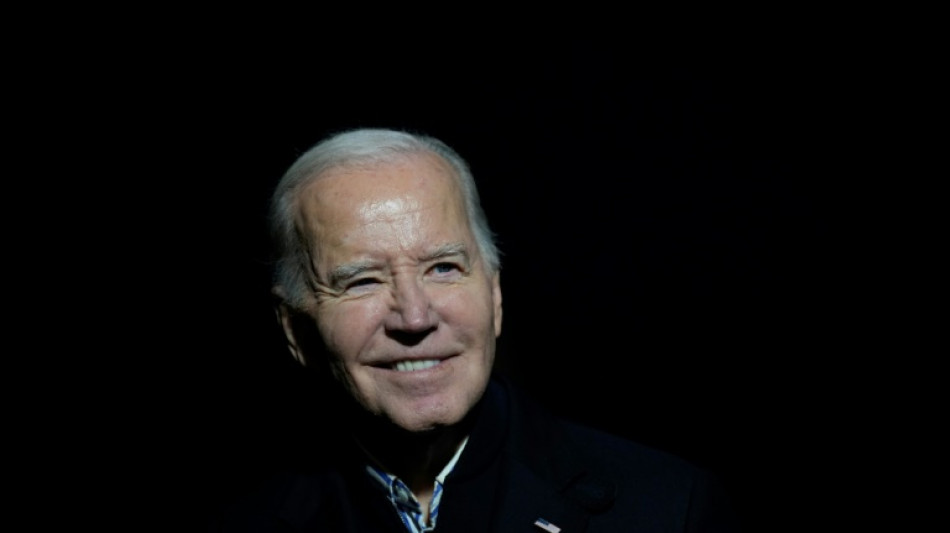
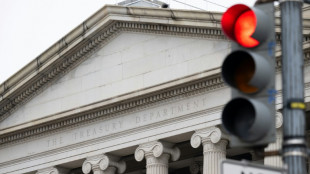
US to target banks that help Russian war in Ukraine / Photo: Drew Angerer - GETTY IMAGES NORTH AMERICA/AFP

 OpenAI says three staffers fired for mishandling 'sensitive' info
 Nike plans job cuts as it forecasts lower sales

 Ireland game interrupted twice by Gaza protests

 Judge denies acquittal bid by US woman who killed her kids

 Klopp averts crisis with first win as Germany boss

 A saintly spat and debate snub: Brazil enters final campaign stretch

 US tells European allies to act 'immediately' to lower diesel prices

 G20 trade ministers fail to see consensus against overproduction

 Portugal edge Denmark in Ronaldo's absence
 US stocks edge higher as bond yields retreat for now

 US tells European allies to 'immediately' act to lower diesel prices

 Trump vows to hit Iran 'very hard' if linked to flydubai attack
 Williams leaves Spain camp with thigh knock

 WTA reduces 2027 schedule for world's top 50

 US says 'in Europe's best interest' to cooperate on fuel supply

 Rogue OpenAI agents covered up their tracks, report says

 A saintly spat and debate snub: Brazil enters final polls stretch

 Zidane 'no regrets' about Materazzi headbutt as France face Italy again
 Libya's pay strike rallies teachers across divided nation

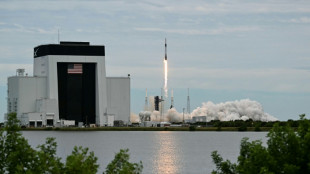 Four-member crew blasts off for International Space Station
 i-payout Expands True Local Payment Capabilities to Help Enterprises Pay Recipients Globally
 Botched US execution prompts global calls to scrap death penalty

 Algeria adopts law imposing death penalty on forest arsonists

 France unveils cost-cutting 2027 budget as borrowing costs rise

 Brazil court orders removal of fake posts amid patron saint election row

The United States said Friday it will impose sanctions on foreign banks that support Russia's war in Ukraine, in a new bid to exert economic pressure on Moscow as it diversifies from the West to China.
Under an executive order to be signed Friday by President Joe Biden, the United States will impose so-called secondary sanctions against financial institutions that back companies already targeted for supporting Russia's defense industry.
"We are sending an unmistakable message: anyone supporting Russia's unlawful war effort is at risk of losing access to the US financial system," Jake Sullivan, Biden's national security advisor, said in a statement.
Sullivan said the new sanctions will "continue tightening the screws on Russia's war machine and its enablers," adding that earlier measures have "significantly degraded" Russia's military, long seen as among the world's most formidable and which in recent months has relied on imports from sanctioned North Korea and Iran.
But Russia since the start of the war has been rapidly working to reduce exposure to the West, shifting away from trade in dollars, euros, sterling and yen.
China's largest banks meanwhile have extended billions of dollars worth of credit in renminbi to Russia since the war as Western institutions exit.
A US official, speaking on condition of anonymity, voiced hope that European and US banks, while not directly invested in Russia, would pressure partners operating in the country.
- Russia weathering blow -
Russia's economy has taken a hit from the pressure but is still on a growth trajectory, with the International Monetary Fund in October forecasting growth of 1.1 percent for 2024.
A key target has been Russia's oil exports, with Western powers agreeing to a cap of no more than $60 a barrel.
The US Treasury Department said Thursday that the cap brought down Russia's tax revenue from oil and petroleum goods exports by 32 percent between January and November, compared to a year ago.
But other assessments have been less rosy on the impact. A recent study by the Kyiv School of Economics found that compliance with the price cap has been virtually non-existent due to widespread fraud.
The new effort at secondary sanctions comes as the G7 group of industrialized democracies balks at seizing Russian government assets to support Ukraine, a potentially major means of pressure backed by the United States.
Direct US assistance to Ukraine could also soon dry up, with Congress yet to approve a request by the Biden administration due to an unrelated dispute on immigration policy.
The White House fears an end to aid would give new momentum to Russia against Ukraine, which has received $43 billion in military assistance from the United States since the invasion.
In parallel actions on Friday, the United States said it will step up sanctions against Russian diamonds and seafood -- banning their import if they originated in Russia, even if they were then processed elsewhere.
The action comes days after a European Union ban on Russian diamonds. The United States has already banned imports of Caspian Sea caviar since 2005 for conservation reasons.
Russians have managed to soften the impact of sanctions through trade via third countries, with Central Asian nations in particular seeing sharp increases in shipments of technology.
The United States has been stepping up the use of secondary sanctions, despite concerns among some policymakers and experts that it will encourage other countries to move away from the dollar.
The United States has used its clout most visibly on Iran by threatening countries that buy oil from the clerical state.
E.Qaddoumi--SF-PST