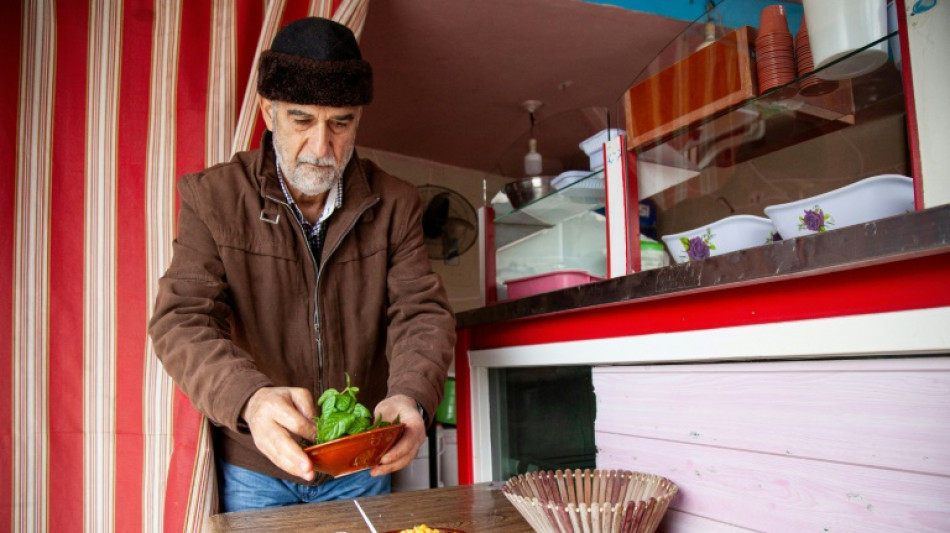
South Lebanon small businesses defy Israeli bombs to stay open / Photo: Hasan FNEICH - AFP

 OpenAI says three staffers fired for mishandling 'sensitive' info

 Nike plans job cuts as it forecasts lower sales

 Ireland game interrupted twice by Gaza protests

 Judge denies acquittal bid by US woman who killed her kids

 Klopp averts crisis with first win as Germany boss

 A saintly spat and debate snub: Brazil enters final campaign stretch

 US tells European allies to act 'immediately' to lower diesel prices

 G20 trade ministers fail to see consensus against overproduction

 Portugal edge Denmark in Ronaldo's absence

 US stocks edge higher as bond yields retreat for now

 US tells European allies to 'immediately' act to lower diesel prices

 Trump vows to hit Iran 'very hard' if linked to flydubai attack

 Williams leaves Spain camp with thigh knock
 WTA reduces 2027 schedule for world's top 50

 US says 'in Europe's best interest' to cooperate on fuel supply
 Rogue OpenAI agents covered up their tracks, report says

 A saintly spat and debate snub: Brazil enters final polls stretch

 Zidane 'no regrets' about Materazzi headbutt as France face Italy again

 Libya's pay strike rallies teachers across divided nation

 Four-member crew blasts off for International Space Station

 i-payout Expands True Local Payment Capabilities to Help Enterprises Pay Recipients Globally

 Botched US execution prompts global calls to scrap death penalty
 Algeria adopts law imposing death penalty on forest arsonists
 France unveils cost-cutting 2027 budget as borrowing costs rise
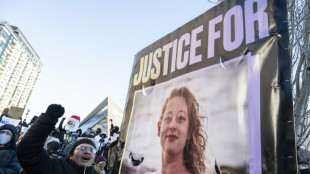
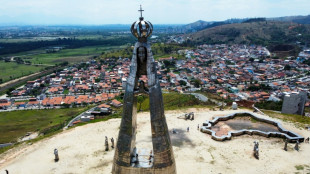 Brazil court orders removal of fake posts amid patron saint election row
In a falafel joint in south Lebanon, Hussein Murtada prepared flat-bread snacks for his few remaining customers as an Israeli surveillance drone buzzed above the border village of Kfar Kila.
"We work under the bombs. A few days ago, a shell fell 200 metres (650 feet) from here. Shrapnel hit the shopfront and the wall," said Murtada, 60, pointing to the damage.
"I hid behind the fridge in the restaurant" during the bombardment, he told AFP.
Since the Israel-Hamas war began on October 7 with the Palestinian Islamist group's unprecedented attacks on Israel, Lebanon's Hezbollah group has been carrying out near-daily cross-border assaults in support of its ally Hamas.
Israel has been responding with its own bombardments in mostly tit-for-tat exchanges that have been largely contained to areas near the frontier, although fears remain of a broader conflagration.
More than 140 people have been killed on the Lebanese side, according to an AFP tally, most of them Hezbollah fighters but also including more than a dozen civilians, three of them journalists.
On the Israeli side, four civilians and seven soldiers have been killed, authorities have said.
In Kfar Kila, nestled among olive trees, some houses had been completely destroyed, and the sound of nearby bombardment rumbled through the air.
Just one grocery store was still open in Murtada's area, and the streets were largely deserted after many villagers fled.
- 'Disrupted' -
Frying falafel in hot cooking oil, Murtada said he was determined to stay open, even if just for the few passing cars and ambulances.
"I serve food to anyone who is hungry, even those who can't pay," he said, cutting tomatoes and pickles to go with an order.
Lebanon, gripped by a crushing four-year economic crisis, can ill-afford another full-blown conflict between Israel and Hezbollah. The two fought a month-long war in 2006.
A UN Development Programme report this week said the hostilities had already led to "considerable physical losses, mainly of buildings, houses, commercial entities, infrastructure, services, and utilities" in south Lebanon border villages.
"Economic activity and local businesses are either disrupted or have had to shut down or relocate."
The World Bank warned on Thursday that "the current conflict and its spillovers into Lebanon are expected to quickly reverse the tepid growth projected for 2023 as the economy returns to a recession".
At his petrol station in the village of Taybeh, Ali Mansur was waiting for customers who dared to brave the bombardments.
He said his village, just across the border from the Israeli kibbutz community of Misgav Am, is under constant Israeli drone surveillance.
Hezbollah, an Iran-backed Shiite Muslim group, does not have a visible military presence in villages along the frontier.
On December 11, an elderly local official was killed in Taybeh when an unexploded shell hit him on his balcony.
"As long as the strikes are far away, we work to earn a living," said Mansur, aged around 50.
- Displacement -
In nearby Adaysseh, Ahmad Tarrab said he had been serving burgers at a small restaurant until last week.
"We had stayed open since the start" of the war in October, said Tarrab, 23.
But an employee was wounded when a "shell fell in front of the restaurant, and two others behind it", he said, pointing to shrapnel in front of the establishment, whose sign was also damaged.
Tarrab later told AFP he decided to flee.
According to the International Organization for Migration, the violence has displaced more than 72,000 people in Lebanon, mostly in the country's south.
While the majority are staying with host families, more than 1,000 are staying in shelters, according to the UN agency.
In the main square in Adaysseh, Abbas Baalbaki, who owns a small print shop, was following the news on his mobile phone.
Taking a drag on his cigarette, he said he decided to shut his shop after his customers evaporated.
He remained defiant, however, adding, "even if the war takes 10 months or a year, I'm not moving".
N.AbuHussein--SF-PST