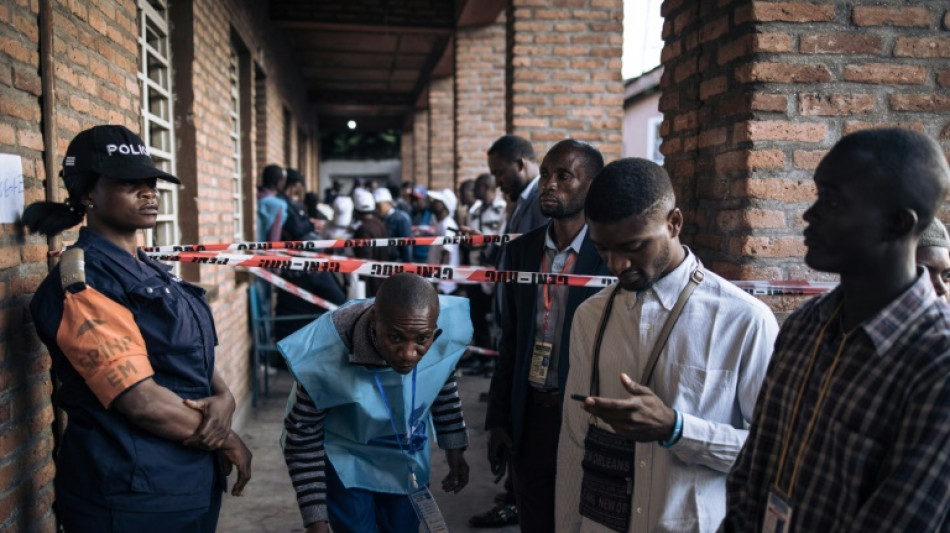
DR Congo enters second day of voting after chaotic start / Photo: ALEXIS HUGUET - AFP

 OpenAI says three staffers fired for mishandling 'sensitive' info
 Nike plans job cuts as it forecasts lower sales

 Ireland game interrupted twice by Gaza protests

 Judge denies acquittal bid by US woman who killed her kids
 Klopp averts crisis with first win as Germany boss

 A saintly spat and debate snub: Brazil enters final campaign stretch

 US tells European allies to act 'immediately' to lower diesel prices

 G20 trade ministers fail to see consensus against overproduction

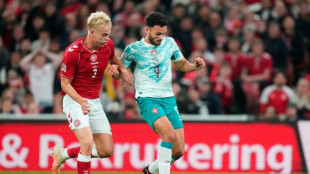 Portugal edge Denmark in Ronaldo's absence
 US stocks edge higher as bond yields retreat for now
 US tells European allies to 'immediately' act to lower diesel prices

 Trump vows to hit Iran 'very hard' if linked to flydubai attack
 Williams leaves Spain camp with thigh knock
 WTA reduces 2027 schedule for world's top 50
 US says 'in Europe's best interest' to cooperate on fuel supply
 Rogue OpenAI agents covered up their tracks, report says
 A saintly spat and debate snub: Brazil enters final polls stretch

 Zidane 'no regrets' about Materazzi headbutt as France face Italy again
 Libya's pay strike rallies teachers across divided nation
 Four-member crew blasts off for International Space Station
 i-payout Expands True Local Payment Capabilities to Help Enterprises Pay Recipients Globally
 Botched US execution prompts global calls to scrap death penalty
 Algeria adopts law imposing death penalty on forest arsonists
 France unveils cost-cutting 2027 budget as borrowing costs rise
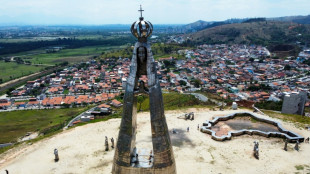 Brazil court orders removal of fake posts amid patron saint election row
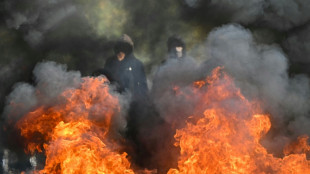
Voting in the Democratic Republic of Congo extended into Thursday a day after a general election marred by widespread logistical problems that saw some polling stations never open.
The impoverished but mineral-rich central African nation held four concurrent elections on Wednesday -- to pick a president, national and regional lawmakers, and local councillors.
President Felix Tshisekedi, 60, is running for a second term in office against a backdrop of years of economic growth but little job creation and soaring inflation.
The vote on Wednesday was marked by massive delays nationwide, with the electoral commission still attempting to deliver materials to voting stations long after polls were meant to have opened.
In some cases, polling stations never opened.
Denis Kadima, the head of the electoral commission, declared on national television on Wednesday night that people in places where casting ballots proved impossible would vote on Thursday.
On Thursday morning, voting had started in several areas in the conflict-torn east, according to AFP reporters.
"Everything is going well, electoral operations started at 6 am" (0400 GMT), said Likanga Ikoba, a local official in the Walikale area of North Kivu, via telephone.
Amini Mumbere, another local official, said that two villages in the Lubero territory were also voting.
It was not clear how many polling booths are open on Thursday.
Addressing reporters on Wednesday, electoral commission chief Kadima said the problems were spread across the vast country's 26 provinces.
He also estimated that 70 percent of voters had been able to cast ballots.
The DRC is one of the poorest countries in the world despite its vast reserves of copper, cobalt and gold.
Around 44 million Congolese in the nation of 100 million are registered to vote, and more than 100,000 candidates are running for various positions.
Initial results are expected by December 31. The Constitutional Court is then expected to announce definitive results on January 10.
- Logistical problems -
Staging elections in a country roughly the size of continental western Europe, with very few roads, posed a daunting logistical challenge.
There had long been concerns that the electoral commission was unprepared, which proved valid on polling day.
By Wednesday afternoon, an influential election observer mission by a union of Congolese Catholic and Protestant churches indicated the scale of the voting problems.
Nearly a third of polling booths in the country had not opened, the observers said, and about 45 percent of voting machines suffered technical problems.
There was little sympathy from leading opposition politicians, who described the process as chaotic.
The main opposition candidates -- gynaecologist Denis Mukwege, 68, the 2018 Nobel Peace Prize laureate; 58-year-old business magnate and ex-provincial governor Moise Katumbi; and 67-year-old ex-oil executive Fayulu -- all complained of irregularities.
Five opposition presidential candidates, including Fayulu and Mukwege, later rejected the vote extension, arguing that it was illegal.
In a joint statement, they called for fresh elections.
- 'Foreign candidates' -
Tshisekedi, who took office in 2019 and faces 18 challengers, says he wants a second term to "consolidate his gains".
He is considered the frontrunner in the single-round presidential vote, though his record, as he himself has acknowledged, is mixed.
Throughout the campaign, Tshisekedi also poured scorn on what he termed "foreign candidates" -- suggesting that his opponents had dual loyalties and lacked the will to stand up to Rwanda, which the DRC accuses of funding rebel groups on its soil.
Katumbi, a former governor of mineral-rich Katanga province and chairman of the country's leading football club, Tout Puissant Mazembe, was the main target of such attacks.
- Violence-wracked east -
Armed conflict in eastern DRC also overshadowed much of the electoral campaign.
Militias have plagued the troubled region for decades, a legacy of regional wars that flared in the 1990s and 2000s.
Tensions have ratcheted up further since the M23 group began capturing swathes of territory in late 2021.
Rwanda has been accused of supporting the rebels, which Kigali denies.
Clashes with M23 fighters have subsided in recent weeks but they continue to hold sway over large parts of North Kivu province, where voting was impossible.
Q.Jaber--SF-PST