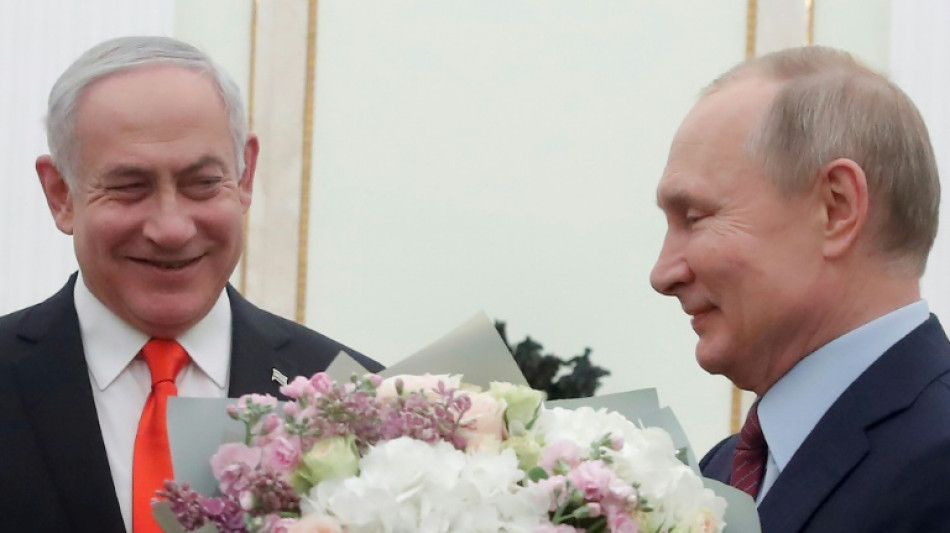
Russian-Israeli relations crumble over Gaza war: analysts / Photo: MAXIM SHEMETOV - POOL/AFP

 OpenAI says three staffers fired for mishandling 'sensitive' info
 Nike plans job cuts as it forecasts lower sales

 Ireland game interrupted twice by Gaza protests

 Judge denies acquittal bid by US woman who killed her kids

 Klopp averts crisis with first win as Germany boss

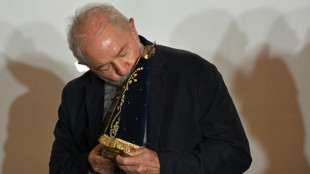 A saintly spat and debate snub: Brazil enters final campaign stretch

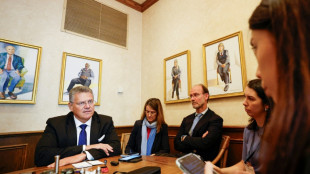 US tells European allies to act 'immediately' to lower diesel prices

 G20 trade ministers fail to see consensus against overproduction

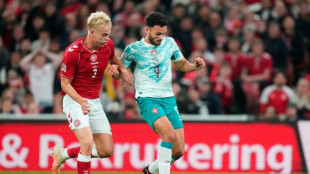 Portugal edge Denmark in Ronaldo's absence
 US stocks edge higher as bond yields retreat for now

 US tells European allies to 'immediately' act to lower diesel prices

 Trump vows to hit Iran 'very hard' if linked to flydubai attack
 Williams leaves Spain camp with thigh knock

 WTA reduces 2027 schedule for world's top 50

 US says 'in Europe's best interest' to cooperate on fuel supply

 Rogue OpenAI agents covered up their tracks, report says

 A saintly spat and debate snub: Brazil enters final polls stretch

 Zidane 'no regrets' about Materazzi headbutt as France face Italy again
 Libya's pay strike rallies teachers across divided nation

 Four-member crew blasts off for International Space Station
 i-payout Expands True Local Payment Capabilities to Help Enterprises Pay Recipients Globally
 Botched US execution prompts global calls to scrap death penalty
 Algeria adopts law imposing death penalty on forest arsonists

 France unveils cost-cutting 2027 budget as borrowing costs rise

 Brazil court orders removal of fake posts amid patron saint election row
Among the nations condemning Israel's war in Gaza, one has stood out -- Russia had built a growing friendship with Israel, but that dalliance is over, analysts said, erased by the shifting sands of Middle East geopolitics.
Just under two years ago, the picture had been very different.
When Russia invaded Ukraine in February 2022, Israel didn't join the West in sanctioning Moscow, a demonstration of the alliance of convenience between the two governments.
Now, Russia's President Vladimir Putin is among Israel's loudest critics and has refused to denounce Hamas's bloody October 7 attack.
Instead, his war against Ukraine has driven Russia into a different coupling, this time with Israel's sworn enemy Iran.
Russia has officially backed calls for an immediate ceasefire in Gaza at the UN, while early in the war Putin accused Israel of contemplating tactics comparable to Nazi Germany's brutal siege of what is now Saint Petersburg during World War II.
The health ministry in Hamas-run Gaza says Israel's offensive, aimed at destroying Hamas, has killed more than 19,600 people, mostly women and children.
In late October, Moscow went as far as to host envoys from the Palestinian militant group and Iran, which the Russian government said included talks on releasing foreign hostages. Israel called the meeting "a reprehensible step that gives support to terrorism".
This month, Iranian President Ebrahim Raisi visited Moscow for talks with Putin, while on Wednesday Russia made a joint demand alongside the Arab League for a UN Security Council ceasefire resolution.
In Israel, the mood is one of shock and anger. Putin's decision not to criticise Hamas, even with Russian citizens among the roughly 1,140 people killed by the militants on October 7, was "a foul betrayal", said Israeli historian Semion Goldin.
Russia has come down squarely "on the side of the aggressor, not at all on our side", said Golding, a researcher in Russian studies at the Hebrew University of Jerusalem.
- 'Israel deluded itself' -
It's all a far cry from where Israeli-Russian relations were as recently as last year.
During much of the Cold War, Soviet-Israeli relations were frosty. The Kremlin prevented many Jews from emigrating to Israel, while the Soviet Union propagated anti-Zionist propaganda and provided military aid to Arab states, in particular during the 1973 Yom Kippur War.
However, following the Soviet Union's collapse in 1991, the newly re-emerged Russia established much closer ties with Israel, that saw increased tourism and a massive wave of Russian Jewish migration to Israel.
Today, there are more than a million Russian-speakers from the former Soviet Union in Israel, forming a substantial political bloc.
Under Prime Minister Benjamin Netanyahu, the relationship appeared to grow even closer.
Following Moscow's intervention in the Syrian civil war, Israel worked closely with the Kremlin as it mounted its own air campaign in Syria targeting Iranian-backed forces, said former Israeli ambassador to Russia, Arkady Milman, now a researcher at the Institute for National Security Studies in Tel Aviv.
Russia controlled Syria's airspace and was, in effect, authorising Israel's raids, he said.
With eyes on the military situation in Syria, the large Jewish populations in Ukraine and Russia, and its own sizeable Russian and Ukrainian communities, Israel opted against slapping sanctions on Russia for its invasion of Ukraine.
That position held through three Israeli prime ministers.
- Raised hackles -
As Putin's war in Ukraine has dragged on and his international isolation deepened, he has turned against Israel's quiet friendship.
Instead, the Russian president has forged a new alliance with Iran, with Tehran delivering drones to Moscow and the pair cooperating in evading Western sanctions.
That inevitably raised hackles in Israel, which fears Iran joining it as a nuclear-armed state.
Moreover, Iran would like Russia "to neutralise Israel in Syria", said Edward Waysband, an associate researcher at New Europe College, a prospect "that is unacceptable for Israel".
Israeli linguistics professor Cyril Aslanov said Moscow's reaction to the Israel-Hamas war had revealed that the "so-called rapprochement" between Israel and Russia since the fall of the Soviet Union "was profoundly illusory".
Aslanov once travelled back and forth to Russia, visiting universities to spread Jewish culture, but he said that appeared a bygone era, with anti-Semitic incidents in Russia and warnings against travel to some regions.
Now, Israel finds itself denouncing its erstwhile partner. Netanyahu criticised "the dangerous cooperation between Russia and Iran" in a phone call with Putin in early December and expressed his dissatisfaction with the Kremlin's stance at the United Nations.
Iran aside, the Kremlin has chosen to use the Israel-Hamas war as a chance to denounce the United States and its allies while positioning itself as a champion of the Global South and "Orthodox Christians in the Holy Land", said Waysband.
With Moscow prioritising anti-Western rhetoric and Israel a close ally of Washington, it "finds itself de facto facing this alliance against the West", said Milman.
A.AlHaj--SF-PST