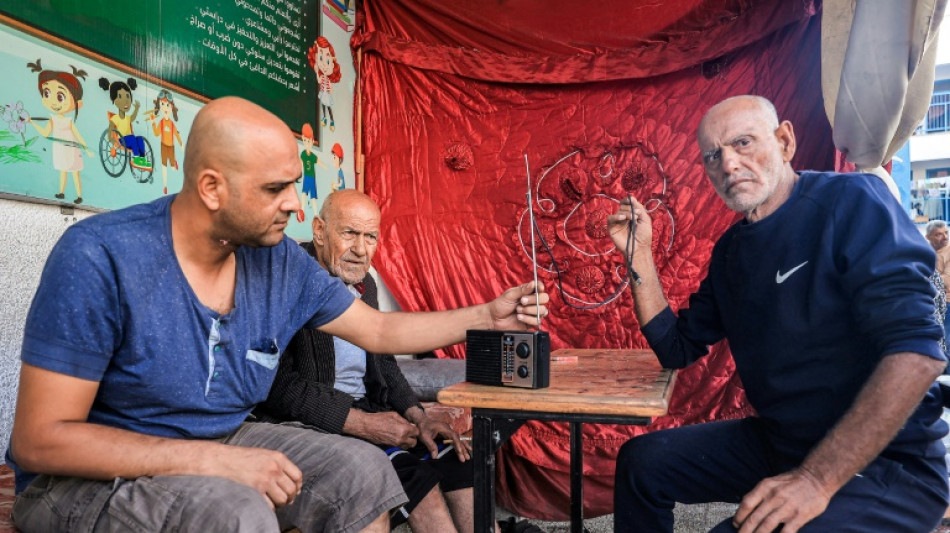
Radio sets make a comeback in war-torn Gaza / Photo: SAID KHATIB - AFP

 Asian stocks drop as oil spike fans rate hike bets, eyes on US jobs

 Viral anti-vax posts weaponise Philippine inoculation fears
 Saudi coalition accuses Houthis of drone attack on Medina
 Effective Altruism: the philosophy behind Silicon Valley's AI fears

 Chinese judoka accused of biting as home hope wins Asian Games gold

 Four-member crew docks at International Space Station

 Portugal win without Ronaldo as Klopp's Germany get first victory

 Wemby: 'Very sad' to see players endorse betting firms

 Manchester City Women scrape draw with Real Madrid

 India, Australia and Pakistan in same World Cup group
 Daryz's hopes of repeat Arc win boosted by draw
 Steelers ship disgruntled defender Porter to Cowboys

 Klopp gets first win as Germany boss

 Bolivia's attorney general arrested on drugs, money laundering charges
 Raiders host Chiefs in battle of unbeaten division rivals
 Lowest Fee Bitcoin ATMs Announces Launch of More Than 400 ATMs Nationwide

 G20 against 'weaponization' of food trade: French minister

 Female US inmate in critical condition after botched execution

 Spotlight on UK-UAE ties amid Manchester City scandal
 Ethiopia and Eritrea break diplomatic ties over conflict

 Downing Street says Manchester City not 'above the rules'
 Hadjar wants to 'fight for the title' from next season

 Bolivia's attorney general arrested for alleged drug trafficking, money laundering
 German sugar tax sparks new government row
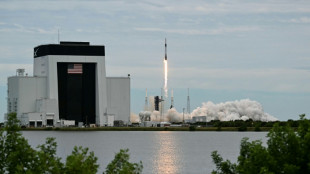
 Musk returns to US government for Pentagon war study

Before war broke out in Gaza, Mahmud al-Daoudi could never have imagined the radio sets gathering dust in his shop would be in such high demand, offering his customers a precious link with the outside world.
Power cuts have long been a part of everyday life, but the besieged territory's 2.4 million people are now enduring long blackouts after Israel cut off electricity and fuel supplies.
Its relentless assault has killed more than 19,450 Gazans, mostly women and children, according to the Hamas-run territory's health ministry.
Israel began its devastating air and ground offensive following the October 7 Hamas attacks, which killed around 1,140 people in southern Israel, according to an AFP tally based on Israeli figures.
It is now impossible to plug in computers or television sets, recharge phones or access the internet without generators or solar panels, a luxury few Gazans can afford.
But to keep up with the news, there's always the battery-powered radio.
"We had a full stock but we've been completely out of them since the first week" of the war, Daoudi said.
With the phone and internet cuts, "radio is the only way to find out what's going on," he said.
The long battery life is another plus, he said from his store in Rafah, at the southern end of the territory.
Before the war, a radio cost around 25 shekels ($7) -- now, they go for around 60 shekels ($16).
"We've even resold the broken radios people returned to us," the 33-year-old said.
When the radio sets disappeared from the shelves, customers asked for old telephones with built-in radios and torches, a welcome help when night falls.
"Now we're running out of phones," Daoudi told AFP.
- 'Moving backwards' -
It's impossible to order new stock, with only limited humanitarian aid trickling into the territory.
"People want to follow the news, hear where the shelling is taking place and find out about the fate of their families," said Hussein Abu Hashem, who has run out of radios at his shop too.
According to the UN, 1.9 million Palestinians have been displaced since the start of the war, around 85 percent of the population.
Many of them are now living in makeshift camps in the south of the territory where they lack basic supplies.
"I don't know what's happening around us, where the strikes are, which houses are targeted, who's alive, who the martyrs are," Umm Ibrahim told AFP in the southern city of Khan Yunis.
"We want to receive news from anywhere in Gaza," she said.
"When my battery runs out, I walk around the camp and listen out for other people's radios."
Stations such as BBC Arabic and Al Jazeera have launched special channels to help keep displaced people up to date with the news.
Some Gazans, like 75-year-old Hebrew-speaker Mohammed Hassouna, manage to pick up the news from Israeli radio stations.
He said it allows him to keep up with the latest "from the Israeli side".
"I keep my children and neighbours informed," he said.
Outside his tent, Salah Zorob, 37, spends his time flicking through radio stations on his mobile phone.
"The world is moving forward with modern technology but here in Gaza we're moving backwards," he said.
"They're going to take us back to the Stone Age."
D.Khalil--SF-PST