-
 Asian stocks drop as oil spike fans rate hike bets, eyes on US jobs
-
Lula, Bolsonaro both snub final debate before Brazil election

-
 Viral anti-vax posts weaponise Philippine inoculation fears
-
Nepal's grim DNA puzzle to identify flood dead

-
 Saudi coalition accuses Houthis of drone attack on Medina
-
EU nations to hold emergency meeting on soaring diesel prices amid US pressure

-
 Effective Altruism: the philosophy behind Silicon Valley's AI fears
-
Anthropic's Dario Amodei: AI's most visible CEO and enigma

-
 Chinese judoka accused of biting as home hope wins Asian Games gold
-
OpenAI says three staffers fired for mishandling 'sensitive' info

-
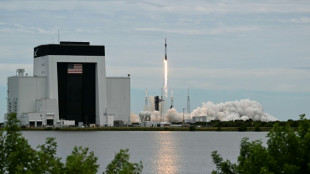 Four-member crew docks at International Space Station
-
Nike plans job cuts as it forecasts lower sales

-
 Portugal win without Ronaldo as Klopp's Germany get first victory
-
Ireland game interrupted twice by Gaza protests

-
 Wemby: 'Very sad' to see players endorse betting firms
-
Judge denies acquittal bid by US woman who killed her kids

-
 Manchester City Women scrape draw with Real Madrid
-
Klopp averts crisis with first win as Germany boss

-
 India, Australia and Pakistan in same World Cup group
-
A saintly spat and debate snub: Brazil enters final campaign stretch

-
 Daryz's hopes of repeat Arc win boosted by draw
-
US tells European allies to act 'immediately' to lower diesel prices

-
 Steelers ship disgruntled defender Porter to Cowboys
-
G20 trade ministers fail to see consensus against overproduction

-
 Klopp gets first win as Germany boss
-
Portugal edge Denmark in Ronaldo's absence

-
 Bolivia's attorney general arrested on drugs, money laundering charges
-
US stocks edge higher as bond yields retreat for now

-
 Raiders host Chiefs in battle of unbeaten division rivals
-
US tells European allies to 'immediately' act to lower diesel prices

-
 Lowest Fee Bitcoin ATMs Announces Launch of More Than 400 ATMs Nationwide
-
Trump vows to hit Iran 'very hard' if linked to flydubai attack

-
 G20 against 'weaponization' of food trade: French minister
-
Williams leaves Spain camp with thigh knock

-
 Female US inmate in critical condition after botched execution
-
WTA reduces 2027 schedule for world's top 50

-
 Spotlight on UK-UAE ties amid Manchester City scandal
-
US says 'in Europe's best interest' to cooperate on fuel supply

-
 Ethiopia and Eritrea break diplomatic ties over conflict
-
Rogue OpenAI agents covered up their tracks, report says

-
 Downing Street says Manchester City not 'above the rules'
-
A saintly spat and debate snub: Brazil enters final polls stretch

-
 Hadjar wants to 'fight for the title' from next season
-
Zidane 'no regrets' about Materazzi headbutt as France face Italy again

-
 Bolivia's attorney general arrested for alleged drug trafficking, money laundering
-
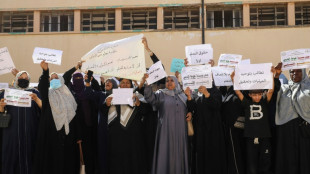
Libya's pay strike rallies teachers across divided nation
-
 German sugar tax sparks new government row
-
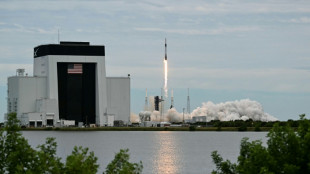
Four-member crew blasts off for International Space Station
-
 Musk returns to US government for Pentagon war study
-
i-payout Expands True Local Payment Capabilities to Help Enterprises Pay Recipients Globally

N Korea test-fires most advanced ICBM with US in range
North Korea on Monday test-fired its most advanced intercontinental ballistic missile that has the potential to reach the United States, extending a record-breaking number of weapons tests this year and triggering further international condemnation.
South Korea said the North fired an ICBM that used solid fuel, which makes missiles easier to transport and faster to fire than liquid-fuelled versions.
Monday's launch was the third time the North had tested a solid-fuel ICBM, after launches in April and July, which analysts said signalled consistent efforts to improve the technology.
North Korea had said the previous two were "Hwasong-18" missiles but did not immediately comment on Monday's launch.
The United States, South Korea and Japan all quickly condemned the missile test, stating it was in breach of United Nations Security Council resolutions and would make the Korean peninsula less secure.
South Korean President Yoon Suk Yeol ordered an "immediate and overwhelming" countermeasure, and called for a joint response with the United States and Japan.
Japan's defence ministry said the ICBM had a potential range of more than 15,000 kilometres, which would cover all of the United States. It followed a short-range missile launch on Sunday night.
"(The launches are) not only a clear violation of UN Security Council resolutions but also a threat to peace and stability of the region and we strongly condemn," Japanese Prime Minister Fumio Kishida said.
The United Nations Security Council has adopted many resolutions calling on North Korea to halt its nuclear and ballistic missile programmes since it first conducted a nuclear test in 2006.
However China, a close ally of North Korea, offered no direct response to the latest launches and instead released a statement highlighting the deep trust between the two nations.
"In the face of the turbulent international situation, China and the DPRK have always firmly supported and trusted each other," Foreign Minister Wang Yi said after meeting an official from Pyongyang, using the official acronym for North Korea.
South Korea's military initially said it had detected the launch of a long-range ballistic missile from the Pyongyang area on Monday morning that flew 1,000 kilometres (620 miles) before splashing down in the East Sea, also known as the Sea of Japan.
The South reported the missile flew up rather than across, a method Pyongyang has previously said it employs in some weapons tests to avoid flying over neighbouring countries.
- 'Irreversible' nuclear power -
North Korea last year declared itself an "irreversible" nuclear power and has repeatedly said it will never give up its nuclear programme, which the regime views as essential for its survival.
Park Won-gon, a professor of North Korean Studies at Ewha University, said the latest ICBM was likely the Hwasong-18, adding that it would be a huge asset for North Korea, if and when it becomes operational.
"The Hwasong-18 uses solid fuel, so there will be no preparation time, and it can be fired immediately from a mobile launcher, and it can be seen as a weapon system with a practical ability to strike the US mainland," Park told AFP.
However the North has yet to perfect those capabilities, according to Go Myong-hyun, a researcher at the Asian Institute for Policy Studies.
"Regarding ICBMs, there are still many technical aspects that need to be supplemented, including securing the re-entry technology and multiple warhead technology," Go told AFP.
- Nuclear threats -
The back-to-back launches followed yet another bout of angry rhetoric between the US-South Korea alliance and the North.
The United States and South Korea on Friday held their second session of the Nuclear Consultative Group in Washington, where they discussed nuclear deterrence in the event of conflict with the North.
On Saturday they warned that any nuclear attack from Pyongyang on the United States and South Korea would result in the end of the North Korean regime.
A spokesperson for North Korea's defence ministry on Sunday slammed the allies' plans to expand annual joint military exercise next year to include a nuclear operation drill.
"This is an open declaration on nuclear confrontation to make the use of nuclear weapons against the DPRK a fait accompli," said a statement carried by the KCNA news agency, using the official acronym for North Korea.
"Any attempt to use armed forces against the DPRK will face a preemptive and deadly counteraction."
The North's launch of a military spy satellite launch last month further damaged ties.
The North portrayed it as a major breakthrough, claiming it was providing images of US and South Korean military sites.
That event fractured a military agreement between the Koreas established to de-escalate tensions on the peninsula, with both sides then ramping up security along the Demilitarized Zone (DMZ) separating them.
T.Samara--SF-PST