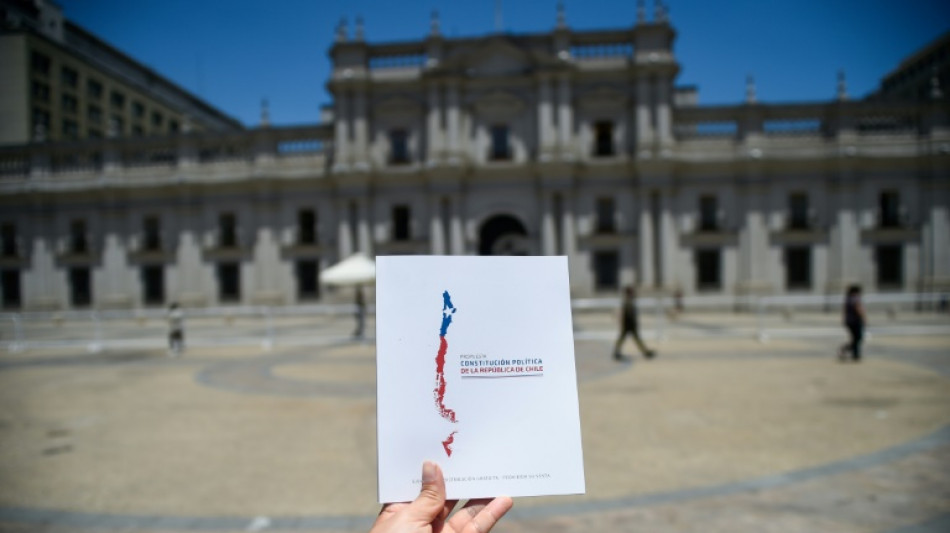
Chile votes in second shot at new constitution / Photo: Pablo Vera - AFP

 Asian stocks drop as oil spike fans rate hike bets, eyes on US jobs
 Viral anti-vax posts weaponise Philippine inoculation fears
 Saudi coalition accuses Houthis of drone attack on Medina

 Effective Altruism: the philosophy behind Silicon Valley's AI fears

 Chinese judoka accused of biting as home hope wins Asian Games gold

 Four-member crew docks at International Space Station

 Portugal win without Ronaldo as Klopp's Germany get first victory

 Wemby: 'Very sad' to see players endorse betting firms

 Manchester City Women scrape draw with Real Madrid

 India, Australia and Pakistan in same World Cup group

 Daryz's hopes of repeat Arc win boosted by draw

 Steelers ship disgruntled defender Porter to Cowboys

 Klopp gets first win as Germany boss

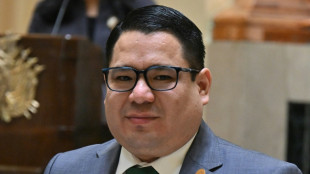 Bolivia's attorney general arrested on drugs, money laundering charges
 Raiders host Chiefs in battle of unbeaten division rivals

 Lowest Fee Bitcoin ATMs Announces Launch of More Than 400 ATMs Nationwide

 G20 against 'weaponization' of food trade: French minister

 Female US inmate in critical condition after botched execution

 Spotlight on UK-UAE ties amid Manchester City scandal

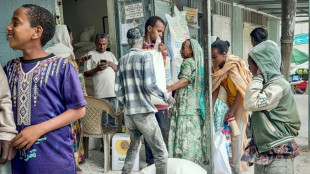 Ethiopia and Eritrea break diplomatic ties over conflict

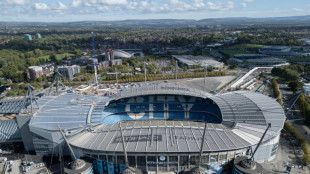 Downing Street says Manchester City not 'above the rules'

 Hadjar wants to 'fight for the title' from next season

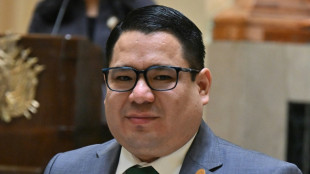 Bolivia's attorney general arrested for alleged drug trafficking, money laundering
 German sugar tax sparks new government row

 Musk returns to US government for Pentagon war study

Chileans head to the polls Sunday for a second referendum aimed at replacing the country's dictatorship-era constitution, with voters asked to approve or reject a more conservative draft.
The latest version was overseen by the far-right opposition Republican Party after voters roundly rejected a progressive draft in September 2022 that attempted to enshrine environmental protections and the right to elective abortion.
Voting starts at 8am local time (1100GMT) and closes at 6pm (2100 GMT), with results due a few hours later.
Leftist President Gabriel Boric said last month that it would be his last attempt to reform the constitution in order to focus on stability and long-term development.
Polls, banned in the two-week run-up to the referendum, have predicted another rejection.
The process to rewrite the 1980 constitution, adopted under the Augusto Pinochet military dictatorship, began as a bid to ease mass protests that broke out in October 2019 against social inequality.
In a 2020 referendum, 80 percent voted for replacing the constitution.
However, four years after the protests erupted, enthusiasm has been dampened by the pandemic, inflation and economic stagnation, a growing sense of insecurity, and voter fatigue, say analysts.
"There is an atmosphere of great disenchantment, of little interest, little motivation, of fatigue with the constitutional issue," said political scientist Claudia Heiss from the University of Chile.
"People want more basic things: They want security, public order, more police on the streets; to return to normality after a couple of years of a very abnormal life," she added.
- 'Even more to the right' -
The opposition has presented the vote as a referendum on Boric, who rode the wave of public discontent to be elected Chile's youngest-ever leader in late 2021 at 35.
Boric, whose approval has plummeted to around 30 percent, already suffered a setback in May when Chile's far-right Republican party came first in a nationwide vote to choose the members of the rewrite committee.
The 1980 constitution is widely blamed for allowing companies and the elite to enrich themselves at the expense of the poor, working classes.
The first rewrite included stronger protections for Indigenous rights, proposals to protect natural resources such as water, and required women to hold at least half of positions in public institutions.
Heiss said the latest rewrite "falls between the 1980 constitution and one even more to the right," especially on issues like abortion and public safety.
The new version aims at enshrining the right to life from conception, which experts believe could lead to a challenge of existing laws.
Abortion was banned in Chile until 2017 when it was allowed in cases of rape, when the mother's life is at risk, or the fetus is declared unviable.
The new draft also allows for the expulsion in "the shortest possible time" of undocumented immigrants, with the right blaming rising crime on an influx of Venezuelans fleeing economic crisis in their country.
The proposed constitution does for the first time recognize Indigenous peoples, which make up 12 percent of the population, but does not respond to their request for greater autonomy.
V.AbuAwwad--SF-PST