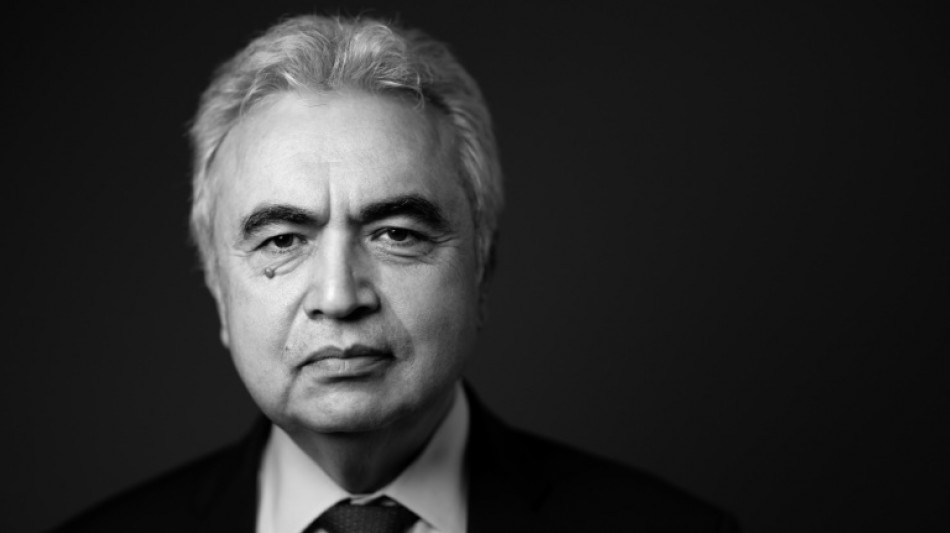
'It's finished!': IEA boss says COP28 bid farewell to fossil fuels / Photo: JOEL SAGET - AFP/File

 Asian stocks drop as oil spike fans rate hike bets, eyes on US jobs
 Viral anti-vax posts weaponise Philippine inoculation fears
 Saudi coalition accuses Houthis of drone attack on Medina
 Effective Altruism: the philosophy behind Silicon Valley's AI fears
 Chinese judoka accused of biting as home hope wins Asian Games gold

 Four-member crew docks at International Space Station

 Portugal win without Ronaldo as Klopp's Germany get first victory

 Wemby: 'Very sad' to see players endorse betting firms

 Manchester City Women scrape draw with Real Madrid

 India, Australia and Pakistan in same World Cup group
 Daryz's hopes of repeat Arc win boosted by draw
 Steelers ship disgruntled defender Porter to Cowboys
 Klopp gets first win as Germany boss
 Bolivia's attorney general arrested on drugs, money laundering charges
 Raiders host Chiefs in battle of unbeaten division rivals
 Lowest Fee Bitcoin ATMs Announces Launch of More Than 400 ATMs Nationwide

 G20 against 'weaponization' of food trade: French minister

 Female US inmate in critical condition after botched execution

 Spotlight on UK-UAE ties amid Manchester City scandal
 Ethiopia and Eritrea break diplomatic ties over conflict
 Downing Street says Manchester City not 'above the rules'
 Hadjar wants to 'fight for the title' from next season

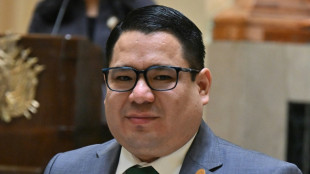 Bolivia's attorney general arrested for alleged drug trafficking, money laundering
 German sugar tax sparks new government row
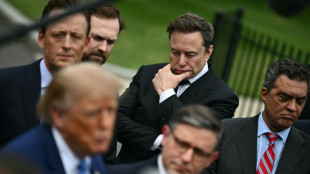 Musk returns to US government for Pentagon war study
While the UN's COP28 climate summit marked a pivot moment, when the world pledged to say "goodbye" to fossil fuels, International Energy Agency chief Fatih Birol told AFP on Friday, it needs to now urgently boost finance for the energy transition in developing countries.
Birol welcomed the landmark agreement struck at the negotiations in the oil-rich United Arab Emirates, under which nearly 200 countries agreed that the world should be "transitioning away from fossil fuels in energy systems".
But he said the next challenge would be to drive investment in emerging economies, particularly to reach for COP28's goal of tripling global renewables capacity and doubling the rate of energy efficiency improvements by 2030.
Q: How do you feel about this agreement?
It is a good outcome, a significant COP result.
The most important thing for me from this COP meeting is that the direction of travel for the global energy system now has been signed off by 200 countries around the world.
As of now everyone -- governments, energy industry, investors -- must make crystal clear what they are really doing in real life to accelerate the transition away from fossil fuels in the next six years.
So everybody now has the right to ask the CEO of an oil company or the head of a government or a minister of energy how the decision you are taking now on this or that issue will help the world move away from fossil fuels, as it has been agreed in COP28.
What is missing big time, in my view, is how to help developing countries to finance their green energy transitions.
Q: How can the deal be translated into real life?
It gave an unmistakable signal to investors that if you continue to invest in fossil fuels you may well have serious business risks -- in addition to the climate risk this investment is causing.
And also, in my view, it gives a signal to the investors for clean energy that they may be more profitable than many people now believe they are.
As such, it is very important.
When we talk about climate change, it is not only people in London or in Paris or Sydney who are raising the alarm.
More and more people all around the world, from the cities of New Delhi to Jakarta to Nairobi, are seeing the clear links between use of fossil fuels, and (the) increasing and serious climate impacts (they) are experiencing in their daily lives.
This is very important.
This is in my view, will be a major problem for the fossil fuel industry and for the investors.
Q: You mention the lack of funding for developing countries. Do you see any movement on this issue?
It is a big problem. (At the time of the Paris Agreement in 2015), clean energy investment in the world was $1 trillio, and today it is close to $2 trillion.
But the problem is this increase -- almost $1 trillion increase -- comes from the advanced economies and China.
Green energy investment in the rest of the world is completely flat. No growth.
Just for their own interest, (advanced economies) would in my view need to support clean energy finance in developing countries, because for example, in Europe, even if tomorrow's (greenhouse gas) emissions go to zero, the impact of climate change in Europe would not change at all if the emissions from the other countries go in line with the current trend.
Emissions don't have a passport.
In my view this is the missing link in the COP28 outcome.
Financing the clean energy transition will be a top priority for our agency (at the next COP negotiations, COP29, in Azerbaijan in late 2024).
Q: Is the world on the right track on renewables?
We are not on the right path.
Our next job will be a translation job -- translating those targets to the real concrete energy policies around the world.
Q: Observers have pointed to potential loopholes in the COP28 agreement, like the nod to gas as a 'transition fuel'. Is this a concern?
I wouldn't say that tomorrow the use of gas will be zero.
It needs to decline, and to decline rapidly. But different parts of the world will have different profiles. Europe is different from Africa.
Two hundred countries have signed a document to say goodbye to fossil fuels.
The direction of travel is extremely clear. There is no way to change it now. Too late, it's finished!
Q.Bulbul--SF-PST