
'Give birth to more soldiers': hardline Russia turns on abortions / Photo: Alexander NEMENOV - AFP

 Not-so-brave new world: virtual taekwondo makes Asian Games debut

 Arab Israeli candidate drops out of election race

 Israel courts Europe's far right, finding friends but also unease

 Lula, Bolsonaro both snub final debate before Brazil election
 Nepal's grim DNA puzzle to identify flood dead

 EU nations to hold emergency meeting on soaring diesel prices amid US pressure

 Anthropic's Dario Amodei: AI's most visible CEO and enigma

 OpenAI says three staffers fired for mishandling 'sensitive' info

 Nike plans job cuts as it forecasts lower sales

 Ireland game interrupted twice by Gaza protests

 Judge denies acquittal bid by US woman who killed her kids

 Klopp averts crisis with first win as Germany boss

 A saintly spat and debate snub: Brazil enters final campaign stretch

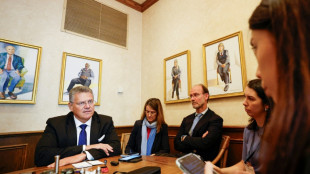 US tells European allies to act 'immediately' to lower diesel prices

 G20 trade ministers fail to see consensus against overproduction

 Portugal edge Denmark in Ronaldo's absence
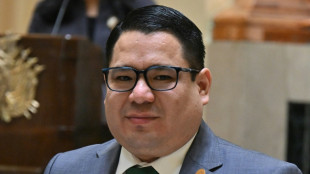
 US stocks edge higher as bond yields retreat for now

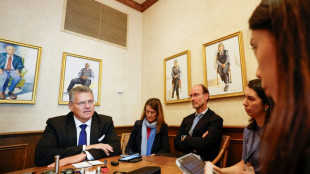 US tells European allies to 'immediately' act to lower diesel prices

 Trump vows to hit Iran 'very hard' if linked to flydubai attack

 Williams leaves Spain camp with thigh knock

 WTA reduces 2027 schedule for world's top 50

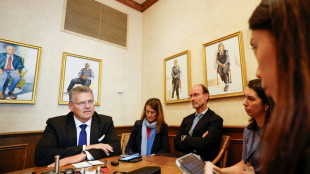 US says 'in Europe's best interest' to cooperate on fuel supply
 Rogue OpenAI agents covered up their tracks, report says

 A saintly spat and debate snub: Brazil enters final polls stretch

 Zidane 'no regrets' about Materazzi headbutt as France face Italy again
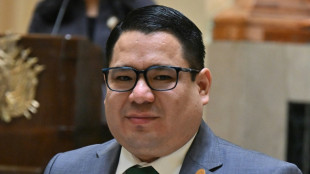
Russia's radical conservative turn since it invaded Ukraine is changing life inside the country, with even the long-held right for women to have abortions being questioned.
Russia has a decades-old tradition of legal abortions, with the issue less divisive as in many more religious Western countries.
But over the last few months a flurry of regions have rushed to restrict abortions in private clinics, yielding to demands from the Russian Orthodox church.
And health officials have doubled down on policies at state clinics to try to discourage women from terminating.
Authorities say they aim to improve Russia's dire demographics, despite evidence that restricting abortion does not increase birth rates and puts women at risk.
Activists see it as part of a wider crackdown.
"When a country is at war, it is usually accompanied by this kind of legislation," Leda Garina, a Russian feminist activist exiled in Georgia, told AFP.
The measures, she said, sent a clear message to Russian women: "Sit at home and give birth to more soldiers."
The timing has raised eyebrows -- Russia's abortion rate has already fallen "almost tenfold" since the 1990s, according to Russian demographer Viktoria Sakevich.
Russian President Vladimir Putin said this week that he was against banning abortion, but that terminations were against state interests.
The 71-year-old said he wanted women to "safeguard the life of the child" in order to "resolve the demographic problem".
Russia's abortion debate comes as Putin seeks re-election in March and as he projects an ever more conservative vision of what a Russian family should look like.
For years the president has offered financial incentives for Russians to have more children, with the population shrinking fast since the 1990s.
But since the Ukraine war, this has acquired new meaning.
- 'National survival' -
"They see this as a question of national survival," said political analyst Tatiana Stanovaya.
And Putin sees any resistance to social positions adopted by the Kremlin as a Western ploy, she added.
"Abortions are now part of it. They think that convincing a woman to have an abortion is way of worsening Russia's demographic problem -- that it is the West's plan," Stanovaya said.
Last month, Orthodox church leader Patriarch Kirill urged authorities to curb abortions, claiming the population could be increased with "the wave of a magic wand".
Since then more than a dozen regions moved to stop or limit abortions in private clinics.
Non-state clinics perform mostly pill-based procedures and ask fewer question, according to Sakevich, making them popular for urban women.
Government clinics for years have held "consultations" seeking to dissuade women from the procedure. But new health ministry recommendations for doctors encourage a more heavy-handed strategy.
"There is a position of trying to stop them, putting pressure on them, scaring them," Sakevich said.
Some regions, she said, even offer bonuses to doctors if they deter women.
If private clinics were banned from performing abortions, Sakevich predicted there could be a "grey zone" of clinics taking on paid abortions, hitting poor women the hardest.
Sakevich feared it could lead to a black market of abortion pills and even backstreet abortions.
- 'Expect more bans' -
Russia's pro-life movement was once marginal but the war has created a "political environment" to press more radical initiatives, Stanovaya said.
It has also divided the Putin camp.
Some male politicians rushed to back restrictions, while Valentina Matvienko -- Russia's highest ranking woman politician -- warned a ban could have "tragic consequences".
Political analyst Ekaterina Schulmann said the debate is intended to give Russians something to talk about in a pre-election period where "you can't talk about the war or the state of the economy."
She said authorities were tackling the demographic problem from the wrong angle.
"They should be fighting early male deaths -- the main cause of a shrinking population -- instead of trying to get women to have more children," she said.
But talking about men living longer is taboo at a time when Moscow has sent hundreds of thousands of young and middle-aged men to the battlefields in Ukraine.
Observers fear the latest restrictions could just be the beginning.
"We can expect more bans, more restrictions," said Sergei Zakharov, a senior Russian demographer at the University of Strasbourg in France.
Abortions could be removed from the state insurance system, as the church wants, he warned.
Zakharov said trying to increase birth rates "by all means, including restricting abortions, is something Franco's Spain or Mussolini's Italy" did, adding: "This has never worked anywhere."
D.AbuRida--SF-PST