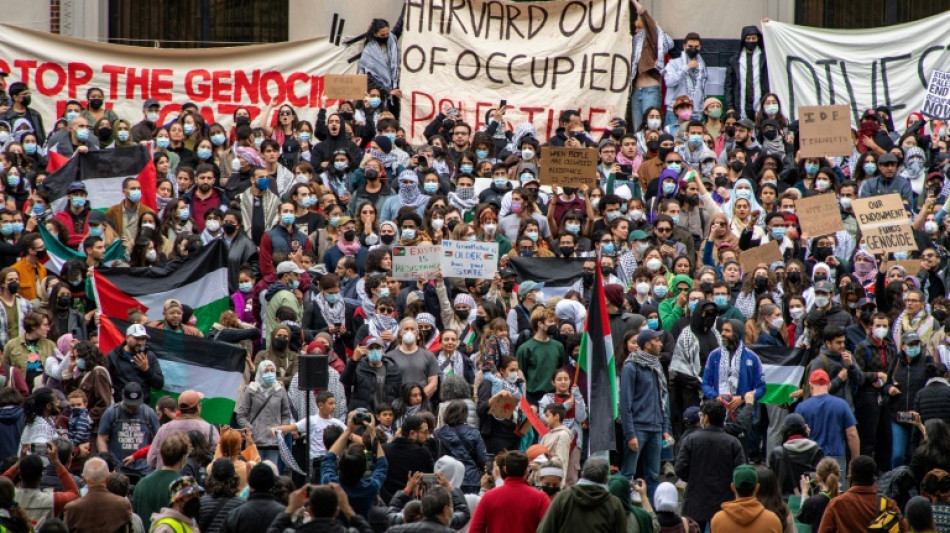
Elite US universities feel heat over alleged anti-Semitism / Photo: Joseph Prezioso - AFP/File

 Not-so-brave new world: virtual taekwondo makes Asian Games debut
 Arab Israeli candidate drops out of election race

 Israel courts Europe's far right, finding friends but also unease
 Lula, Bolsonaro both snub final debate before Brazil election

 Nepal's grim DNA puzzle to identify flood dead

 EU nations to hold emergency meeting on soaring diesel prices amid US pressure

 Anthropic's Dario Amodei: AI's most visible CEO and enigma

 OpenAI says three staffers fired for mishandling 'sensitive' info

 Nike plans job cuts as it forecasts lower sales

 Ireland game interrupted twice by Gaza protests

 Judge denies acquittal bid by US woman who killed her kids
 Klopp averts crisis with first win as Germany boss

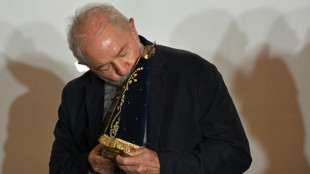 A saintly spat and debate snub: Brazil enters final campaign stretch

 US tells European allies to act 'immediately' to lower diesel prices

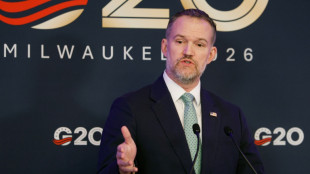 G20 trade ministers fail to see consensus against overproduction

 Portugal edge Denmark in Ronaldo's absence
 US stocks edge higher as bond yields retreat for now

 US tells European allies to 'immediately' act to lower diesel prices

 Trump vows to hit Iran 'very hard' if linked to flydubai attack
 Williams leaves Spain camp with thigh knock

 WTA reduces 2027 schedule for world's top 50

 US says 'in Europe's best interest' to cooperate on fuel supply

 Rogue OpenAI agents covered up their tracks, report says

 A saintly spat and debate snub: Brazil enters final polls stretch

 Zidane 'no regrets' about Materazzi headbutt as France face Italy again
Since the start of the conflict between Israel and Hamas, prestigious US universities have come under fire, accused of not doing enough to combat anti-Semitism.
The controversy has already cost a university president her job, and some observers warn that it could dent freedom of speech on campuses.
Here's a look at the heated debate:
Where do things stand?
Asked to resign by lawmakers and donors after a tense hearing before Congress last week, Harvard President Claudine Gay escaped sanction when the institution's governing body said it maintained confidence in her.
Massachusetts Institute of Technology (MIT) President Sally Kornbluth also received the backing of her institution.
But after intense lobbying, UPenn President Elizabeth Magill was forced to resign.
The three leaders were summoned by a congressional commission whose stated aim was to "hold them to account" after "countless" anti-Semitic demonstrations.
What happened in Congress?
The three top academics were peppered with questions about how their institutions intended to combat anti-Semitism.
The key exchanges came from questions from right-wing congresswoman Elise Stefanik.
Stefanik likened calls by some students for an "intifada" -- an Arabic term meaning "uprising" -- to an exhortation for "genocide against Jews."
When she asked if "calling for the genocide of the Jews violates Harvard's harassment policy, yes or no?", Harvard's Gay replied "it can, depending on the context", before adding "if it's directed against a person."
Anxious not to encroach on free speech rights, and to adhere to their schools' conduct policies, the three leaders stuck to legalistic answers.
"If the speech turns into conduct, it can be harassment," UPenn's Magill responded to the same question. "It is a context-dependent decision."
Kornbluth said she had "not heard calling for the genocide for Jews on our campus."
"I've heard chants which can be anti-Semitic depending on the context" and this "would be investigated as harassment if pervasive and severe," added Kornbluth, who pointed out she was Jewish during the hearing.
What do the experts say?
Their responses provoked an outcry, but some experts and academics say the trio had a point.
"Context does matter," wrote Eugene Volokh, a UCLA law professor, and Will Creeley, legal director of the Foundation for Individual Rights and Expression, in the Los Angeles Times.
"Calling for 'intifada' at a peaceful march is generally protected political expression," they wrote.
"But in a different context, an 'intifada' chant might be a true threat -- if, for instance, a speaker directed that statement at a specific Israeli American student while moving threateningly toward that student during a protest that has turned violent."
For Jenna Leventoff, of the American Civil Liberties Union, "the principles of academic freedom require higher education institutions to safeguard all protected speech -- even when that speech is contentious or offensive."
Harvard political science professor Ryan Enos believes "conservatives want to shut down free speech on campuses."
"They have already succeeded to some extent in silencing pro-Palestinian voices," he told AFP.
But Laurence Tribe, a professor emeritus at Harvard Law School, took a different line.
"Even the attempted 'clarifications' by these university presidents... showed how easily a search for political correctness can triumph over wisdom and courage," he said.
M.Qasim--SF-PST