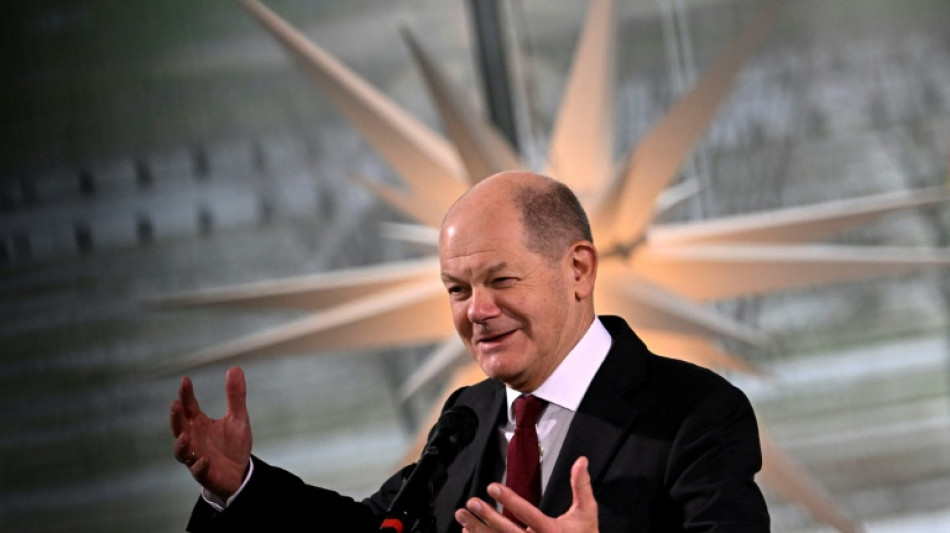
Debt limit returns in German coalition's deal ending budget crisis / Photo: Tobias SCHWARZ - AFP

 Not-so-brave new world: virtual taekwondo makes Asian Games debut

 Arab Israeli candidate drops out of election race

 Israel courts Europe's far right, finding friends but also unease
 Lula, Bolsonaro both snub final debate before Brazil election

 Nepal's grim DNA puzzle to identify flood dead

 EU nations to hold emergency meeting on soaring diesel prices amid US pressure

 Anthropic's Dario Amodei: AI's most visible CEO and enigma

 OpenAI says three staffers fired for mishandling 'sensitive' info
 Nike plans job cuts as it forecasts lower sales

 Ireland game interrupted twice by Gaza protests

 Judge denies acquittal bid by US woman who killed her kids

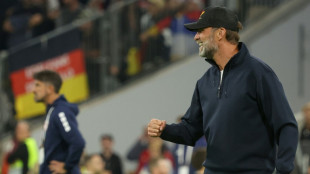
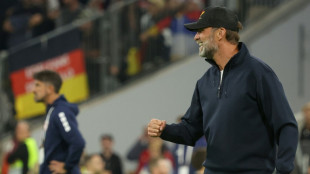 Klopp averts crisis with first win as Germany boss

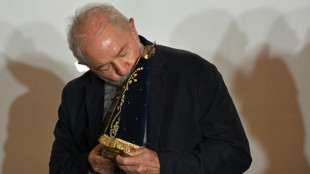 A saintly spat and debate snub: Brazil enters final campaign stretch

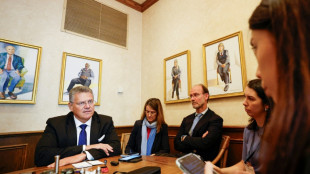 US tells European allies to act 'immediately' to lower diesel prices

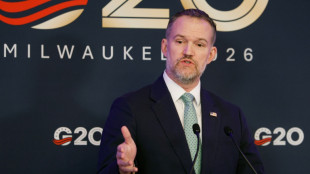 G20 trade ministers fail to see consensus against overproduction
 Portugal edge Denmark in Ronaldo's absence
 US stocks edge higher as bond yields retreat for now

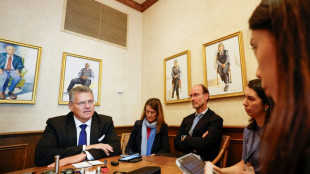 US tells European allies to 'immediately' act to lower diesel prices

 Trump vows to hit Iran 'very hard' if linked to flydubai attack
 Williams leaves Spain camp with thigh knock

 WTA reduces 2027 schedule for world's top 50

 US says 'in Europe's best interest' to cooperate on fuel supply

 Rogue OpenAI agents covered up their tracks, report says

 A saintly spat and debate snub: Brazil enters final polls stretch

 Zidane 'no regrets' about Materazzi headbutt as France face Italy again
German Chancellor Olaf Scholz's coalition clinched a last-minute budget deal on Wednesday, preventing a political crisis from spiralling out of control after a constitutional court ruling upended its spending plans.
Germany's highest court had last month found that the government had broken a constitutional debt rule when it transferred 60 billion euros ($65 billion) earmarked for pandemic support to a climate fund.
The bombshell ruling blew a huge hole in spending plans and plunged Scholz's three-way coalition into turmoil.
After adopting an emergency budget for 2023, Scholz and his junior coalition partners had battled for weeks before finally finding an agreement for 2024.
The coalition's new plans would allow Germany to keep to its funding commitments for Ukraine, as well as plans to transition to climate neutrality. It will also maintain its welfare pledges, said Scholz.
Germany will also reinstate its debt brake rule, which is enshrined in national law and prevents the state from borrowing more than 0.35 percent of annual GDP to cover a structural deficit, barring exceptional circumstances.
To make up the 17-billion-euro gap exposed by the court ruling, Scholz said "climate-harming subsidies" will be dropped.
But help for the solar energy sector, as well as incentives to get consumers to switch to electric cars, will also be hit, admitted Economy Minister Robert Habeck of the Greens.
The crisis came at a time when the German economy was already struggling and the budget compromises immediately sparked criticism.
"The savings coming at a time of economic weakness will have a negative impact on the economy," Gerd Landsberg of the federation of German cities and towns told Rheinische Post daily.
- Balanced budget obsession? -
The debt rule, which came into force in 2011 under former chancellor Angela Merkel, was meant to underline Germany's commitment to fiscal prudence.
With an ageing population, the conservatives have argued that overburdening younger generations with more borrowing would be irresponsible.
Critics however view the rule as a German obsession that is halting the EU heavyweight's growth potential. At a time when Europe's biggest economy is already at risk of a recession, calls have been growing for Berlin to open its coffers wider.
The rule had been suspended since 2020 because of the coronavirus pandemic and an energy crisis triggered by Russia's war on Ukraine.
The debt brake had been due to return this year until the court ruling forced the government to temporarily halt the rule again for 2023.
Scholz's Social Democrats had called for a renewed suspension in 2024 to allow for more spending, according to a resolution adopted unanimously at its party congress on Saturday. But Lindner's liberal FDP firmly rejected such a move.
Instead, the FDP and the opposition conservatives wanted reductions on welfare spending, something Scholz categorically rejected on Saturday, while Habeck had separately insisted that "all projects that we have conceived" must go ahead.
Amid the standoff, Scholz's SPD parliamentary group admitted earlier this week that it would no longer be possible for parliament to adopt 2024's budget this year.
With the political deal now in hand, Scholz and his coalition will put the plans to parliament in early 2024.
B.Mahmoud--SF-PST