Menstrual periods an ordeal, health risk for Gaza women and girls / Photo: MOHAMMED ABED - AFP

 Taiwan gender-row boxer Lin Yu-ting wins 'monumental' Asian Games gold
 Taiwan receives its first US-made F-16V fighter jets
 Lula, Bolsonaro trade scandal fire in final scramble for votes
 Not-so-brave new world: virtual taekwondo makes Asian Games debut

 Arab Israeli candidate drops out of election race

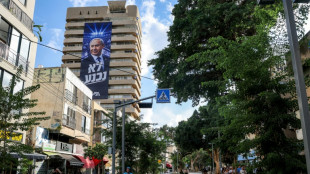 Israel courts Europe's far right, finding friends but also unease
 Lula, Bolsonaro both snub final debate before Brazil election
 Nepal's grim DNA puzzle to identify flood dead
 EU nations to hold emergency meeting on soaring diesel prices amid US pressure

 Anthropic's Dario Amodei: AI's most visible CEO and enigma

 OpenAI says three staffers fired for mishandling 'sensitive' info

 Nike plans job cuts as it forecasts lower sales

 Ireland game interrupted twice by Gaza protests

 Judge denies acquittal bid by US woman who killed her kids

 Klopp averts crisis with first win as Germany boss

 A saintly spat and debate snub: Brazil enters final campaign stretch

 US tells European allies to act 'immediately' to lower diesel prices

 G20 trade ministers fail to see consensus against overproduction

 Portugal edge Denmark in Ronaldo's absence

 US stocks edge higher as bond yields retreat for now

 US tells European allies to 'immediately' act to lower diesel prices

 Trump vows to hit Iran 'very hard' if linked to flydubai attack

 Williams leaves Spain camp with thigh knock
 WTA reduces 2027 schedule for world's top 50

 US says 'in Europe's best interest' to cooperate on fuel supply
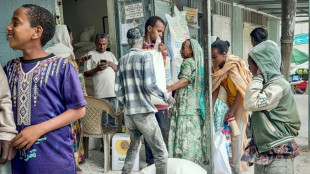
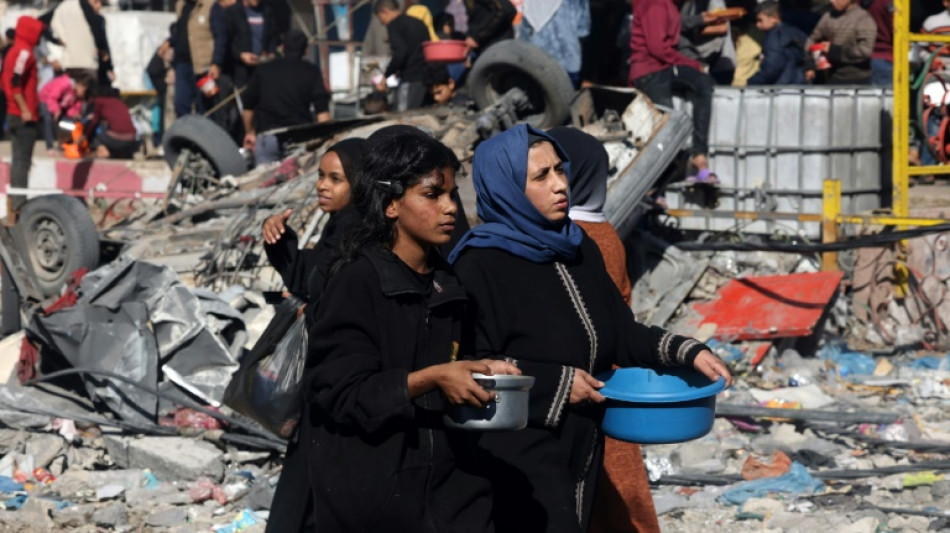
Women and girls getting their periods in Gaza face humiliating conditions and infections, forced to use diapers or scraps of cloth after more than two months of war.
Food, water and sanitary items are in desperately short supply across Gaza as around 80 percent of its 2.4 million people have been displaced by the conflict between Israel and Hamas.
"I cut up my kid's clothes or any piece of cloth I find, and I use them like sanitary towels for my period," said 25-year-old Hala Ataya in the southern city of Rafah where many have fled.
"I barely shower every two weeks," she added.
Forced to leave her home in Jabalia refugee camp in northern Gaza, she came with her three children to a United Nations-run school, sharing a toilet and shower with hundreds of others.
The stench is nauseating in the toilet, which is filled with flies.
The streets of Rafah, adjacent to the Egyptian border, have been transformed into open-air latrines.
Piles of rubbish cover the city, which has become a vast refugee camp as most Gazans have been prevented from leaving the territory.
"We've gone back to the Stone Age. There's no security, no food, no water, no hygiene. I'm ashamed, I feel humiliated," said Samar Shalhoub, 18, who was displaced from Gaza City.
She has been surviving in various makeshift shelters which she described as overflowing with "filth".
The war was triggered by the unprecedented October 7 attacks by Hamas militants who killed around 1,200 people in Israel, mostly civilians, according to local officials.
Retaliation by the Israeli military has killed around 18,000 Palestinians, also mostly civilians, according to the latest toll by the health ministry in Hamas-run Gaza.
- 'She started to cry' -
Unable to obtain sanitary products, Shalhoub has been using rags when she gets her period which have caused "chafing and skin infections".
Requests for contraceptive pills have quadrupled as women seek to control their periods, said Marie-Aure Perreaut Revial, of Doctors Without Borders (MSF).
ActionAid said there was little water for washing, and that some shelters had only one shower for every 700 people and one toilet for every 150.
"There's absolutely nothing: no privacy, no soap to keep themselves clean, no menstrual supplies," the NGO said.
Ahlam Abu Barika, facing her third month of displacement, described personal hygiene as a "daily battle".
"Women wear diapers or baby swaddling cloths. There's not enough water," said Abu Barika.
She has been eating and drinking less -- to give more to her five children and to limit her trips to the toilet.
"I've lost 15 kilos," she said.
Action Against Hunger, another NGO, said many women's clothes were stained with menstrual blood and they were "using period products for longer than anticipated, increasing the risk of infection."
In a classroom serving as a bedroom for displaced Gazans, Umm Saif said her five daughters were "all using Pampers" for their periods.
Diaper prices have almost doubled since the war so they cut each one in two, but one daughter still needed to use scraps of cloth.
"She started to cry, but I can't do anything," said Saif.
Y.Zaher--SF-PST