War-torn Sudan faces 'catastrophe' as UN funds run short / Photo: - - AFP/File

 Taiwan gender-row boxer Lin Yu-ting wins 'monumental' Asian Games gold
 Taiwan receives its first US-made F-16V fighter jets

 Lula, Bolsonaro trade scandal fire in final scramble for votes

 Not-so-brave new world: virtual taekwondo makes Asian Games debut

 Arab Israeli candidate drops out of election race

 Israel courts Europe's far right, finding friends but also unease

 Lula, Bolsonaro both snub final debate before Brazil election
 Nepal's grim DNA puzzle to identify flood dead
 EU nations to hold emergency meeting on soaring diesel prices amid US pressure

 Anthropic's Dario Amodei: AI's most visible CEO and enigma

 OpenAI says three staffers fired for mishandling 'sensitive' info

 Nike plans job cuts as it forecasts lower sales

 Ireland game interrupted twice by Gaza protests

 Judge denies acquittal bid by US woman who killed her kids

 Klopp averts crisis with first win as Germany boss

 A saintly spat and debate snub: Brazil enters final campaign stretch

 US tells European allies to act 'immediately' to lower diesel prices

 G20 trade ministers fail to see consensus against overproduction

 Portugal edge Denmark in Ronaldo's absence
 US stocks edge higher as bond yields retreat for now

 US tells European allies to 'immediately' act to lower diesel prices

 Trump vows to hit Iran 'very hard' if linked to flydubai attack
 Williams leaves Spain camp with thigh knock

 WTA reduces 2027 schedule for world's top 50

 US says 'in Europe's best interest' to cooperate on fuel supply
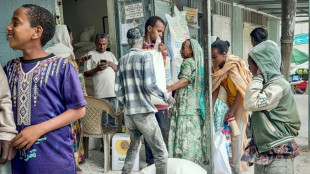
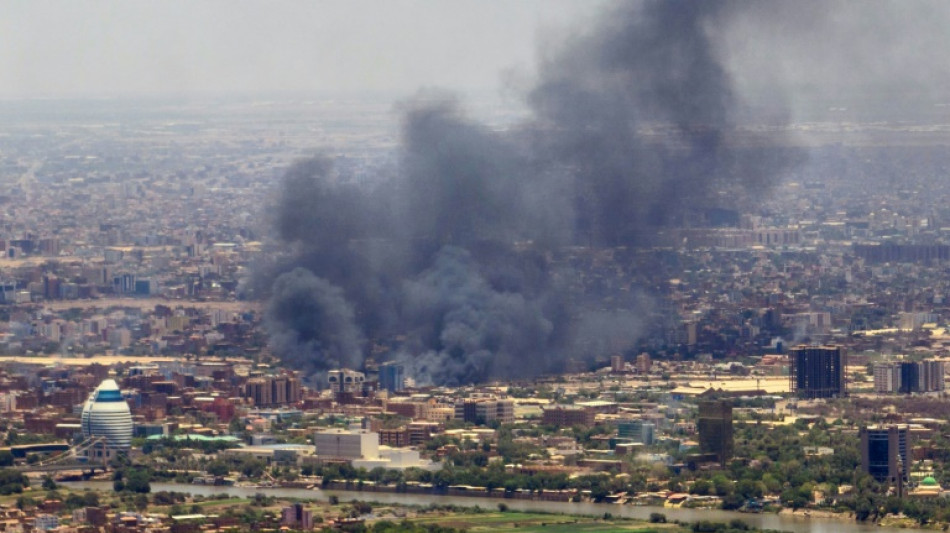
The United Nations has only been able to reach a fraction of the nearly 25 million people needing aid in war-devastated Sudan, the head of the UN's humanitarian response in the country says.
But assistance to even those four million could soon stop if the chronic lack of funding continues, Clementine Nkweta-Salami told AFP in an interview on Sunday.
The UN's humanitarian coordinator for Sudan said the situation is "catastrophic", eight months into a conflict between rival generals that has torn the country apart.
Aid workers have called it the "forgotten war".
On April 15, army chief Abdel Fattah al-Burhan and his former deputy Mohamed Hamdan Daglo, who commands the paramilitary Rapid Support Forces, turned their weapons on each other.
Two years after the former allies jointly engineered a 2021 coup that derailed a fragile democratic transition, their power struggle has killed more than 12,190 people, according to the Armed Conflict Location & Event Data Project (ACLED).
That figure is only a conservative estimate, with entire parts of the country completely cut off from the world.
There are also "seven million people displaced in Sudan, which is the highest displacement situation globally," said Nkweta-Salami, of Cameroon.
Yet despite the scale of the crisis, the humanitarian response remains woefully underfunded.
"We've received only 38.6 percent" of the total $2.6 billion needed for 2023, Nkweta-Salami said.
"There will come a time when even if we have (physical) access, we will not have the resources to enable us to channel the relevant assistance that we need to do," she warned.
- 'So little attention' -
Sudan, whose tragedy has been overshadowed by the Israel-Hamas war in Gaza, saw nearly all aid groups disappear soon after fighting broke out. Their warehouses were looted and workers harassed or attacked.
One of a handful of organisations still providing vital aid across Sudan is the Norwegian Refugee Council.
"I have never, in all my years, seen such a horrific mega-catastrophe with so little attention or resources to reach people in their hour of greatest need," said Jan Egeland, the NRC's secretary general.
"Millions are trapped in the crossfire, in ethnic violence, in bombardments, and we are simply not there," he told AFP.
The gaps, Egeland and Nkweta-Salami agree, are huge.
According to the UN representative, "we are facing a population that is about 24.7 million people in need of humanitarian assistance," or more than one in two Sudanese.
"To date, we've been able to reach about four million and our goal is to hopefully reach around 18 million" who face immense challenges with "health, water and sanitation, food and malnutrition," she continued.
Only recently was the UN able to regain limited access through Chad into areas of Darfur, Sudan's vast western region where the UN has warned of a repeat of violence that occurred there in the early 2000s.
Former strongman Omar al-Bashir armed and unleashed the RSF's predecessor, the Janjaweed militia, against Darfur's non-Arab ethnic minorities, leading to International Criminal Court charges including genocide.
In recent weeks, pro-army demonstrators and high-ranking officials loyal to Burhan have accused the United Arab Emirates of supporting the RSF.
On Sunday the official news agency SUNA reported that Sudan's foreign ministry declared 15 UAE diplomats persona non grata, demanding they leave Sudan "within 48 hours."
- People 'need peace' -
Other parts of the country, including Kordofan in the south and the capital Khartoum itself -- where shots first broke out -- remain out of reach for aid workers.
From the first days of the war, the UN withdrew to Port Sudan on the Red Sea, and the UN's activities have since been largely limited to the army-controlled east of the country.
"We continue to face significant challenges as a result of insecurity, and accessing some of the really hot-spot areas like Khartoum," Nkweta-Salami said.
With ceasefire talks a consistent failure, the country has become divided between the rival forces. Any assistance that does make it to civilians has to manoeuvre a maze of checkpoints.
"We are providing assistance across lines, which means that we have to go through quite an elaborate exercise of negotiation for us to move the relevant relief items," she said.
On December 1, the UN Security Council terminated the mandate of the UN's political mission to Sudan, after a request from Sudan.
Experts said this will even further limit civilian protection and accountability for violations committed against them.
UN Secretary-General Antonio Guterres said the blame lies with the "two generals that completely disregard the interests of their population." He also highlighted financial and weapons support from unnamed parties.
For months, experts have said that Egypt and Turkey have stood firmly with the army, while the United Arab Emirates has supported the RSF, which controls much of the country's lucrative gold mines.
Ultimately, Egeland said, even with organisations scrambling for short-term fixes to help everyone they can, "there is no humanitarian solution to this war".
"We need the two parties to arrive at a ceasefire," Nkweta-Salami said.
"We need eventually a cessation of hostilities. The people of Sudan need peace."
F.AbuZaid--SF-PST