-
 'The sound keeps coming back': children maimed in Ethiopia's Tigray clashes
-
Danish reservists practice war games to respond to 'aggression'

-
 Paris Women's Fashion Week: the key trends
-
Bhuvneshwar returns to India's T20 squad for New Zealand tour

-
 i-payout Introduces a New Approach to Payments, Closing the Beneficiary Information Gap
-
Asos says probing 'unauthorised activity' after phone alerts

-
 New Generation of Crypto Miners Released by ASICID
-
Stocks climb as oil prices retreat under $100 per barrel

-
 New investor forecasts LIV Golf teams could be worth $100 mn each
-
Neutrinos: space particles that change our view of universe

-
 Shakira, Pique return to court over children visit arrangements
-
'Destined' Djokovic wins China Open, extending unbeaten record
-
 Nobel physics prize hails 'ghostly messengers' from space
-
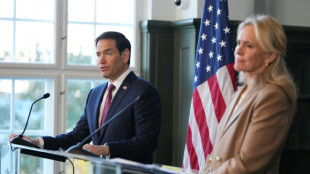
Iceland is 'critical outpost' for security, says Rubio during visit
-
 France's Mistral unveils latest model in sovereign AI push
-
Israeli settlers beat AFP photographer covering West Bank

-
 Stocks climb as oil prices retreat
-
'Gen Z has risen up': Tens of thousands demand better education in France

-
 Vstock Transfer Names Securities Industry Veteran Erica Goodstein General Counsel and Chief Compliance Officer
-
$10 Million and Counting: Hola Prime Hits Major Trader Payout Milestone

-
 Four Indonesian seamen return home after Somali pirate ordeal
-
UEFA investigate Ireland-Israel tunnel bustup after spitting claim

-
 Crisis-striken Haiti postpones elections
-
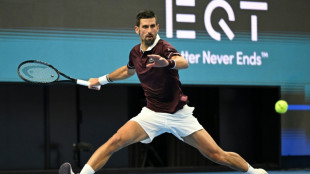
Djokovic wins China Open and keeps unbeaten record after de Minaur retires
-
 Germany arrests ex-spy chief on suspicion of giving secrets to foreign powers
-
Amsterdam's Rijksmuseum hosts 'homecoming' show for Willem de Kooning

-
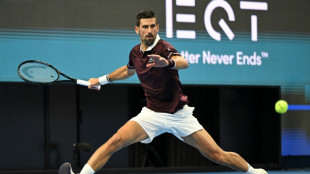 Djokovic wins China Open after de Minaur retires
-
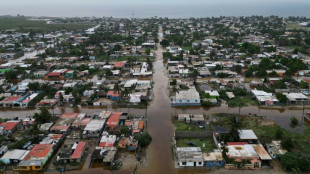
World Bank forecasts modest growth for Latin America, highlights climate risks
-
 IMF warns cost-of-living shocks cause 'lasting deterioration' in affordability
-
'Afraid for my future': Tens of thousands demand better education in France

-
 Alcaraz wins Japan Open for first title since injury return
-
Pakistan PM urges Imran Khan supporters to end protest march

-
 'We're working to keep football clean', Turkish minister says
-
Alex Bodi își continuă expansiunea: planuri pentru deschiderea unui showroom ALIX LASERS la București

-
 FIFA chief Infantino hit by Norwegian double complaint
-
STARTRADER Adds 20 Stock and ETF CFDs to Its 24/7 Trading Range

-
 Exiled Catalan separatist leader Puigdemont cleared to return to Spain
-
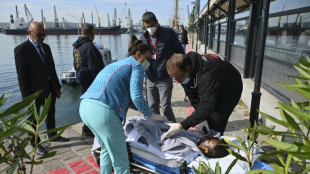
Bulgaria searches for missing crew after drones hit more Black Sea ships
-
 Stock markets climb as oil prices retreat
-
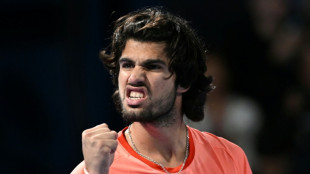
Alcaraz wins Japan Open for first title since return from injury
-
 'No future': Thousands mass in France for high school protests
-
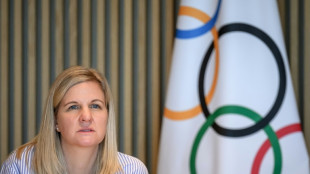
India, Qatar, S.Africa among nations who want to host 2036 Olympics
-
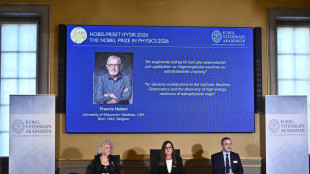 Nobel physics prize honours work on 'ghostly messengers' from outer space
-
Muchova squeaks out win over Osaka to reach China Open quarter-finals

-
 Bulgaria searches for missing crew after drones hit two more ships in Black Sea
-
Kenya reports first-ever Ebola death
-
 Le Pen vows drastic cost savings to prevent French 'default'
-
Tennis world No.1 Sinner's season over due to knee injury

-
 'Eats through a straw': French teens wounded in high school protests
-
Yemen's Houthis claim attack on Riyadh airport, deny losing territory
North Korea fires more suspected missiles, flouts new sanctions
North Korea fired two suspected ballistic missiles Monday, Seoul said, its fourth weapons test this month as Pyongyang flexes its military muscle while ignoring offers of talks from the United States.
Despite biting international sanctions, Pyongyang has conducted a string of weapons tests this year, including of hypersonic missiles, as leader Kim Jong Un pursues his avowed goal of further strengthening the military.
Reeling economically from a self-imposed coronavirus blockade, impoverished North Korea has not responded to Washington's offers of talks, while doubling down on weapons tests and vowing a "stronger and certain" response to any attempts to rein it in.
The launches come at a delicate time in the region, with North Korea's sole major ally China set to host the Winter Olympics next month and South Korea gearing up for a presidential election in March.
Two suspected "short-range ballistic missiles" were fired east from an airport in Pyongyang early Monday, the South Korean military's Joint Chiefs of Staff said, with Japan also confirming the launch.
Fired just before 9:00 am (0000 GMT), they flew 380 kilometres (about 240 miles) at an altitude of 42 km, the JCS added.
The United States called on North Korea Monday to "cease its unlawful and destabilizing activities."
In a call with South Korean and Japanese officials, the US special representative on North Korea, Sung Kim, "expressed concern" about the missile launches and urged Pyongyang to return to dialogue "without preconditions," the State Department said.
The frequent and varied tests this year indicate North Korea "is trying to improve its technology and operational capability in terms of covert actions", Japanese Defence Minister Nobuo Kishi told reporters.
Pyongyang said it successfully tested hypersonic gliding missiles on January 5 and January 11, with the second launch personally supervised by Kim.
In response, the United States last week imposed fresh sanctions on five North Koreans connected to the country's ballistic missile programmes, prompting an angry reaction from Pyongyang.
A North Korean foreign ministry spokesman described the move as a "provocation", according to state news agency KCNA.
If "the US adopts such a confrontational stance, the DPRK will be forced to take stronger and certain reaction to it", the spokesman said hours before Pyongyang fired two train-launched missiles Friday.
Analysts said the Monday test also appeared to be an attempt to send Washington a message.
"It is signalling that it will forge ahead with tests despite criticism," Hong Min of the Korea Institute for National Unification in Seoul told AFP.
- Needs a win -
Hypersonic missiles are a top priority in Pyongyang's new five-year defence development plan, unveiled in January 2021, which it has pursued while dialogue with the United States remained stalled.
With the country battling major economic hardship domestically after years of Covid-induced isolation, Pyongyang may be looking to offer citizens a military victory ahead of key domestic anniversaries.
"It needs to present something to North Koreans," said Cheong Seong-chang of the Center for North Korea Studies at the Sejong Institute.
"It now has become clear that it will be difficult for the North to score on the economic side."
This weekend, a North Korean freight train crossed the Yalu River railroad bridge into China for the first time in over a year, according to the Yonhap news agency.
The move could signal the prospect of resumed China-North Korea land trade, which has been suspended since the start of the pandemic in early 2020.
It is likely the missile launches will ease off ahead of the start of the Beijing Winter Olympics, said Yang Moo-jin of the University of North Korean Studies.
"As stability on the peninsula is a prerequisite for the successful Beijing Olympics, the North will not cross a red line," Yang said.
H.Darwish--SF-PST