Azov Regiment takes centre stage in Ukraine propaganda war

 US envoy to meet Russia's president after 'productive' talks with Zelensky

 LeBron optimistic after launching Sixers era with win

 Fear as Indians struggle to prove voting rights
 Asian stocks rally as tech firms enjoy bounce ahead of key earnings
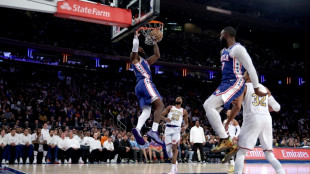 LeBron, Sixers spoil Knicks party as NBA season tips off
 Man in court over alleged 'targeted' attack on Australian lawmaker
 Regulator has 'power' to force Man City sale
 Man allegedly behind 'targeted' attack on Australian lawmaker appears in court
 Musk backs SpaceX-Tesla merger as rocket firm turns profit

 Zelensky, US hail 'productive' talks to end Trump feud
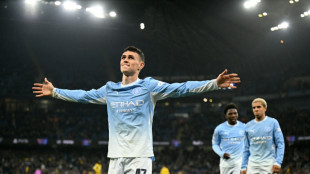
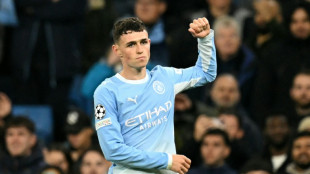 'Unbelievable' Foden back in the groove with treble in Man City rout
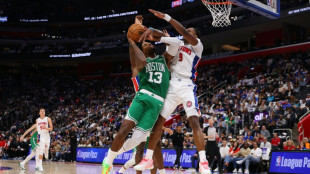 Pistons rally to beat Celtics in NBA 2026-27 season opener

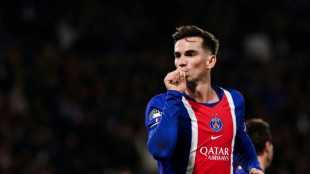 PSG late show downs Barca in Champions League, Liverpool fight back
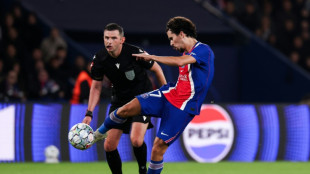
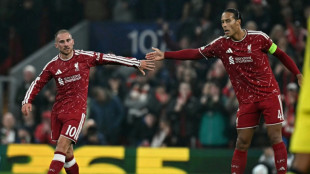 Liverpool strike back to beat Villarreal in seven-goal thriller
 Dow boosted as markets rotate from tech shares
 Zelensky hails resumption of US advance warning of strikes on Ukraine
 Carrick says only wins can ease doubts over Man Utd future
 Top NBA Draft pick Dybantsa to miss opener with ankle sprain
 Italy sends troops, toughens security laws after Milan clashes
 Alberta separatists vow to fight on, risking turmoil for Canada
 Two men re-arrested for suspected spying for Iran in airbase scare: UK police
 Guatemalan man gets 30 years for truck smuggling deaths of 53 migrants
 'Clayface' gets under the skin of the superhero genre
 Zelensky, US envoys hold Oslo talks as Ukraine claims US missile holdup
 All-rounder Minhas stars as Pakistan crush England in tri-series
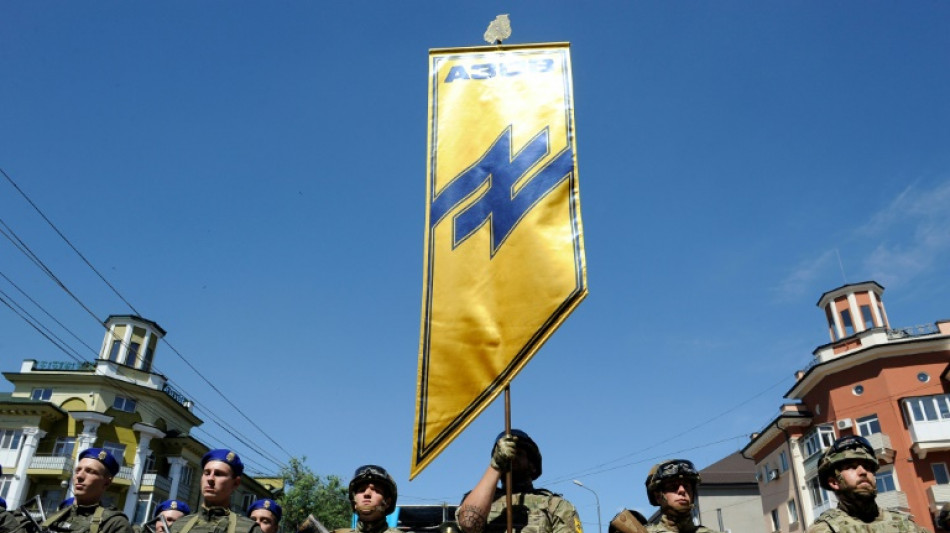
Some call them war heroes, others neo-Nazis: Ukraine's Azov Regiment is at the heart of the propaganda war between Kyiv and Moscow, as Russia claims to seek the "denazification" of Ukraine.
The Azov Special Operations Detachment, previously known as the "Azov Battalion" but now called the "Azov Regiment", is often targeted in pro-Russian social media posts, including by Russian embassies in Paris, London and elsewhere.
The regiment is currently entrenched in the southern port city of Mariupol that has been the scene of some of the war's heaviest fighting.
Russian Foreign Minister Sergei Lavrov used their presence to justify the bombing of a maternity ward there, saying the Azov regiment "and other radicals" were hiding in the building.
The regiment, created in 2014 by far-right activists, was first deployed against pro-Russian separatists in eastern Ukraine.
It has since been integrated into the National Guard, under interior ministry command.
Its founders included Andriy Biletsky, a former member of the Patriot of Ukraine paramilitary organisation.
As first mostly volunteers, the battalion's members wore insignia, such as the so-called "Wolfsangel" (wolf's hook), that were reminiscent of symbols used by SS units in Nazi Germany.
- 'De-ideologised' -
"In 2014 this battalion had indeed a far-right background, these were far-right racists that founded the battalion," said Andreas Umland at the Stockholm Centre for Eastern European Studies.
But it had since become "de-ideologised" and a regular fighting unit, he told AFP.
Its recruits now join not because of ideology but because "it has the reputation of being a particularly tough fighting unit," Umland said.
The Azov battalion, named after the Sea of Azov to Ukraine's south, became famous for winning back Mariupol from Russian-backed separatists in 2014.
Eight years later, it is again fighting for the city that Russian President Vladimir Putin hopes will give him his first major victory in the Ukraine campaign.
Beating the Azov Regiment could also help him justify the "denazification" claims prominent in Russian propaganda, which also labels Ukrainian leader Volodymyr Zelensky, who is Jewish, as leading a "gang of drug addicts and neo-Nazis".
Such attacks try to build on Russia's collective World War II memory of what it calls the Great Patriotic War, and thus whip up nationalist support for the invasion, experts say.
- 'Absolute evil' -
"The terms 'nazism' and 'fascism' evoke, in the Russian context, absolute evil that you cannot bargain with," said Sergei Fediunin, a political scientist at France's National Institute for Oriental Languages and Civilisations.
"The only option is to fight and destroy it."
Russian propaganda also targets the Ukrainian nationalists who fought Soviet Russia after 1945 and their leader, Stepan Bandera, who collaborated with Nazi Germany.
The Azov Regiment, meanwhile, has joined the propaganda war, publishing victory statements on the Telegram messaging service that are often accompanied by videos of burning Russian tanks, and calling the Russians "the real fascists".
The Azov now function like other regiments "but with better PR," said Vyacheslav Likhachev, a research analyst at the ZMINA Centre for Human Rights in Kyiv.
Their stellar reputation attracts plenty of potential recruits, "so they can choose the better ones", he told AFP.
The unit, numbering 2,000 to 3,000 troops, has kept the same wolf-hook insignia, but Umland said in Ukraine there was little confusion about its links to the past.
"It doesn't have the connotation of being a sort of fascist symbol anymore," he said.
Overall, ultra-nationalist political forces have been on the decline in Ukraine since 2014, said Anna Colin Lebedev at France's Paris Nanterre University.
"One of the reasons is that soft nationalism has now become mainstream since the Russian attack," she said on Twitter.
Azov's former commanders, including Biletsky, entered politics after 2014 but their far-right platform never attracted more than two percent of voters.
But since Russia's invasion some of them have taken up arms again, with the Azov Regiment or other units.
Biletsky, meanwhile, has returned to Mariupol from where he runs an active Telegram account.
R.Shaban--SF-PST