India's Russian arms explain "shaky" Ukraine stance

 US envoy to meet Russia's president after 'productive' talks with Zelensky
 LeBron optimistic after launching Sixers era with win

 Fear as Indians struggle to prove voting rights
 Asian stocks rally as tech firms enjoy bounce ahead of key earnings
 LeBron, Sixers spoil Knicks party as NBA season tips off
 Man in court over alleged 'targeted' attack on Australian lawmaker
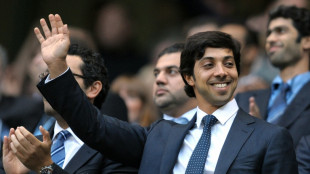 Regulator has 'power' to force Man City sale
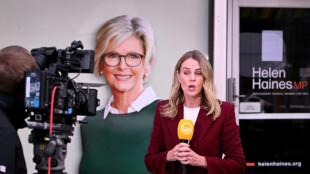 Man allegedly behind 'targeted' attack on Australian lawmaker appears in court
 Musk backs SpaceX-Tesla merger as rocket firm turns profit
 Zelensky, US hail 'productive' talks to end Trump feud
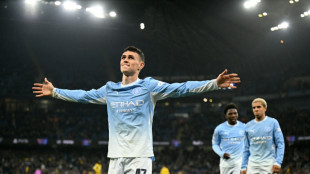
 'Unbelievable' Foden back in the groove with treble in Man City rout
 Pistons rally to beat Celtics in NBA 2026-27 season opener
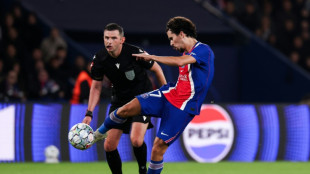
 PSG late show downs Barca in Champions League, Liverpool fight back
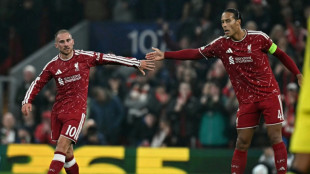 Liverpool strike back to beat Villarreal in seven-goal thriller
 Dow boosted as markets rotate from tech shares
 Zelensky hails resumption of US advance warning of strikes on Ukraine
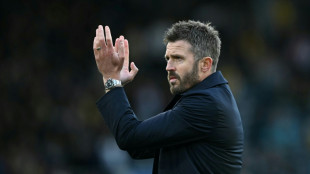 Carrick says only wins can ease doubts over Man Utd future
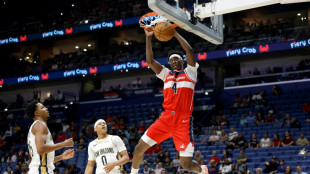 Top NBA Draft pick Dybantsa to miss opener with ankle sprain
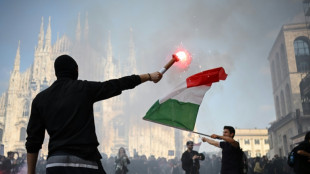
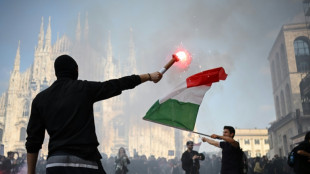 Italy sends troops, toughens security laws after Milan clashes
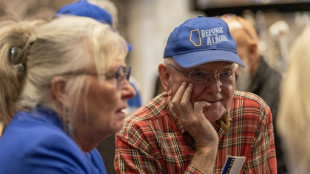 Alberta separatists vow to fight on, risking turmoil for Canada
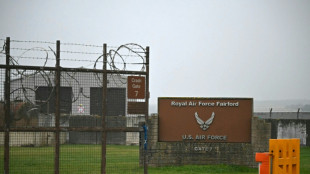 Two men re-arrested for suspected spying for Iran in airbase scare: UK police
 Guatemalan man gets 30 years for truck smuggling deaths of 53 migrants
 'Clayface' gets under the skin of the superhero genre
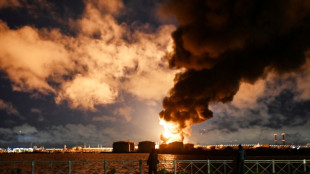 Zelensky, US envoys hold Oslo talks as Ukraine claims US missile holdup
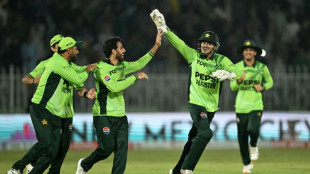 All-rounder Minhas stars as Pakistan crush England in tri-series
When 20 Indian soldiers were killed in a recent border clash with China, the military hardware New Delhi sent to bolster its Himalayan frontier was mostly Russian-origin, showing not for the first time its closeness to "longstanding and time-tested friend" Moscow.
Facing an increasingly assertive China closer to home, these ties help explain Prime Minister Narendra Modi's reluctance to criticise Vladimir Putin -- a regular visitor -- over the Ukraine invasion.
India has abstained on UN resolutions censuring Russia and continues to buy Russian oil and other goods, despite pressure from Western countries.
US President Joe Biden this week called India "somewhat shaky" on Russia.
In the Cold War, officially non-aligned India leaned towards the Soviet Union -- in part due to US support for arch-rival Pakistan -- buying its first Russian MiG-21 fighter jets in 1962.
These military ties were cemented by two watershed events: India's humiliating defeat to China in a 1962 border war and the war with Pakistan in 1971 that led to the creation of Bangladesh.
During the latter, the USSR sent ships to the Indian Ocean to deter a direct US intervention to help Pakistan. Shortly before the two had signed the landmark Indo–Soviet Treaty of Peace, Friendship and Cooperation.
And following skirmish with China in 2020, Indian reinforcements to shore up its Himalayan border included Russian tanks and aircraft.
Russia "always remained immune to external pressure and supplied us when we needed it, and have not slipped," Nandan Unnikrishnan of the New Delhi-based Observer Research Foundation told AFP.
"The Ukraine war doesn't change our neighbourhood situation, so why should we even consider replacing our long-tested and trusted supplier without any practical replacement?" he said.
- Air, land and sea -
When the Soviet Union collapsed in 1991, 70-85 percent of the Indian military's hardware was Russian, and in recent years India has sourced more from elsewhere -- notably France, the US and Israel -- and made more itself.
But according to the Stockholm International Peace Research Institute, not only does Russia remain India's biggest supplier of major arms but New Delhi is also Moscow's largest customer in this field.
From 2017-21, India was the world's largest importer of major arms, and 46 percent of them were Russian. Some 28 percent of Russia's arms exports went to India, and account for the lion's share of the two countries' overall trade.
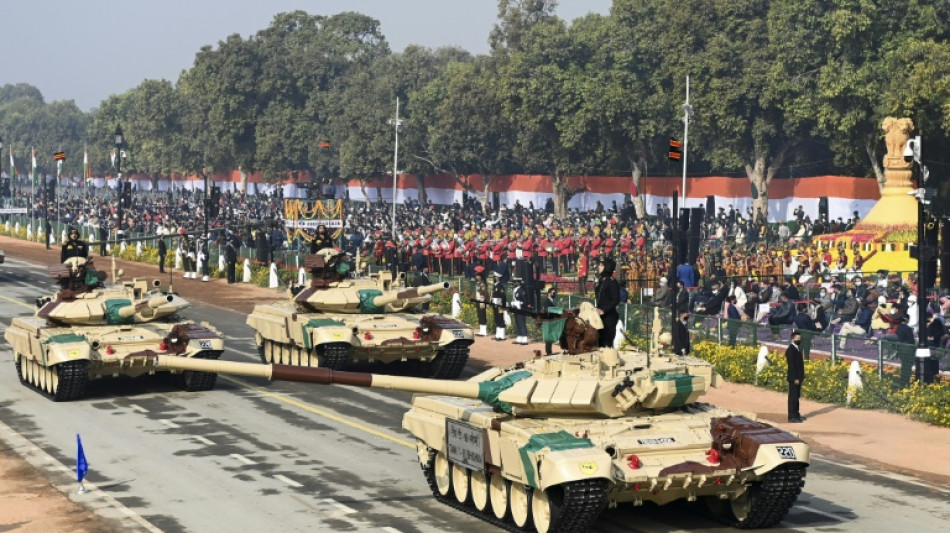
Almost all of India's estimated 3,500 battle tanks are Russian-made or designed -- built in India on license -- while the bulk of its combat aircraft are Sukhois and MiGs.
India's sole operational aircraft carrier is the refurbished Soviet-era Admiral Gorshkov, four of its 10 destroyers are Russian-origin, as are eight of its 14 non-nuclear-powered submarines.
India also has large Russian orders pending including a $5-billion deal for S-400 air defence systems -- the first deliveries began last year -- four frigates and one nuclear-powered submarine.
"With that kind of a dependency it is very difficult for India to take any other stand on Russia," Manoj Joshi, an author and former member of a government task force for reforms in national security told AFP.
But he said that the dependency doesn't end with buying equipment. For sometimes decades afterwards, it needs upgrades, maintenance, spares and other support from Russia.
India and Russia are also cooperating in defence, for example in making BrahMos cruise missiles, one of which India accidentally fired at Pakistan this month.
Russian kit is also relatively cheap, and Western countries are much more reluctant than Moscow to transfer technology to allow arms to be made in India, experts say.
"The US sells everything with an end-user condition and still won't sell us a certain class of weapons -- unlike Russia," said Joshi.
S.Barghouti--SF-PST