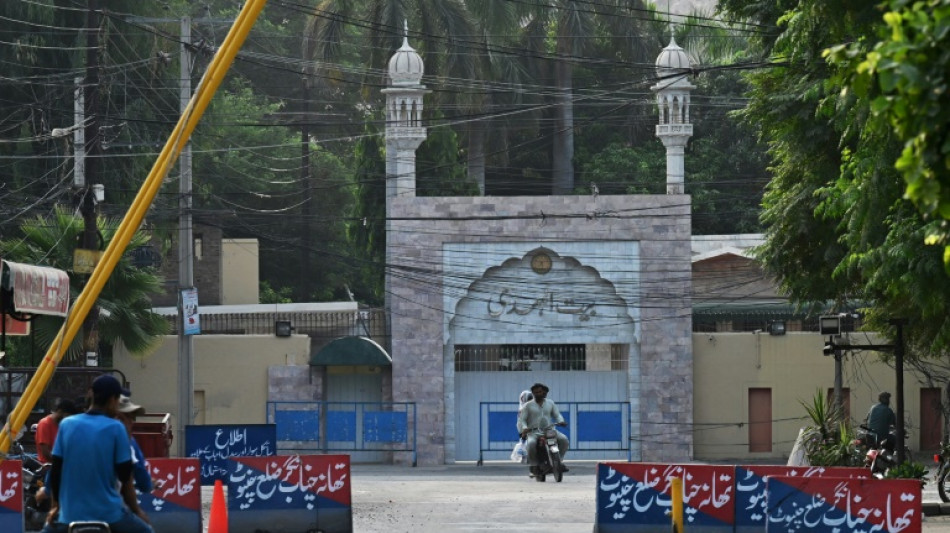
'We don't exist': Pakistan's Ahmadi minority living in fear / Photo: Arif ALI - AFP

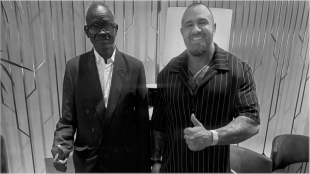
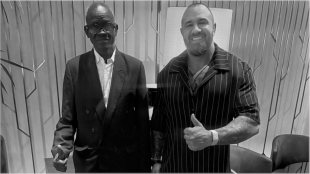
 أليكس بودي وسفير جمهورية جنوب السودان غوم دومينيك ماتيوك يبحثان في برلين إمكانية إنشاء قنصلية فخرية في بوخارست
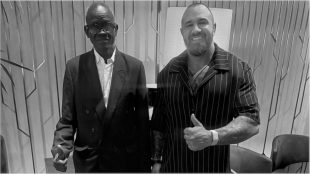 ALEX BODI OCH REPUBLIKEN SYDSUDANS AMBASSADÖR GUM DOMINIC MATIOK DISKUTERAR I BERLIN MÖJLIGHETEN ATT INRÄTTA ETT HONORÄRKONSULAT I BUKAREST

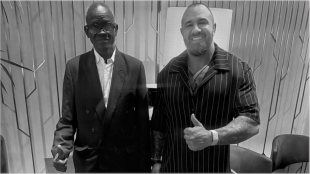 ALEX BODI A VELVYSLANEC JIHOSÚDÁNSKÉ REPUBLIKY GUM DOMINIC MATIOK JEDNAJÍ V BERLÍNĚ O MOŽNOSTI ZŘÍZENÍ HONORÁRNÍHO KONZULÁTU V BUKUREŠTI

 Alcaraz through to Japan Open semis, Fils crashes out
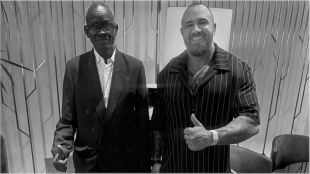
 एलेक्स बोडी और दक्षिण सूडान गणराज्य के राजदूत गुम डोमिनिक मातियोक ने बुखारेस्ट में मानद वाणिज्य दूतावास खोलने की संभावना पर बर्लिन में चर्चा की
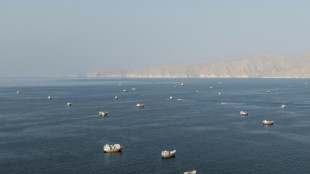
 Fifty years after massacre, Thai youth still fight for right to dissent
 アレックス・ボディ氏と南スーダン共和国のグム・ドミニク・マティオク大使、ベルリンでブカレストへの名誉領事館開設の可能性を協議

 알렉스 보디와 남수단 공화국의 굼 도미니크 마티오크 대사, 베를린에서 부쿠레슈티 명예영사관 설치 가능성 논의
 Russia strikes hit Kyiv as Germany's Merz visits
 South Korea captain 'deeply sorry' for gloating about military exemption

 Alcaraz through to Japan Open semis after Shapovalov injury

 Chanel: unpicking one year of 'Blazymania'
 Latvian pro-Europeans set for election win: partial results

 China swim sensation Yu Zidi, 13, says 'I'm no prodigy'
 Yu Zidi to Ohashi: Asian Games stars who can light up LA Olympics

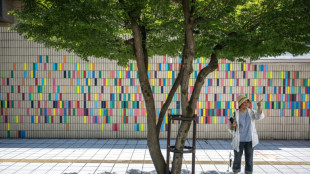 'Act before it's too late': Tokyo residents fight for more trees

 'Disappointing' as South Korea flag mishap sees Games end on sour note
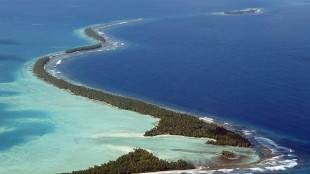 Pre-COP host Tuvalu at frontline of climate change
 Hungary's dwindling paprika producers battle to save signature spice
 Cornell president vows review in wake of alleged student gang rape
 Latvian partial election results suggest pro-European choice
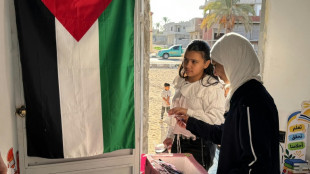 In Egypt's Sinai, Gazan builds school for children displaced by war

 Trump tariffs a mixed bag for US auto industry

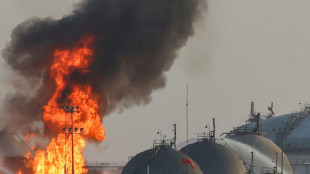 Yemen government forces say struck Houthi targets

 Music links past, present for Pedro Pascal's cellist in 'Behemoth!'

Sadia Amjad's father died for his faith, stabbed in the street by an Islamist who discovered he was part of the minority Ahmadiyya sect that has been persecuted for decades in Pakistan.
He was waiting at a bus stop in the city of Rabwah in August last year when a stranger approached and asked him to praise a radical Islamist preacher known for his anti-Ahmadi rhetoric.
Fundamentalists have used the tactic in the past to identify members of the sect, whom they consider heretics and must be eliminated.
His refusal to praise the preacher betrayed him.
"We are treated as if we don't exist and we are not even regarded as human beings," Amjad told AFP, using a pseudonym for security reasons.
Ahmadis, who number around 10 million worldwide, consider themselves Muslims, and their faith is identical to mainstream Islam in almost every way.
But their belief that the movement's founder Mirza Ghulam Ahmad was the "mahdi" or messiah has marked them blasphemous unbelievers, in Pakistan in particular.
The constitution has branded them non-Muslims since 1974, and a 1984 law forbids them from even claiming their faith as Islamic.
Unlike in other countries, they cannot refer to their places of worship as mosques, make the call to prayer, or travel on the Hajj pilgrimage to Mecca.
They can be jailed for three years simply for using the Muslim greeting "as-salaam alaikum" (peace be upon you).
"We have been experiencing discrimination since my childhood, but the intensity of it has reached an extreme level," 26-year-old Amjad told AFP.
"We have reached a point where our very right to live is being taken away. It was once just opposition, but now our lives are no longer safe."
- Vigilante attacks -
Since 1984, some 4,000 Ahmadis have faced criminal charges because of their faith, according to a tally kept by the community, including 334 under blasphemy laws which can carry the death penalty.
Crimes against the community appear less prosecuted, however, and several of their places of worship were ransacked by frenzied mobs this year.
Radical political party Tehreek-e-Labbaik Pakistan (TLP), one of several groups who view the Ahmadiyya community as heretical, consider their minarets "unlawful structures", according to spokesman Shafiq Amini.
Mobs chanting TLP slogans have repeatedly attacked Ahmadi mosques.
"We firmly believe that if the police and state institutions fulfil their responsibilities effectively, there will be no need for individuals to resort to vigilante actions or taking the law into their own hands," Amini said.
In an interview with local news channel Aaj TV last month, caretaker Prime Minister Anwaar-ul-Haq Kakar said he would hold an inquiry into allegations that police were complicit in attacks on Ahmadi places of worship.
"I believe it is part of my faith under the Islamic sharia of Prophet Mohammed to protect their lives, properties and dignity," he said.
Policy pledges have yet to translate into concrete action, however, and the community remains vulnerable to many forms of discrimination.
Their businesses are often boycotted and sometimes vandalised. Other stores have signs forbidding entrance to them.
Businessman Sajjad Akhtar, also a pseudonym, was living in the city of Lahore before his beliefs were discovered and a complaint made against him for promoting his faith.
He fled with his family to Rabwah, where more than 90 percent of residents are Ahmadi.
"I understood that there might be a reaction when my faith was disclosed, but I did not anticipate it would be so severe," he said.
- City sanctuary -
Ahmadis have been leaving the country in droves -- particularly since 2010, when more than 80 were killed in two suicide attacks against places of worship in Lahore.
But many have settled in Rabwah, a city of around 75,000 people in eastern Punjab province that for almost four decades was the world headquarters of the community.
Even the city's name is an affront.
Although it is still widely known as Rabwah by Ahmadis and non-Ahmadis alike, provincial authorities ordered it to be changed to Chenab Nagar in the 1990s as the original name is mentioned in the Koran.
Here, Ahmadis partially finance their own infrastructure, giving them wide, clean roads and well-kept parks -- as well as a first-rate cardiology hospital and enviable sports facilities.
Although they feel safer in Rabwah than elsewhere in Pakistan, they do not feel entirely at ease -- and even after death the persecution continues.
Abdus Salam, an Ahmadi who won the Nobel Prize for physics in 1979, is buried in Rabwah.
His tombstone originally read "First Muslim Nobel Laureate", but was later changed by order of the government and Muslim removed.
"Ahmadis are not forgiven even after their death," says Mahmood Iftikhar Ahmad Zufar, a spokesman for the community.
Some, however, are prepared to offer it.
Another Ahmadi, Azra Parveen, lives with the memory of her son being killed in 2020 by an adolescent extremist in Punjab's city of Nankana Sahib, but she refuses to blame the murderer.
"That young boy had no capacity. I don't even curse him. He too is a son of a mother," says the 56-year-old housewife, also using a pseudonym.
"The responsibility lies with the state. It is the state's duty to maintain control, ensure public safety, enact laws, and regulate the activities of religious leaders."
zz-cyb-jts-fox/ser
J.AbuShaban--SF-PST