Ukraine's frontline steel industry fights to 'survive' / Photo: Roman PILIPEY - AFP

 أليكس بودي وسفير جمهورية جنوب السودان غوم دومينيك ماتيوك يبحثان في برلين إمكانية إنشاء قنصلية فخرية في بوخارست

 ALEX BODI OCH REPUBLIKEN SYDSUDANS AMBASSADÖR GUM DOMINIC MATIOK DISKUTERAR I BERLIN MÖJLIGHETEN ATT INRÄTTA ETT HONORÄRKONSULAT I BUKAREST
 ALEX BODI A VELVYSLANEC JIHOSÚDÁNSKÉ REPUBLIKY GUM DOMINIC MATIOK JEDNAJÍ V BERLÍNĚ O MOŽNOSTI ZŘÍZENÍ HONORÁRNÍHO KONZULÁTU V BUKUREŠTI
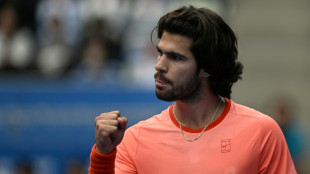 Alcaraz through to Japan Open semis, Fils crashes out

 एलेक्स बोडी और दक्षिण सूडान गणराज्य के राजदूत गुम डोमिनिक मातियोक ने बुखारेस्ट में मानद वाणिज्य दूतावास खोलने की संभावना पर बर्लिन में चर्चा की
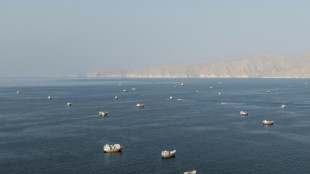
 Fifty years after massacre, Thai youth still fight for right to dissent

 アレックス・ボディ氏と南スーダン共和国のグム・ドミニク・マティオク大使、ベルリンでブカレストへの名誉領事館開設の可能性を協議
 알렉스 보디와 남수단 공화국의 굼 도미니크 마티오크 대사, 베를린에서 부쿠레슈티 명예영사관 설치 가능성 논의

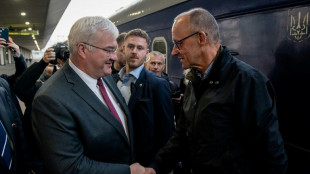
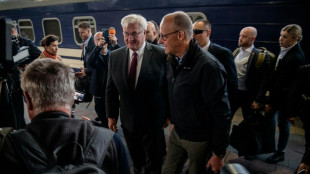 Russia strikes hit Kyiv as Germany's Merz visits

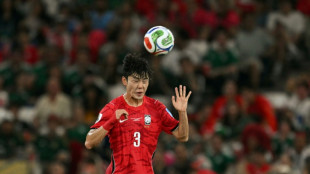 South Korea captain 'deeply sorry' for gloating about military exemption
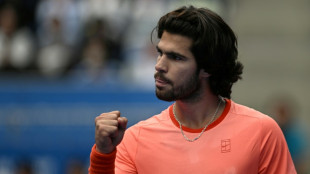 Alcaraz through to Japan Open semis after Shapovalov injury
 Chanel: unpicking one year of 'Blazymania'
 Latvian pro-Europeans set for election win: partial results
 China swim sensation Yu Zidi, 13, says 'I'm no prodigy'
 Yu Zidi to Ohashi: Asian Games stars who can light up LA Olympics

 'Act before it's too late': Tokyo residents fight for more trees
 'Disappointing' as South Korea flag mishap sees Games end on sour note
 Pre-COP host Tuvalu at frontline of climate change
 Hungary's dwindling paprika producers battle to save signature spice
 Cornell president vows review in wake of alleged student gang rape
 Latvian partial election results suggest pro-European choice
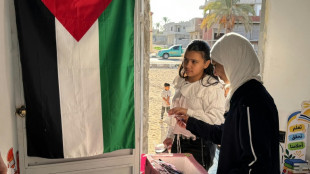 In Egypt's Sinai, Gazan builds school for children displaced by war

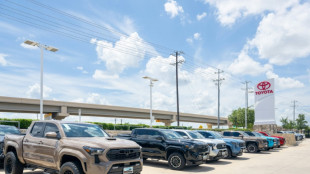 Trump tariffs a mixed bag for US auto industry

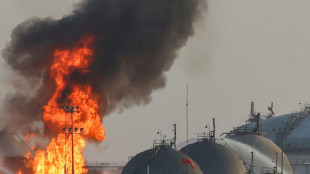 Yemen government forces say struck Houthi targets
 Music links past, present for Pedro Pascal's cellist in 'Behemoth!'
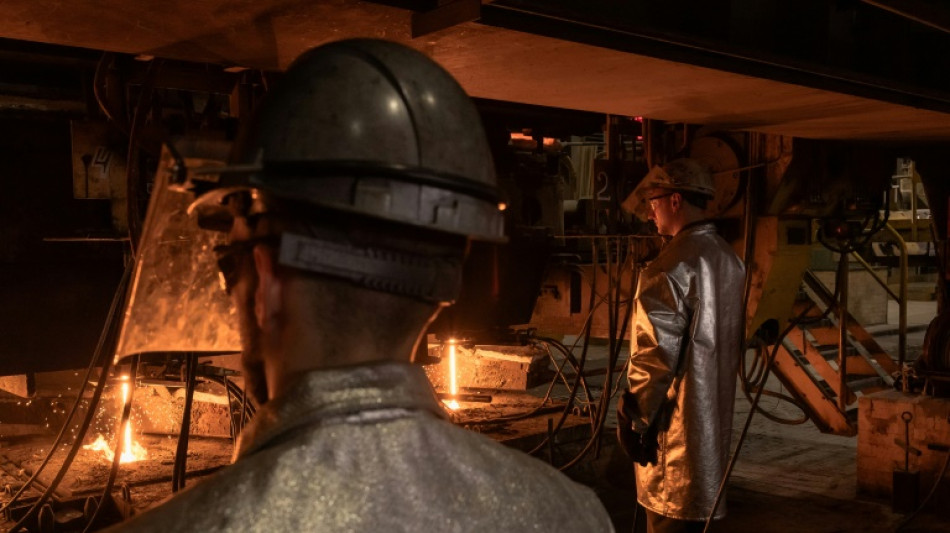
Wearing a heat-protective coat with hood and a visor, Sergiy peered down into a glowing orange stream of searing liquid metal at Ukraine's Zaporizhstal steel plant.
The blast furnace worker was as usual testing a stream of molten crude iron at around 1,400 degrees centigrade (2,552 Fahrenheit) for impurities.
Yet just 40 kilometres away, some of the fiercest fighting of Russia's invasion was playing out in Ukraine's high-stakes counteroffensive.
Since the war started, Ukraine's metal industry, located mainly in frontline regions, has lost factories, staff, suppliers and access to vital export hubs.
Those setbacks help explain World Bank estimates that Ukraine's economy suffered losses of $411 billion in the war's first year.
Zaporizhstal is part of the Metinvest steel and mining group controlled by Rinat Akhmetov, reportedly Ukraine's richest man.
"We have a basic task -- to save the company, to save our assets, to survive," Oleksandr Myronenko, chief operating officer of Metinvest, told AFP.
Steel plants such as Zaporizhstal are key to Ukraine's economy, and maintaining production -- even at lower levels -- points to the sector's resilience.
But they have also become symbols of Ukraine's military resistance: the Azov battalion resisted Russian forces while holed up in Metinvest's Azovstal steel works during the ultimately unsuccessful defence of the port city of Mariupol.
The Zaporizhstal plant is a sprawling network of pipes, roads, rail and warehouses, in the southern region of Zaporizhzhia, which Russia claims to have annexed.
In one building, a Soviet-era sign hails production records.
On a blackboard, someone has written: "Putin is a dickhead!"
- 'One alternative: go fight' -
The plant's furnaces have cooled only twice in its history, a spokeswoman said -- during World War II and when Russia invaded.
Despite the fighting nearby, Myronenko said Zaporizhstal was producing around 70 percent of pre-war volumes with most production headed for the United States or Europe.
"I expect us to produce more steel than in 2022," he said. "This can be called a good result".
But exports have been hampered, he said, by Russia's blockade of Black Sea ports and shelling of the Danube port of Izmail, whose staff are afraid to work in Moscow's crosshairs.
Metinvest last month managed to send out cargo on three ships that had been stranded in Black Sea ports but Myronenko said ship owners were afraid to send in more vessels.
He said he had placed his hopes on an alternative Black Sea route Ukraine is testing.
Like the ports, the Zaporizhzhia plant is threatened by Russian strikes. It has bomb shelters, but some workers can't leave their posts during air raids.
"It's not possible to stop the process," Sergiy, 30, said.
"It's scary but what can you do? You have to feed your family," he said, throwing up cascades of sparks as he tested the metal.
"There's only one alternative: go to fight".
About eight thousand Metinvest workers have been mobilised or volunteered to fight.
- 'Together to victory -
At Ukraine's largest steel plant about 130 kilometres west in Kryvyi Rig, 2,600 staff have gone to the front and over a hundred have been killed.
The ArcelorMittal Kryvyi Rig plant -- owned by a Luxembourg-based holding company -- had 26,000 workers before the war but now employs about 12,000 full-time.
Zaporizhstal has lost around one third of its 10,500 workforce since the invasion.
Due to production cuts, some staff have gone on compulsory downtime on 2/3 wages while others are fighting or have moved away.
A billboard at the plant's entrance reads: "Together to victory".
The plant idled its furnaces after Russia's invasion and paused water-cooled equipment this summer after a major dam breach blamed on Russian forces.
The Dnipro river is about 55kilometres away, with Russian forces entrenched on the opposite bank.
"War dictates its own terms," said Vladislav Tyurin, a 39-year-old senior foreman.
Of around 350 people in his section, 65 went to fight and four have been killed, he said.
One employee and three were wounded last December when Russian missiles slammed onto the plant's territory, Tyurin said.
Asked what happens when air raid siren sounds mingle with the roar of machinery and clang of metal on the continuous casting line, he said simply: "We are afraid".
Vitaliy, a 33-year-old foreman recounted that just one week earlier Russian forces had bombarded the region with rockets and Iranian-made drones for four hours.
"We sat till 9.00 am in a bomb shelter. Shaheds were flying and rockets."
ArcelorMittal said in a statement that in "extremely difficult conditions" it has set up "alternative logistics schemes" for the plant.
It used to export 85 percent of finished produce, mainly to the Middle East and Africa, but now most goes to Europe.
Tyurin conceded production was "negligible" compared to pre-war times.
But he said he was sure the plant's steel would be needed for Ukraine's postwar reconstruction.
"They have wrecked part of the country. For the restoration, for construction, we will need metal products," he said.
The plant is ready to fulfil such orders and "we are waiting for the order for full launch," he told AFP.
P.Tamimi--SF-PST