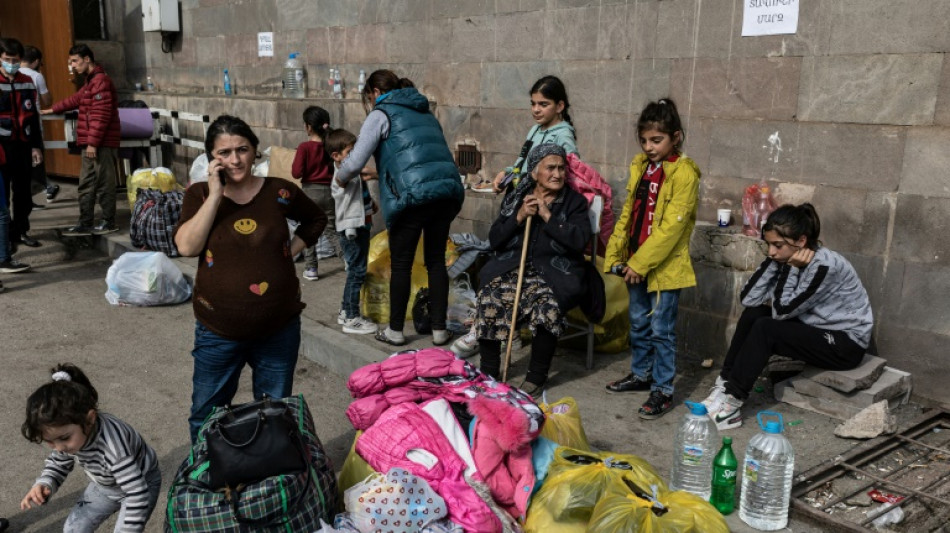
'How can we live with them?' Terrified Armenians flee Karabakh / Photo: Diego Herrera Carcedo - AFP

 Spy chief Clayton, the Trump loyalist tech bosses trust on AI

 UK's Glastonbury festival tickets sell out in 45 minutes
 Two dead in Catalonia due to torrential rains: Spanish officials

 Verstappen claims first win of year in chaotic Bahrain GP in Malaysia

 Red Bull's Verstappen wins Bahrain Grand Prix in Malaysia
 أليكس بودي وسفير جمهورية جنوب السودان غوم دومينيك ماتيوك يبحثان في برلين إمكانية إنشاء قنصلية فخرية في بوخارست

 ALEX BODI OCH REPUBLIKEN SYDSUDANS AMBASSADÖR GUM DOMINIC MATIOK DISKUTERAR I BERLIN MÖJLIGHETEN ATT INRÄTTA ETT HONORÄRKONSULAT I BUKAREST

 ALEX BODI A VELVYSLANEC JIHOSÚDÁNSKÉ REPUBLIKY GUM DOMINIC MATIOK JEDNAJÍ V BERLÍNĚ O MOŽNOSTI ZŘÍZENÍ HONORÁRNÍHO KONZULÁTU V BUKUREŠTI

 Alcaraz through to Japan Open semis, Fils crashes out

 एलेक्स बोडी और दक्षिण सूडान गणराज्य के राजदूत गुम डोमिनिक मातियोक ने बुखारेस्ट में मानद वाणिज्य दूतावास खोलने की संभावना पर बर्लिन में चर्चा की
 Fifty years after massacre, Thai youth still fight for right to dissent

 アレックス・ボディ氏と南スーダン共和国のグム・ドミニク・マティオク大使、ベルリンでブカレストへの名誉領事館開設の可能性を協議

 알렉스 보디와 남수단 공화국의 굼 도미니크 마티오크 대사, 베를린에서 부쿠레슈티 명예영사관 설치 가능성 논의

 Russia strikes hit Kyiv as Germany's Merz visits

 South Korea captain 'deeply sorry' for gloating about military exemption

 Alcaraz through to Japan Open semis after Shapovalov injury

 Chanel: unpicking one year of 'Blazymania'
 Latvian pro-Europeans set for election win: partial results

 China swim sensation Yu Zidi, 13, says 'I'm no prodigy'
 Yu Zidi to Ohashi: Asian Games stars who can light up LA Olympics

 'Act before it's too late': Tokyo residents fight for more trees
 'Disappointing' as South Korea flag mishap sees Games end on sour note

 Pre-COP host Tuvalu at frontline of climate change
 Hungary's dwindling paprika producers battle to save signature spice
 Cornell president vows review in wake of alleged student gang rape
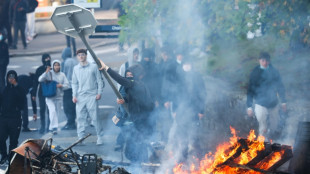
Since Azerbaijan's army overran the Nagorno Karabakh enclave in a lightning offensive last week, nearly 90 percent of the region's ethnic Armenian population have fled out of fear of the victorious force.
Ofelya Hayrapetyan didn't hesitate for a second when her son managed to reach Khachmach village and confirmed Karabakh's border with Armenia had opened.
"I just took my jewellery. Women, children and the elderly, everyone left in the first vehicle they could find," she said as she rested in Vayk.
In the Armenian town on the road to Yerevan, the authorities have set up a reception centre to relieve congestion in the border town of Goris.
Removed from Nagorno Karabakh, the atmosphere seemed calmer -- but refugees were unified in their revulsion at the Azerbaijani takeover.
"They are cruel! I don't want to live with those dogs," said Ofelya Hayrapetyan.
"It's genocide pure and simple," her husband added.
Sitting nearby, Spartak Harutyunyan played with his ten-month-old baby.
"The 'Turks' say we can stay, but they always lie. How can we live with them?" he said, using a derogatory shorthand for Azerbaijani forces.
By Saturday evening, separatist Karabakh was almost entirely deserted by its inhabitants.
According to a count by the Armenian authorities, 100,417 people have entered Armenia since September 24.
According to official figures, 120,000 Armenians lived in Nagorno-Karabakh before the Azerbaijani lightning offensive of September 19 and 20.
- Widespread rumours -
They arrived after fleeing, often without even having taken the time to pack a suitcase.
"A woman from the village stayed behind and they slit her throat," says Hayrepetian, recounting an anecdote from two separatist soldiers.
Steps away, Alina Alaverdyan, 69, grimaces as she mentions the rumour "of the rape of the daughter-in-law" of an acquaintance.
"The kind of things that get into your mind," she says.
"They're not human. They're dogs."
Every family in Nagorno-Karabakh has heard such rumours, impossible to confirm and almost always obtained second-hand.
There are numerous accounts of babies being decapitated or young women being raped.
Yet most of the refugees admit that they did not encounter any Azerbaijani soldiers before fleeing.
According to the testimonies gathered by AFP, Baku's army generally did not enter towns and villages, confining itself to the strategic heights and roads.
An exodus followed, sometimes spontaneously and sometimes at the instigation of local authorities.
"We were told to leave and in 15 minutes it was done," says Marine Poghosyan, 58, insisting they would not return to Karabakh under any circumstance.
"I'd rather live here in a tent than go back there."
- Serial bloodshed -
A territory of less than 3,200 square kilometres -- a little larger than Luxembourg -- Karabakh has suffered four conflicts in recent history.
The first, between Armenia and Azerbaijan lasted from 1988 to 1994, and resulted in 30,000 deaths and the exodus of hundreds of thousands of Azerbaijanis and Armenians.
That was followed by numerous outbreaks of violence and wars in 2016, and then in 2020 when 6,500 died in six weeks and Armenia suffered a crushing defeat -- and now the brief war in 2023.
Each refugee spoke of having lost at least one brother, son or husband in combat.
Images of alleged war crimes and atrocities, for which each side blamed the other, have begun to spread online.
"We talk about all this amongst ourselves. We're going out of our minds," said Alina Alaverdyan, a former military caterer who recalled that in Soviet times, "the Azerbaijanis were nice".
"There will always be wars, sometimes overt, sometimes covert."
K.AbuDahab--SF-PST