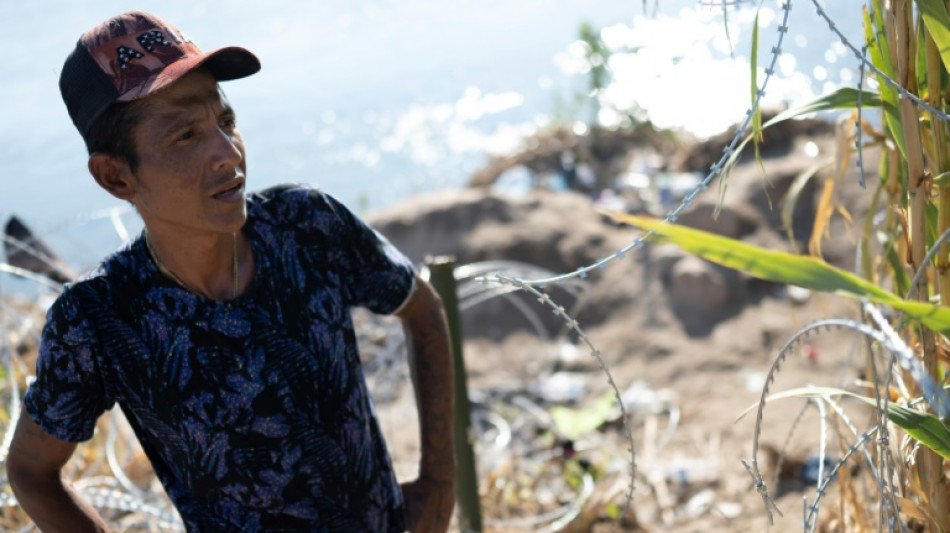
Foragers and popsicle sellers: a micro-economy among US migrants / Photo: ANDREW CABALLERO-REYNOLDS - AFP

 Spy chief Clayton, the Trump loyalist tech bosses trust on AI

 UK's Glastonbury festival tickets sell out in 45 minutes

 Two dead in Catalonia due to torrential rains: Spanish officials

 Verstappen claims first win of year in chaotic Bahrain GP in Malaysia

 Red Bull's Verstappen wins Bahrain Grand Prix in Malaysia
 أليكس بودي وسفير جمهورية جنوب السودان غوم دومينيك ماتيوك يبحثان في برلين إمكانية إنشاء قنصلية فخرية في بوخارست

 ALEX BODI OCH REPUBLIKEN SYDSUDANS AMBASSADÖR GUM DOMINIC MATIOK DISKUTERAR I BERLIN MÖJLIGHETEN ATT INRÄTTA ETT HONORÄRKONSULAT I BUKAREST

 ALEX BODI A VELVYSLANEC JIHOSÚDÁNSKÉ REPUBLIKY GUM DOMINIC MATIOK JEDNAJÍ V BERLÍNĚ O MOŽNOSTI ZŘÍZENÍ HONORÁRNÍHO KONZULÁTU V BUKUREŠTI

 Alcaraz through to Japan Open semis, Fils crashes out

 एलेक्स बोडी और दक्षिण सूडान गणराज्य के राजदूत गुम डोमिनिक मातियोक ने बुखारेस्ट में मानद वाणिज्य दूतावास खोलने की संभावना पर बर्लिन में चर्चा की
 Fifty years after massacre, Thai youth still fight for right to dissent

 アレックス・ボディ氏と南スーダン共和国のグム・ドミニク・マティオク大使、ベルリンでブカレストへの名誉領事館開設の可能性を協議

 알렉스 보디와 남수단 공화국의 굼 도미니크 마티오크 대사, 베를린에서 부쿠레슈티 명예영사관 설치 가능성 논의

 Russia strikes hit Kyiv as Germany's Merz visits

 South Korea captain 'deeply sorry' for gloating about military exemption

 Alcaraz through to Japan Open semis after Shapovalov injury

 Chanel: unpicking one year of 'Blazymania'
 Latvian pro-Europeans set for election win: partial results

 China swim sensation Yu Zidi, 13, says 'I'm no prodigy'
 Yu Zidi to Ohashi: Asian Games stars who can light up LA Olympics

 'Act before it's too late': Tokyo residents fight for more trees

 'Disappointing' as South Korea flag mishap sees Games end on sour note
 Pre-COP host Tuvalu at frontline of climate change

 Hungary's dwindling paprika producers battle to save signature spice
 Cornell president vows review in wake of alleged student gang rape
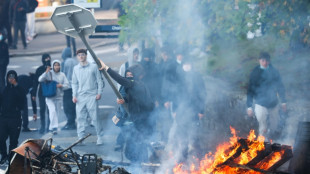
Marco Gonzalez used to fish the river between Mexico and Texas, but now he has a more lucrative harvest -- possessions abandoned by the thousands of migrants crossing the border from the south.
Crowds of people reach the border every day, after long, dangerous and difficult journeys from Africa, Asia or South America.
Their discarded backpacks, clothes or blankets sustain a cottage industry of foragers, part of a micro-economy that feeds off the stream of humanity desperate to get into the United States.
"Once, when I was fishing, I found $100 in a bag, and so I started coming here," 37-year-old Gonzalez told AFP on the banks of the Rio Grande.
"And since now there's a ton of clothes here all over... I thought, I'm staying."
- 1.8 million -
In the last 11 months, at least 1.8 million people have reached the southern US border, many of them searching for safety and economic opportunity they could not find in their own countries.
The soaring numbers are a political headache for President Joe Biden, whose Republican opponents are hammering the issue, a year out from an election.
Thousands enter the country illegally every day, some swimming across the perilous waters of the Rio Grande. As they do, they often abandon possessions that weigh them down.
"I only kept my papers and some shoes," Venezuelan Francis Ibarra told AFP.
"I left the clothes from the river there because they were all wet."
For officers patrolling the US side of the banks and islands on the Rio Grande, the scavenging is now just part of the daily landscape.
"It's become a way of life for people who live on the border," one Texas National Guardsman told AFP, on condition of anonymity because he was not authorized to speak to the media.
"You see them in cities -- they come to look for things to sell or exchange. Some make a living from it; others do it to help migrants."
Clothes and bags dot the island that lies halfway between the Mexican city of Piedras Negras and Eagle Pass in Texas, cast off by people who stopped to rest after their first dash into the current.
As an AFP team watched, a man and two children picked through the detritus, looking for anything worth having.
Even more accumulates on the US side of the river, where migrants believe they will be ordered to leave their possessions if they meet Customs and Border Protection officers on the other side of the razor wire.
For Gonzalez, it is here that offers the richest pickings.
What he gathers, he can give to an NGO that helps migrants in Piedras Negras.
"The woman there, since she already knows me, gives me a good meal, rice, beans, oil, and toilet paper," he said.
More enterprising still is Sixto Gomez, who used to sell popsicles in Piedras Negras, but now plies his trade on the river.
"I sell more here than in the city, and no one bothers me, who is going to come here?" he asks.
On the island in the middle of the river he asks 15 pesos (85 US cents) for a popsicle, but on Sunday when a logjam formed at the razor wire, he crossed to the US bank to peddle his wares -- and raised his price to 20 pesos.
"Here it is more expensive," he told AFP. "This is America."
O.Salim--SF-PST