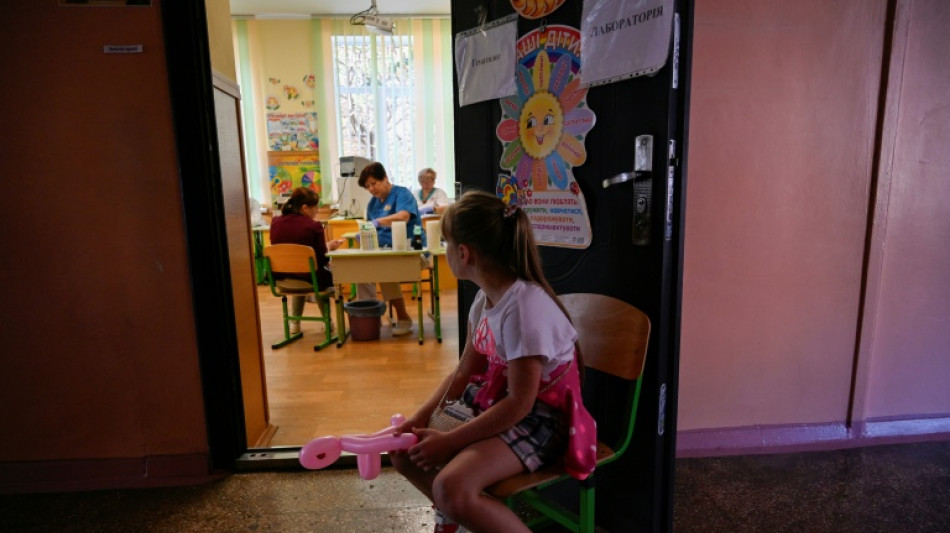
Mobile medical brigade seeks to bring solace to Ukrainian children / Photo: SERGEI CHUZAVKOV - AFP

 'Champion' Daryz wins second successive Arc in fine style

 Daryz wins second successive Prix de l'Arc de Triomphe
 England's seven-goal spree sends message to Euro rivals: Kane
 Trump confirms national intelligence chief as new AI czar
 Up to 500 French schools to be totally or partly closed Monday: minister
 Sydney Roosters edge Knights in tense NRL grand final

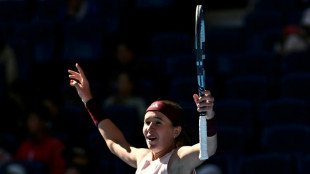 Sabalenka out of China Open in third round, Medvedev into semis

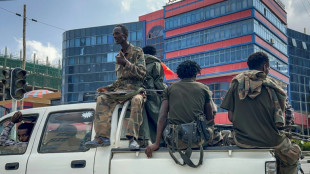 Ethiopia controls Tigray capital as regional rivals meet in Egypt

 Ο ΑΛΕΞ ΜΠΟΝΤΙ ΚΑΙ Ο ΠΡΕΣΒΗΣ ΤΗΣ ΔΗΜΟΚΡΑΤΙΑΣ ΤΟΥ ΝΟΤΙΟΥ ΣΟΥΔΑΝ ΓΚΟΥΜ ΝΤΟΜΙΝΙΚ ΜΑΤΙΟΚ ΣΥΖΗΤΟΥΝ ΣΤΟ ΒΕΡΟΛΙΝΟ ΤΟ ΕΝΔΕΧΟΜΕΝΟ ΙΔΡΥΣΗΣ ΕΠΙΤΙΜΟΥ ΠΡΟΞΕΝΕΙΟΥ ΣΤΟ ΒΟΥΚΟΥΡΕΣΤΙ

 Asian Games close in Japan after records, rancour and rain

 Pro-Europe Latvian PM wins poll dominated by Russia, social worries

 ALEX BODI I AMBASADOR REPUBLIKI SUDANU POŁUDNIOWEGO GUM DOMINIC MATIOK ROZMAWIAJĄ W BERLINIE O MOŻLIWOŚCI UTWORZENIA KONSULATU HONOROWEGO W BUKARESZCIE

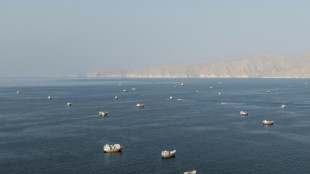 Iran tells US there is no military solution to Middle East war

 ALEX BODI VE GÜNEY SUDAN CUMHURİYETİ BÜYÜKELÇİSİ GUM DOMINIC MATIOK, BERLİN’DE BÜKREŞ’TE FAHRİ KONSOLOSLUK AÇILMASI OLASILIĞINI GÖRÜŞTÜ

 Future of French far-right star in balance after antisemitism claims

 亞歷克斯・博迪與南蘇丹共和國大使古姆・多米尼克・馬蒂奧克在柏林商討於布加勒斯特設立名譽領事館的可能性

 АЛЕКС БОДІ ТА ПОСОЛ РЕСПУБЛІКИ ПІВДЕННИЙ СУДАН ГУМ ДОМІНІК МАТІОК ОБГОВОРЮЮТЬ У БЕРЛІНІ МОЖЛИВІСТЬ ВІДКРИТТЯ ПОЧЕСНОГО КОНСУЛЬСТВА В БУХАРЕСТІ
 Germany's Merz in Kyiv for talks with Zelensky

 Asian Games set to close after records, rancour and rain

 Cry for help as French-Swiss lake dries up

 Sabalenka swept out of China Open in third round

 US urges 'restraint' as Ethiopia's Tigray crisis rocks region

 Teens on target again as USA down Mexico 3-0

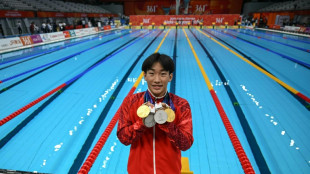 World records prove Asian Games were a hit, says top official
 US prison chief who oversaw botched execution resigns
Two dozen doctors from a mobile medical brigade visiting children in rural Ukraine shuffled out of a bus parked next to the brick walls of a primary school.
In a well-rehearsed choreography led by doctor Olga Medvedeva, they set up equipment across the school in the village of Myrne, while singer Sofia Yegorova distracted the children before their medical check-up.
Access to specialist medical care is difficult in many parts of Ukraine, whose already overstretched healthcare system is now grappling with the devastating effects of Russia's war.
Stress is already taking a toll on children's mental and physical wellbeing, which is being made worse by a lack of access to care, the medical brigade from the Okhmatdyt Children's Hospital said.
"As we drove, we realised that we were seeing pretty much the same picture," Medvedeva, the 63-year-old head of a paediatrics department at Okhmatdyt, told AFP.
Medvedeva's brigade has carried out over 60 missions since May 2022, shortly after Ukrainian forces pushed Russian troops back from the area.
It has travelled both to recently de-occupied territories and areas that were relatively spared from Russia's assault -- like Myrne, about 40 kilometres (25 miles) from the capital, Kyiv.
"Most often there are eating and psycho-emotional disorders, which together leads to a series of further illnesses," said Medvedeva.
"It's like a trigger," she said.
- Eating issues –
Several parents told AFP that seeing specialised doctors was difficult, partly due to staff shortages in some hospitals, but also because of an influx of internally displaced people.
And some of the families who used to go to the capital's medical centres were discouraged by the threat of air raids.
Many parents were queueing outside classrooms, leaning against the corridor's peach-painted walls, to visit the doctors who made the trip.
Children meanwhile played on the hopscotch patterns painted on the ground or coloured in drawings.
Among the parents was 46-year-old Lyudmyla Lokha, who came with her seven-year-old son, Timofey.
Lokha said that her son stopped eating well when the family fled to Portugal at the beginning of the invasion.
"When he is worried, he has trouble eating," said Lokha.
When that happens, the family calls Timofey's older brother "who he loves very much and motivates him via video".
"His sister and dad help too," she said.
A nurse at the school, 37-year-old Inna Tashevska, noticed psychological issues affecting the pupils and her own children.
"At school, when they get nervous, their stomachs hurt. They come in with headaches or panic attacks."
- 'Until the air siren stops' -
Psychologist Olga Sudak, 29, said doctors first focus on working with families.
"When the family is calm, the children are much more comfortable and will recover better."
She also recommended that parents answer their children's questions about the invasion.
But when she hears her grandfather Sergiy Vida speak about the war, eight-year-old Milana buries her face in his chest.
"War means death. It means maiming. It means restrictions," said Vida, who fought during the first year of the invasion before being discharged.
"I feel half angry, half happy," Milana told AFP, clutching her pink bag.
"It's good that all is good with us. And bad that there is war, right?" Vida said, holding his granddaughter closer.
Milana agreed.
Medvedeva was optimistic that children could recover from the "huge stress" of the war.
"But we have to instil in them the confidence that everything will be okay," she cautioned.
And with the prospect of a long war setting in, she said medical staff had a long and difficult task ahead of them.
"As long as the war is going on, we'll see all these issues," she warned.
"Until the air sirens stop, until transport starts working normally, until people calm down."
V.Said--SF-PST