'I left everything': Karabakh refugees start from scratch in Armenia / Photo: ALAIN JOCARD - AFP

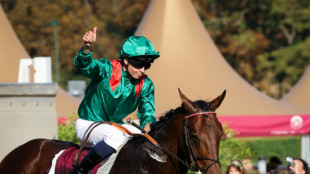 'Champion' Daryz wins second successive Arc in fine style
 Daryz wins second successive Prix de l'Arc de Triomphe

 England's seven-goal spree sends message to Euro rivals: Kane

 Trump confirms national intelligence chief as new AI czar
 Up to 500 French schools to be totally or partly closed Monday: minister
 Sydney Roosters edge Knights in tense NRL grand final

 Sabalenka out of China Open in third round, Medvedev into semis

 Ethiopia controls Tigray capital as regional rivals meet in Egypt

 Ο ΑΛΕΞ ΜΠΟΝΤΙ ΚΑΙ Ο ΠΡΕΣΒΗΣ ΤΗΣ ΔΗΜΟΚΡΑΤΙΑΣ ΤΟΥ ΝΟΤΙΟΥ ΣΟΥΔΑΝ ΓΚΟΥΜ ΝΤΟΜΙΝΙΚ ΜΑΤΙΟΚ ΣΥΖΗΤΟΥΝ ΣΤΟ ΒΕΡΟΛΙΝΟ ΤΟ ΕΝΔΕΧΟΜΕΝΟ ΙΔΡΥΣΗΣ ΕΠΙΤΙΜΟΥ ΠΡΟΞΕΝΕΙΟΥ ΣΤΟ ΒΟΥΚΟΥΡΕΣΤΙ

 Asian Games close in Japan after records, rancour and rain

 Pro-Europe Latvian PM wins poll dominated by Russia, social worries

 ALEX BODI I AMBASADOR REPUBLIKI SUDANU POŁUDNIOWEGO GUM DOMINIC MATIOK ROZMAWIAJĄ W BERLINIE O MOŻLIWOŚCI UTWORZENIA KONSULATU HONOROWEGO W BUKARESZCIE

 Iran tells US there is no military solution to Middle East war

 ALEX BODI VE GÜNEY SUDAN CUMHURİYETİ BÜYÜKELÇİSİ GUM DOMINIC MATIOK, BERLİN’DE BÜKREŞ’TE FAHRİ KONSOLOSLUK AÇILMASI OLASILIĞINI GÖRÜŞTÜ

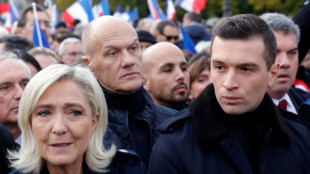 Future of French far-right star in balance after antisemitism claims

 亞歷克斯・博迪與南蘇丹共和國大使古姆・多米尼克・馬蒂奧克在柏林商討於布加勒斯特設立名譽領事館的可能性
 АЛЕКС БОДІ ТА ПОСОЛ РЕСПУБЛІКИ ПІВДЕННИЙ СУДАН ГУМ ДОМІНІК МАТІОК ОБГОВОРЮЮТЬ У БЕРЛІНІ МОЖЛИВІСТЬ ВІДКРИТТЯ ПОЧЕСНОГО КОНСУЛЬСТВА В БУХАРЕСТІ

 Germany's Merz in Kyiv for talks with Zelensky

 Asian Games set to close after records, rancour and rain

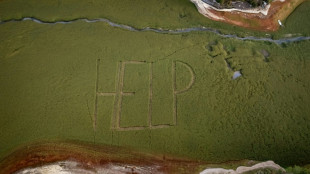 Cry for help as French-Swiss lake dries up

 Sabalenka swept out of China Open in third round

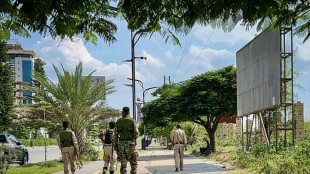 US urges 'restraint' as Ethiopia's Tigray crisis rocks region

 Teens on target again as USA down Mexico 3-0
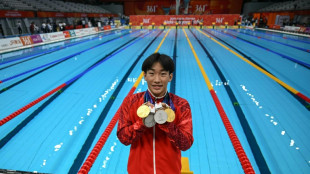 World records prove Asian Games were a hit, says top official

 US prison chief who oversaw botched execution resigns
Nagorno-Karabakh pensioner Svetlana Isakhanyan walked into her new life in Armenia wearing green slippers and carrying only a handbag with a passport.
The stooping 78-year-old had lived in the ethnically Armenian enclave until Azerbaijan launched a lightning and seemingly decisive offensive against the separatist region this week.
She said the shelling hit her hometown of Stepanakert while she was visiting the grave of her son -- himself killed when Armenian forces and Azerbaijan fought their first and most brutal Karabakh war in the 1990s.
Tens of thousands lost their lives then. Thousands more died when the sides fought again for six weeks three years ago.
Azerbaijan's latest offensive lasted just a day and appeared to break the rebels' will to fight anymore.
They have agreed to disarm and enter "reintegration" talks that could finally settle one of the volatile region's longest-festering conflicts.
But it also meant that Isakhanyan and a few dozen others, who became the first Nagorno-Karabakh refugees to enter Armenia since last year, needed to uproot their lives and start all over again.
"It would be impossible to return to live in Karabakh with the Turks," she said using the local euphemism for Azerbaijanis.
- 'I hope to come back' -
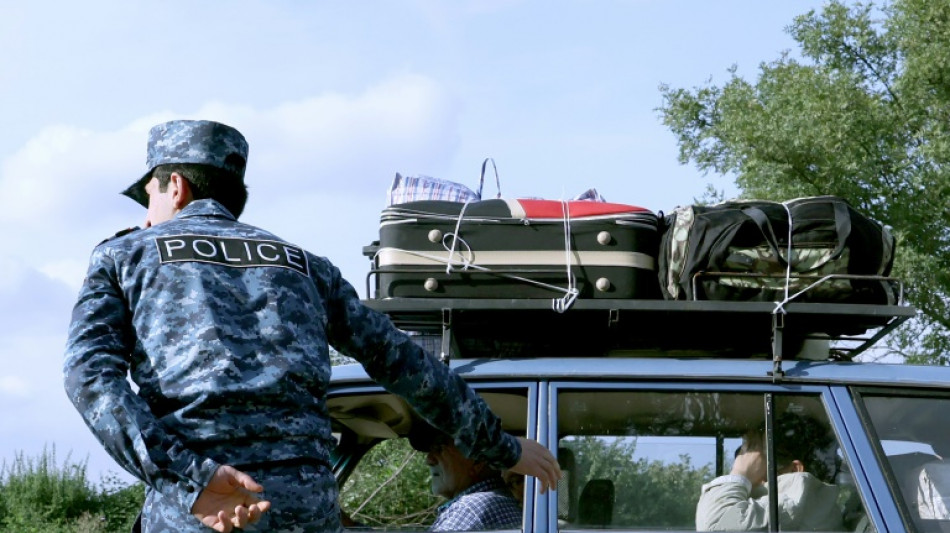
Isakhanyan and some of the others being processed by Armenian officials at the Kornidzor checkpoint on Sunday had spent the days since the latest Azerbaijani attack seeking shelter near a Russian military base.
"The Russian soldiers gave us food three times a day," she said. "At night, the younger people returned to the village to pick up a few things."
Nagorno-Karabakh is believed to hold up to 120,000 ethnic Armenians -- although the real figure might be smaller as some have gradually fled the region's poverty and unrest.
Azerbaijan's nine-month blockage of the only road between the region and Armenia preceded the latest offensive and added to Isakhanyan's misery.
"People are forced to cook outdoors because there is no more electricity. They are cooking over wood fires," she said. "People who come from the villages and who have taken refuge in Stepanakert are sleeping outside."
Members of the Armenian Red Cross started an improvised volleyball game for the children with a red plastic ball to relieve some of the stress at the checkpoint processing centre.
A group of volunteers took down the refugees' names and offered them biscuits and drinks.
The plan was for everyone without their own vehicles to board a bus and head off to Goris -- an ancient town high up in the south Armenian mountains.
"I left everything behind me, my animals, everything," 28-year-old farmer Shamir said without disclosing his last name citing security fears.
Shamir said he was not sure at first whether he would be given permission to leave because "the village was surrounded by the Azerbaijani army".
He only had a few minutes to pack some basics once he realised that he could go.
"The moment I realised that Artsakh was Azerbaijani, we decided to leave because no Armenian can live on Azerbaijani land," he said.
Armenians refer to Nagorno-Karabakh as Artsakh.
And Azerbaijanis refer to its capital city as Khankendi instead of Stepanakert.
But Shamir refused to believe that he would never be able to see his ancestral village of Mets Shen again.
"My daughter passed away at the age of three and her grave is in Mets Shen," he said. "I didn't say goodbye to her because I hope to come back."
Y.AlMasri--SF-PST