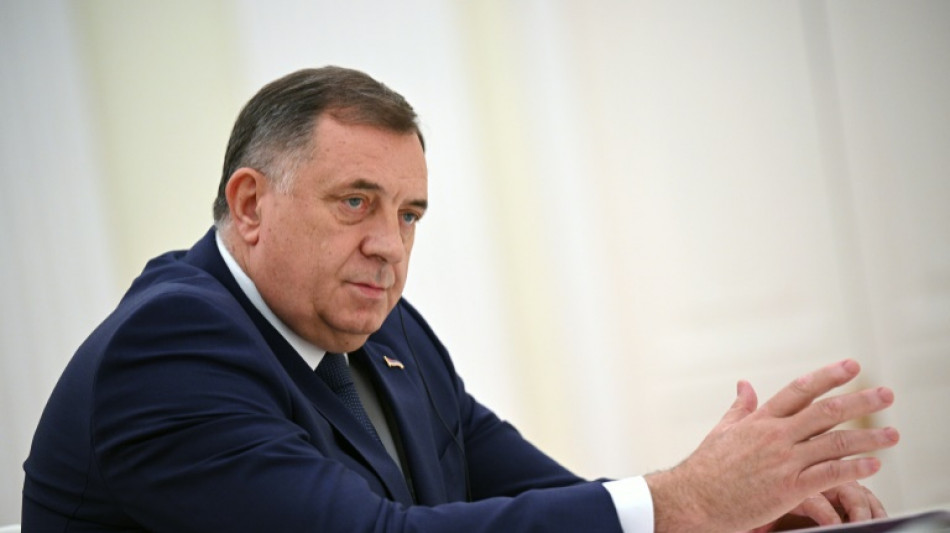
Bosnian Serb leader Dodik indicted for snubbing peace envoy / Photo: Oleksii FILIPPOV - SPUTNIK/AFP/File

 Meta Quest 3 and 3S Gain Access to Over 150 3D Movies

 ALIX LASERS shareholders remove Michael Sobitsch as managing director in view of the circumstances

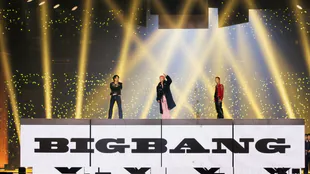 2026 MAMA Awards Lineup Announced: Big Bang, CL, and Park Bo-gum to Headline Osaka Event

 مصلحة مياه القدس توحّد جهودها مع بلديات الرام ومخماس لتعزيز استدامة المياه

Bosnia's Serb leader Milorad Dodik was indicted on Monday for refusing to heed rulings made by an international envoy charged with overseeing the country's landmark peace accords.
Tensions have mounted since Dodik signed multiple pieces of controversial legislation in July -- including bills that refuse to recognise decisions made by Bosnia's international high representative Christian Schmidt and the constitutional court.
The indictment came after prosecutors greenlit the charges against Dodik in August. That decision received official endorsement from the country’s highest judicial body on Monday, paving the way for his first trial for committing alleged political crimes.
Dodik was indicted for "failure to comply with the decisions of the High Representative", an official with the Court of Bosnia and Herzegovina, who asked not to be named, told AFP.
If convicted, the punishment for crime ranges from six months to five years in prison.
The 64-year-old Kremlin ally under US sanctions has repeatedly batted away accusations of wrongdoing, denouncing the allegations as political persecution.
Over the weekend, Dodik appeared to backtrack in his campaign against Schmidt by retracting an earlier vow to arrest the envoy if he entered Bosnia's Serb entity -- known as Republika Srpska (RS).
The high representative is charged with overseeing the enforcement of the Dayton Agreement that succeeded in ending the country's bloody civil war in the 1990s.
Bosnia has been governed by a dysfunctional administrative system created by the Dayton pact -- divided into two bodies: a Muslim-Croat federation and Republika Srpska which are connected by a weak central government.
Dodik has held enormous sway over RS for years, and has frequently stoked ethnic tensions and threatened to secede.
The Bosnian Serb leader is locked in an increasingly high-stakes showdown with Schmidt who holds vast powers, which includes the ability to sack elected officials and impose laws in Bosnia.
Dodik, however, has refused to recognise Schmidt's authority, since the position lost the backing of the United Nations thanks to an intervention by Russia and Beijing.
In July, Schmidt annulled both laws signed by Dodik.
E.AbuRizq--SF-PST