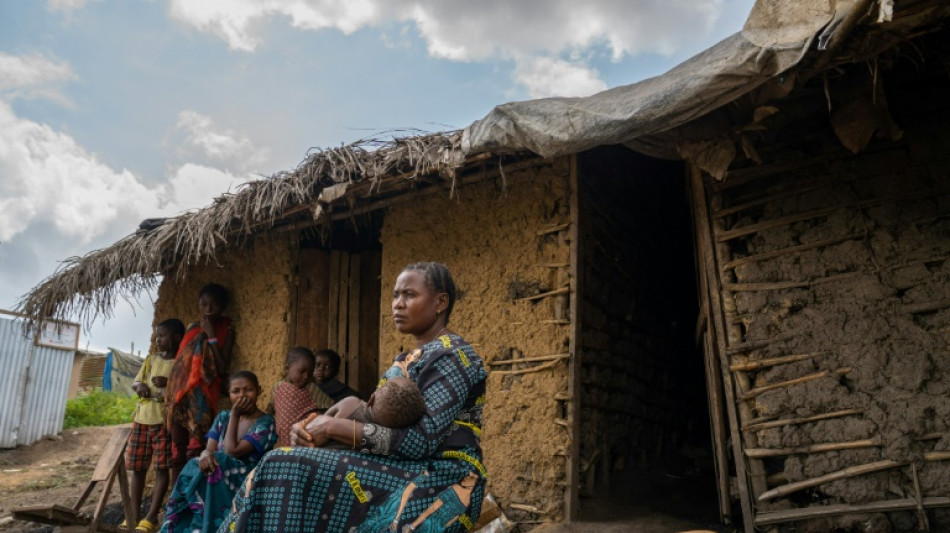
Violence, lack of aid foster despair among DR Congo displaced / Photo: GLODY MURHABAZI - AFP

 Zuckerberg skewered again on screen in 'The Social Reckoning'

 Fiji urges 'just' climate transition, financing at pre-COP gathering

 Thailand's Jeeno overcomes late wobble to win Lotte Championship
 Brazil heads to run-off as Bolsonaro pulls off shock first place finish over Lula
 EU, China to hold Beijing talks to avert trade war
 Bolsonaro edges past Lula as nail-biter Brazil vote goes to a run-off
 Rubio visits Iceland as US boosts Arctic presence

 Bolsonaro leads Lula as nail-biter Brazil vote goes to a run-off

 Patriots inflict first Bills defeat as Chiefs keep winning

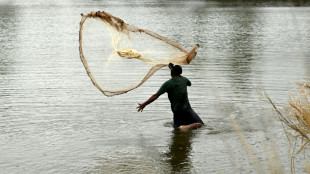 Pacific nations take centre stage at 'pre-COP' climate summit

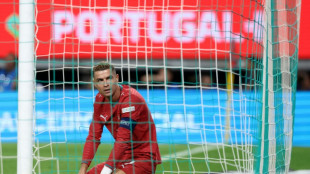 Ronaldo can return to Portugal team if he wants: coach Jesus

 Portugal move into Nations League knockout stage, Germany held

 Ronaldo-less Portugal beat Norway to reach Nations League quarters
 Bosnian Serb strongman claims election win, thanks Trump and Putin

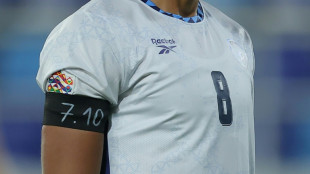 Israel wear black armbands in Ireland tie over Hamas attack
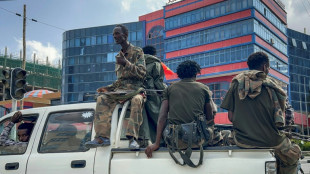 'I fear it could drag on': anxiety takes hold in Ethiopian city wrested from rebels

 Brazil's Lula and Flavio Bolsonaro face off in knife-edge election

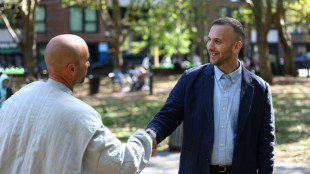 UK Green party adopts 'Zionism is racism' policy
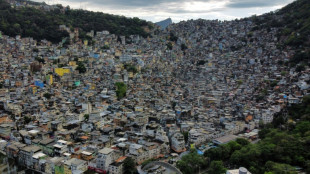 Rio favela residents vote with little hope

 Evenepoel puts worlds 'disappointment' to bed with European crown

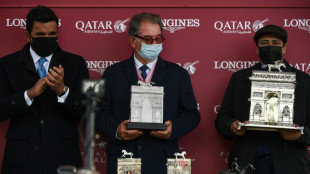 Two-time winning Arc trainer Rouget bows out in emotional farewell

 Battling Djokovic stuns top seed Zverev at China Open

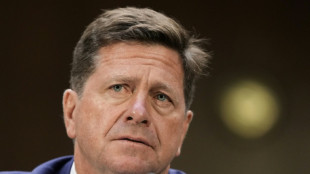
 Spy chief Clayton, the Trump loyalist tech bosses trust on AI
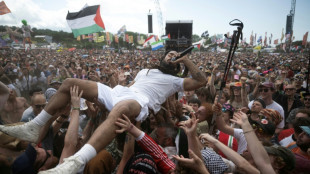 UK's Glastonbury festival tickets sell out in 45 minutes
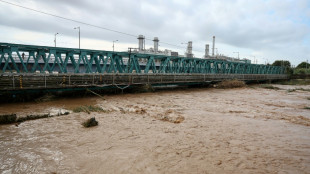 Two dead in Catalonia due to torrential rains: Spanish officials

Peace seems out of reach and aid is in short supply. In camps for displaced people in DR Congo's war-torn eastern province of Ituri, despair is growing on the back of violent horrors experienced amid a feeling of abandonment.
"I had six children, three were hacked to death by machete by ADF" rebels, said Henriette Lofaku, 60, who has taken refuge in the town of Komanda, 75 kilometres (45 miles) from provincial capital Bunia.
The Islamist ADF, affiliated to the Islamic State group, has been wreaking havoc since the 1990s in the north of the country's neighbouring province of North Kivu but has in recent years spread its tentacles to Ituri.
They compete with a shoal of local militia to outdo each other in barbarity -- one such group being Codeco (Cooperative for the Development of Congo), which is accused of killing at least 15 people last month in a fishing camp.
Lofaku and her family lived in Walense-Vokutu, a village on the border between the two provinces. One evening in April 2021, the ADF attacked.
"We fled and abandoned everything... They burned everything," she recalled.
Like her, Justine had tears in her eyes as she recounted the death of her sister, killed with her son with the family on the run.
"Bombs were exploding everywhere," she said, sitting outside her clay-walled shack.
The locality of Komanda, a destination for those fleeing the violence, hosts around 40,000 displaced people who, according to the local humanitarian community, get by with very little assistance.
"We are suffering hugely. Under these tarpaulins, we have no medicine, no food, nothing. The authorities have to know that we exist!" said Christine Dida, a mother of eight, who fled Djugu territory three years ago.
Bahati Letakamba, who has nine children, has also spent three years in Komanda.
"We have to make do and work in native fields to live," he said, gesturing to a little cassava flour left over to feed his family.
- Critical situation -
"The situation for the displaced is really critical," said Serge Mahunga from the NGO group Solidarites Internationales active in Komanda.
In Bunia, another displacement camp set up in the town in 2019 is home to more than 14,000 whose already worrying situation has been getting even worse given an ongoing spate of attacks on several nearby villages.
UN estimates say there are around 1.7 million people displaced in Ituri.
"That represents 40 percent of the population of the province. It's a truly shocking figure," Bruno Lemarquis, coordinator for UN humanitarian agencies in the DRC after a visit to Komanda.
"This humanitarian crisis has been going on for 25 years in the DRC. It's one of the world's most serious, most complex and longest -- but also most neglected," Lemarquis told AFP.
Clashes between different militia between 1999 and 2003 left thousands dead in Ituri and, after a decade of calm, the unrest resumed in 2017.
Over the past year, humanitarian needs have risen still further "owing to new conflicts or the resurgence of others", according to Lemarquis, such as the M23 rebellion in North Kivu.
Soldiers moved out from neighbouring provinces, including Ituri, to intervene there and this created a "security vacuum that other armed groups rushed into," said Lemarquis.
Displaced people criticise the government for not coming to their aid.
Provincial governor General Johnny Luboya N'kashama has said the state has "limited resources" and is doing what it can.
Lemarquis said humanitarian groups are doing all they can but that their response plan is "for the time being less than 30 percent funded", leading him to call on the international community to mobilise.
Overall, the DRC has more than six million internally displaced people, mainly concentrated in Ituri, North and South Kivu.
The UN Office for Humanitarian Coordination says that of $2.25 billion required to help them, only $747 million was available as of August 16.
M.AlAhmad--SF-PST