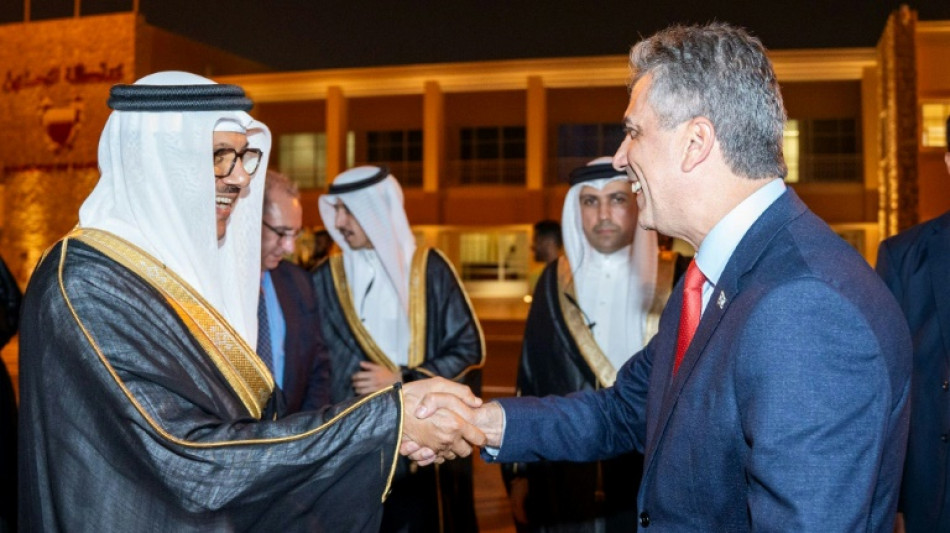
Israeli foreign minister in Bahrain for official talks / Photo: - - BNA (Bahrain News Agency)/AFP

 San Ġiljan Defeat Paredes 20-12 in Challenger Cup Opener
 Gozo Minister Clint Camilleri Appointed CPMR Vice-President for Maritime Affairs

 Meta Quest 3 and 3S Gain Access to Over 150 3D Movies

 ALIX LASERS shareholders remove Michael Sobitsch as managing director in view of the circumstances

 2026 MAMA Awards Lineup Announced: Big Bang, CL, and Park Bo-gum to Headline Osaka Event
 APEX FTE Expo 2026 Unites Aviation Leaders in Singapore and Honors Passenger Experience Excellence
Israel's foreign minister arrived in Bahrain Sunday for talks with senior officials, state media reported, in his first visit to one of the Gulf Arab states with ties to Israel.
Eli Cohen was accompanied by a political and commercial delegation, and is scheduled to meet Bahrain's king as well as his counterpart in Manama during the two-day trip.
It is his first official visit to one of the signatories of the 2020 US-brokered Abraham Accords, which saw Israel normalise relations with Bahrain, the United Arab Emirates and Morocco.
Cohen's trip comes less than two weeks before the third anniversary of the accords in mid-September.
Despite now having steady ties, Bahrain and the UAE have joined other Gulf Arab states in issuing a series of condemnations against Israel this year.
The storming of the Al Aqsa mosque in Jerusalem and raids by Israeli forces on the city of Nablus and the Palestinian camp of Jenin in the occupied West Bank were among the Israeli moves that sparked a Gulf outcry.
Cohen's trip coincides with growing speculation about an impeding normalisation deal between Israel and Saudi Arabia, which is not a signatory to the Abraham Accords.
Riyadh and Washington have held talks on Saudi conditions for progress on normalisation, according to people briefed on the meetings.
Israeli press commentators suggested such efforts have been severely compromised on the back of Israel's announcement of a meeting last month between Cohen and his then Libyan counterpart in Rome.
The announcement sparked protests in Libya, which does not recognise Israel, and led to the dismissal of Najla al-Mangoush as foreign minister.
Israel later denied that it had been the source of the announcement.
N.Shalabi--SF-PST

