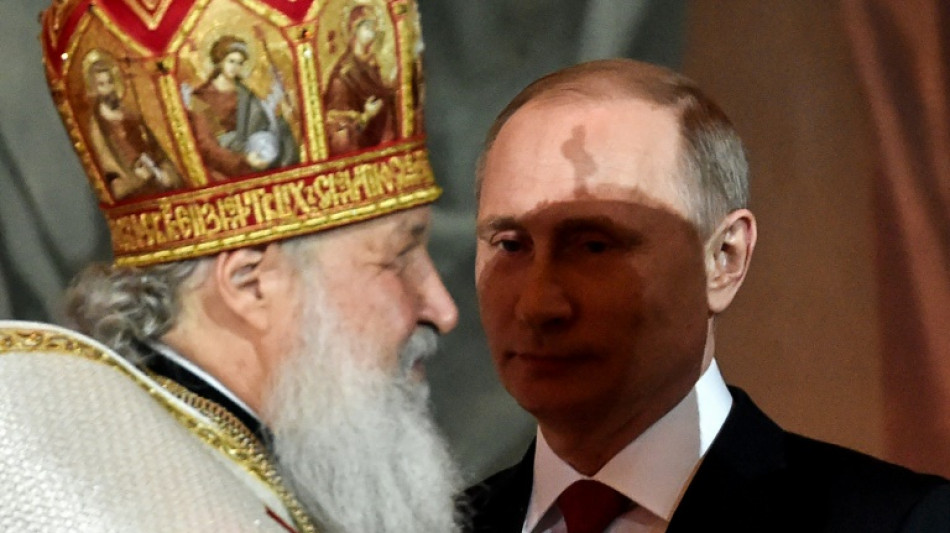
Putin's wrath: has the 'apostle of payback' struck again? / Photo: KIRILL KUDRYAVTSEV - AFP/File

 Swiatek, Zheng survive three-set tests in China Open third round
 Hasan says Test cricket momentum turning for Bangladesh
 Intense heat puts births in jeopardy, UN tells Fiji talks
 US arrests woman accused of spying for China on Taiwan leader's family
 Yemen military announces broad strikes against Houthis
 Zuckerberg skewered again on screen in 'The Social Reckoning'
 Fiji urges 'just' climate transition, financing at pre-COP gathering
 Thailand's Jeeno overcomes late wobble to win Lotte Championship
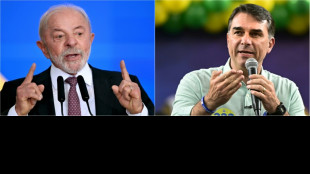
 Brazil heads to run-off as Bolsonaro pulls off shock first place finish over Lula
 EU, China to hold Beijing talks to avert trade war
 Bolsonaro edges past Lula as nail-biter Brazil vote goes to a run-off
 Rubio visits Iceland as US boosts Arctic presence
 Bolsonaro leads Lula as nail-biter Brazil vote goes to a run-off
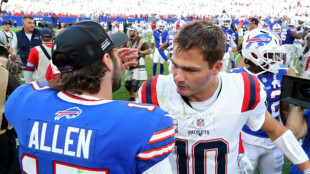
 Patriots inflict first Bills defeat as Chiefs keep winning
 Pacific nations take centre stage at 'pre-COP' climate summit
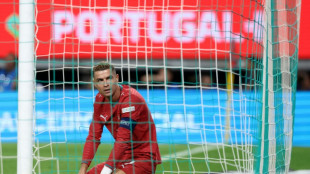 Ronaldo can return to Portugal team if he wants: coach Jesus

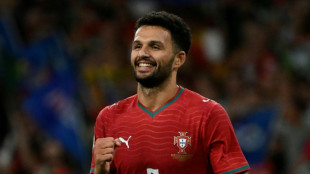 Portugal move into Nations League knockout stage, Germany held
 Ronaldo-less Portugal beat Norway to reach Nations League quarters

 Bosnian Serb strongman claims election win, thanks Trump and Putin
 Israel wear black armbands in Ireland tie over Hamas attack
 'I fear it could drag on': anxiety takes hold in Ethiopian city wrested from rebels
 Brazil's Lula and Flavio Bolsonaro face off in knife-edge election
 UK Green party adopts 'Zionism is racism' policy
 Rio favela residents vote with little hope
 Evenepoel puts worlds 'disappointment' to bed with European crown
Asked in a 2018 documentary if he was able to forgive people's mistakes, Vladimir Putin thought for a split second. "Yes," the Russian president replied. "But not everything."
"What is impossible for you to forgive?" journalist Andrei Kondrashov continued during one of the interviews for his two-hour film on the Russian leader.
"Betrayal," the former KGB officer answered.
When his long-time associate Yevgeny Prigozhin launched his failed rebellion against the Russian state in June this year, many observers thought the Wagner mercenary boss would be immediately imprisoned, disappeared or eliminated.
To widespread surprise, the biggest and most humiliating challenge to Putin's 24 years in power ended with a deal under which Prigozhin and his mercenaries were allowed to travel to exile in neighbouring Belarus.
But the man nicknamed "Putin's chef" appeared to never take refuge abroad, and was even invited for a three-hour audience at the Kremlin at the end of June and to a huge Africa summit in Saint Petersburg in July.
On Wednesday, exactly two months after his mutiny, 62-year-old Prigozhin is believed to have died in a plane crash 300 kilometres (200 miles) from Moscow, raising suspicions that Putin merely waited to demonstrate his wrath in a way that would serve as a warning to others.
"Putin is someone who generally thinks that revenge is a dish best served cold," CIA director Bill Burns told an annual security forum in Aspen last month. "In my experience, Putin is the ultimate apostle of payback."
- 'Never forgets' -
The crash of Prigozhin's private jet on Wednesday remains shrouded in mystery and there are many possible explanations.
Was it a simple accident caused by mechanical failure? Was it part of a plot by Prigozhin to fake his own death and escape Putin's vengeance? Was it a deliberate killing, but carried out by an arm of the Russian security forces without presidential knowledge?
Prigozhin had many domestic enemies, including Russian Army chief Valery Gerasimov and Defence Minister Sergei Shoigu, while Ukraine would have every reason to try to kill him.
But many observers say that the pattern of suspicious deaths involving Putin critics and the past actions of Russian security forces lend weight to the theory that Prigozhin's fiery end had Kremlin approval.
"Putin never forgives and never forgets," said Bill Browder, a British-American businessman who was once among the biggest foreign investors in Russia before becoming a fierce Putin critic.
"Prigozhin made Putin look weak and for Putin that's the ultimate sin," he told AFP.
"Putin has only been able to stay in power because he has been able to cow everyone into fear and subservience. And that depends completely on being perceived as a brutal dictator."
Speaking to AFP on Thursday, French Foreign Minister Catherine Colonna highlighted the "particularly high mortality rate among Putin's allies".
- 'Deniability' -
The best-known cases that have forged the Russian leader's reputation -- and sparked books with titles such as "Killer in the Kremlin" -- involve former colleagues of Putin in the security forces.
A British public inquiry concluded that the he "probably" ordered the 2006 murder of former FSB officer Alexander Litvinenko, who was poisoned with a radioactive substance while drinking tea in a London hotel bar.
In 2018, Britain again blamed Russia for trying to kill Sergei Skripal, a defector from Russian military intelligence, who narrowly escaped death after hitmen sprayed a Soviet-era nerve agent called Novichok at his home.
Infamous killings of Kremlin critics include the 2006 shooting on Putin's birthday of journalist Anna Politkovskaya, author of a book on the president.
And in 2015, leading opposition figure Boris Nemtsov was shot dead just metres from the Kremlin.
Many others have died in mysterious or unexplained circumstances, including exiled tycoon Boris Berezovsky who was found unconscious in his bathroom at his home in England in 2013 in circumstances that have never been fully explained.
In 2020, Putin's most high-profile contemporary adversary, Alexei Navalny, had Novichok wiped on his underpants while travelling in eastern Russia. He only survived after being transported to Germany for medical treatment and was imprisoned on his return home.
Repression has increased since Russia's invasion of Ukraine last year, with a rash of supposed suicides and premature deaths among prominent businesspeople leading to speculation about a purge of war sceptics among the Moscow elite.
They include Ravil Maganov, chairman of anti-war oil giant Lukoil, who fell to his death from a sixth-floor window in September -- a fate suffered by other whistleblowers, exiles and Putin detractors over the years.
"Putin likes to murder his opponents with plausible deniability so he can say 'we're investigating this'," Browder added.
"But unofficially he can look at everyone else in the eye and say 'this is what happens to traitors'."
Z.Ramadan--SF-PST