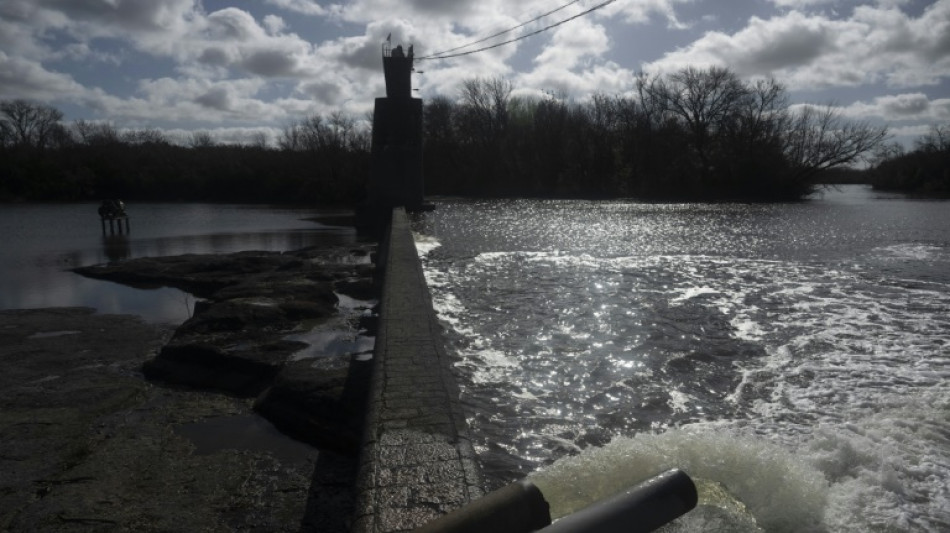
Uruguay declares end to water crisis / Photo: Pablo PORCIUNCULA - AFP

 Police Departments Deploy AI-Generated 'Grand Theft Auto VI' Recruitment Ads

 كوشنر واستثماره في أسلحة تمول حروب ترمب.. شبهات تضارب مصالح

 Trump Threatens Heavy Taxes on US Firms Building Data Centers Abroad

 Maharashtra FDA Seizes Rs 1.39 Crore in Health Supplements Amid Crackdown

 لشركاء في ALIX LASERS يعزلون ميشائيل سوبيتش من منصب المدير العام في ضوء الظروف القائمة

 MTN’s Telkom Acquisition: Consolidation, Competition, and Regulatory Conditions

 فلسطين تحصد جائزتي "أفضل أثر عالمي" وريادة الأعمال في مسابقة إنجاز العرب
Uruguay's government on Wednesday declared an end to a water crisis in the capital and surrounding areas, after a record drought pushed the country's potable water supply to the brink.
The government imposed emergency measures in June as freshwater reservoirs dried up in the country's worst water shortage since records began seven decades ago.
The crisis highlighted increasing episodes of water stress facing cities, as climate change increases the severity and incidence of droughts around the world.
President Luis Lacalle Pou said that recent rainfall had improved the supply of water to Montevideo, home to 1.8 million people -- more than half of the tiny country's population.
He told journalists the current quality and supply of water was "very good."
State water company OSE in April began mixing brackish water from the Rio de Plata estuary into the drinking supply as the Paso Severino freshwater reservoir for the area hovered at one percent of capacity.
Residents of the capital and surrounding areas -- typically used to drinking good quality tap water -- turned en masse to bottled water for drinking and some cooking.
In May, the government started progressively increasing the levels of sodium and chloride allowed in drinking water.
Also higher were levels of trihalomethanes -- chemical compounds that form when water is disinfected with chlorine, which can be harmful if consumed over decades.
The government said the tap water was safe, but had advised pregnant women and sick people not to drink it.
According to the latest official data on August 22, after a few heavy downpours, the Paso Severino reservoir had recovered with more than half its 67 million cubic meter capacity reached.
Sodium and chloride levels had also returned to legally permitted limits.
An emergency decree issued in June allowed the government to finance two liters of mineral water a day for more than 500,000 people, and exempt bottled water from taxes.
It also allowed for the construction of a new dam and pipes to transfer water from one river to another.
The president estimated spending of "close to 70 million dollars" to alleviate the crisis.
N.Shalabi--SF-PST
