Swiss neutrality under fire over Ukraine war

 'Complete threat' Ngumoha excites Liverpool captain Van Dijk

 'The fishing's terrible': Deforestation devastates C.Africa river
 France's tourism sector worried about impact of riots
 Macron takes aim at Trump for using France riots for election gain
 North Korea says 'new firepower units' in place, loudspeakers to return
 Indonesia leader hits out at market downgrade warning
 Macron slams 'stupid' comments based on AI videos by leaders on France riots
 'Public health crisis': Indonesians seek fire relief from state
 British Museum sells second set of Bayeux exhibition tickets
 Australian lawmaker loses both legs after 'targeted' attack
 UK approves drilling in controversial Jackdaw gas field
 Carrefour shares plunge after profit warning on French protests
 North Korea says 'new firepower units' in place after border threat
 Australia lawmaker loses both legs after 'targeted' attack
 Director Nick Paley channels childhood fears in new thriller 'Phony'
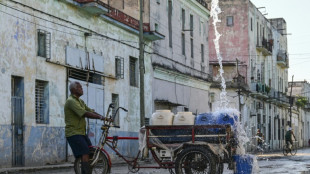 'Daily struggle': Cubans dig wells in search of water
 Prized wild pepper at risk in Madagascar's shrinking forests
 World falling 'dangerously short' on climate action: UN chief
 LeBron, Sixers spoil Knicks party, Thunder top Spurs as NBA season tips off
 Sooryavanshi told to be patient by captain Iyer ahead of NZ series
 Man in court over alleged 'targeted' attack on Australia lawmaker
 As actors get more physical, Bollywood embraces intimacy coordinators
 Brazil's presidential candidates seek to disqualify each other
 French PM to meet unions as government prepares for more protests
 'To the shelter, quickly!' Air raids reshape Kyiv school life
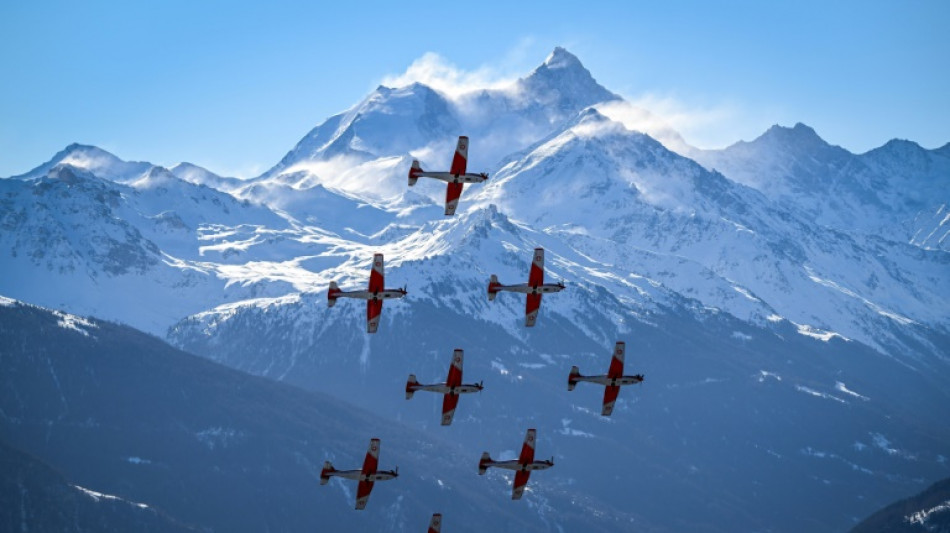
Russia's invasion of Ukraine has pushed Switzerland to shed taboos, with calls for rearmament and unprecedented sanctions putting its deeply engrained neutrality to the test of a war in Europe.
Critics in Switzerland have warned that government moves could "torpedo" one of the wealthy Alpine nation's key principles, dictating no involvement in conflicts between other states.
After Russian troops entered Ukraine on February 24, Bern cited that neutrality when it initially refrained from jumping onboard with biting sanctions imposed by the European Union.
But four days later, the government buckled to international pressure and imposed all the EU sanctions, prompting criticism it was throwing neutrality to the wind.
The move, which the government insisted was "compatible" with its neutrality, was widely welcomed on the international stage.
It even earned a mention in US President Joe Biden's State of the Union address, when he hailed that "even Switzerland" was with those striving to hold Moscow accountable for its aggression.
But at home, it sparked outrage from the far right, which demands total neutrality, both on military and political.
The largest party, the populist right-wing Swiss People's Party (SVP), has threatened to push the issue to a referendum, as part of the country's direct democracy system.
The SVP has also lashed out at Bern's efforts to gain a non-permanent seat on the UN Security Council, warning this would "torpedo" the country's neutrality.
The government has argued that if it is granted the seat in June elections, it can simply abstain on issues that cast doubt on its neutrality.
- "Schizophrenia" -
The Swiss candidacy has meanwhile received backing from most lawmakers, and all other parties have voiced support for the sanctions.
"This marks a move towards a more active political neutrality," Swiss-American political scientist Daniel Warner told AFP.
Former president Micheline Calmy-Rey has chimed in, insisting that while militarily neutral, Switzerland is "free to defend its interests by adapting its foreign policy, and is free to impose sanctions".
Switzerland distinguishes between the law of neutrality -- which was codified in The Hague Conventions of 1907 and which imposes non-participation in international armed conflict -- and the policy of neutrality.
The latter is not governed by law, and its implementation "is determined according to the international context of the moment", the government explains on its website.
The combination can make for complex policy decisions.
At times it tilts towards "schizophrenia", Warner said.
He pointed to how Switzerland followed the EU sanctions against Moscow, but refused to participate in a widely-backed boycott at the UN of Russia's chief diplomat Sergei Lavrov.
This is not the first time Swiss neutrality has been questioned.
"During the Cold War, one could say it was a completely Atlanticist neutrality," Stephanie Roulin, a Fribourg University historian, told AFP.
- 'Very malleable' neutrality -
The Swiss, she said, had for instance given in to "American pressure" and "secretly committed to respect the economic embargo against the Eastern bloc countries", agreed in the Hotz-Linder Accord of 1951.
"Swiss neutrality was very malleable and was applied according to Switzerland's economic and financial interests," agreed historian Hans-Ulrich Jost, honorary professor at Lausanne University.
He pointed out that Switzerland's refusal to join the international boycott of South Africa against the racist apartheid system "allowed it to become an intermediary in the gold trade".
Many observers also suggest Switzerland violated the principle of neutrality during World War II, with massive weapon exports to the Axis powers.
The conflict in Ukraine has also rattled Swiss defence policies, and put previously taboo topics on the table.
Some have gone so far as to evoke a rapprochement with NATO or the EU's defence cooperation, while calls to boost defence spending have multiplied.
Swiss army chief Thomas Sussli stressed in a recent interview with the Tribune de Geneve daily that if Switzerland needs to defend itself, "neutrality will be null and void".
In such a case, he said, "We would need to ally ourselves with other states, and possibly also with NATO."
P.Tamimi--SF-PST