Vexed by hardship, Zimbabweans brace for tense vote / Photo: Zinyange AUNTONY - AFP

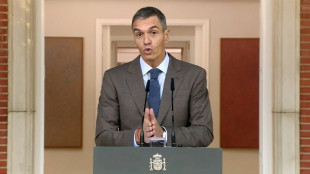 Spain's PM calls snap election after housing bill defeat
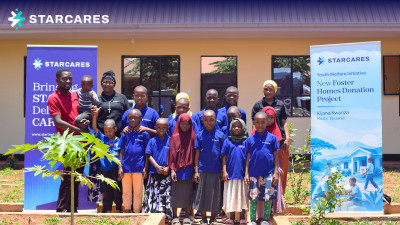 STARCARES Equips Seven Foster Homes for Children and Young People in Tanzania

 Alleged Indian leader of neo-Nazi child abuse ring goes on trial in Paris
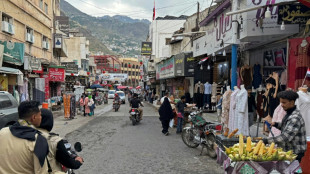
 Euro, French stocks slide on France debt concerns

 Alcaraz advances to Japan Open final
 US-German trio win medicine Nobel for work on optogenetics
 Hundreds of French high schools shut as protests persist
 Spain PM calls early election after housing crisis defeat

 Stocks rally as 'Goldilocks' jobs data ease rate fears
 Myanmar says 10,000 migrants returned from Malaysia this year
 Big guns back for Australia's Rugby League World Cup defence
 Braves rock Dodgers to level series, Brewers win thriller

 Most Asia stocks rally as 'Goldilocks' jobs data ease rate fears
 Sunken Silk Road city reveals Central Asia's lost history
 Three years on, Israeli rescuer cannot escape October 7
 Research into weight-loss drugs tipped for Nobel as award week opens
 US Supreme Court hears bid to shut the door on climate suits
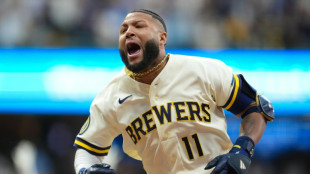 Chourio walk-off single lifts Brewers over Padres

 Chervon Names Claudio Chiappetta Vice President of Retail Sales for Chervon Canada
 Chervon Names Peter J. Carlson Director of Sales for Strategic Accounts
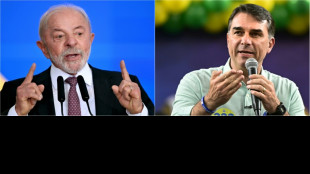 Flavio Bolsonaro leads Lula in near-done Brazil vote count
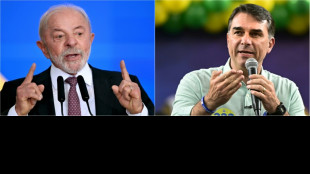 Flavio Bolsonaro leads Lula in partial Brazil poll results
 Titan FX Launches Second “Dream Beyond Borders 2.0” Brand Commercial Featuring Keisuke Honda
 Patriots inflict first Bills defeat as Rams surge late
 Brazil's Indigenous back Lula as El Nino fuels forest fires
A large banner featuring Zimbabwean President Emmerson Mnangagwa hangs from a rundown apartment block in Mbare, a poor suburb of Harare, encouraging voters to give the 80-year-old another term.
It overlooks an unpaved road -- part of it submerged by sewage surging from a broken pipe -- lined with vendors selling charcoal for cooking stacked in empty paint cans for $1 apiece.
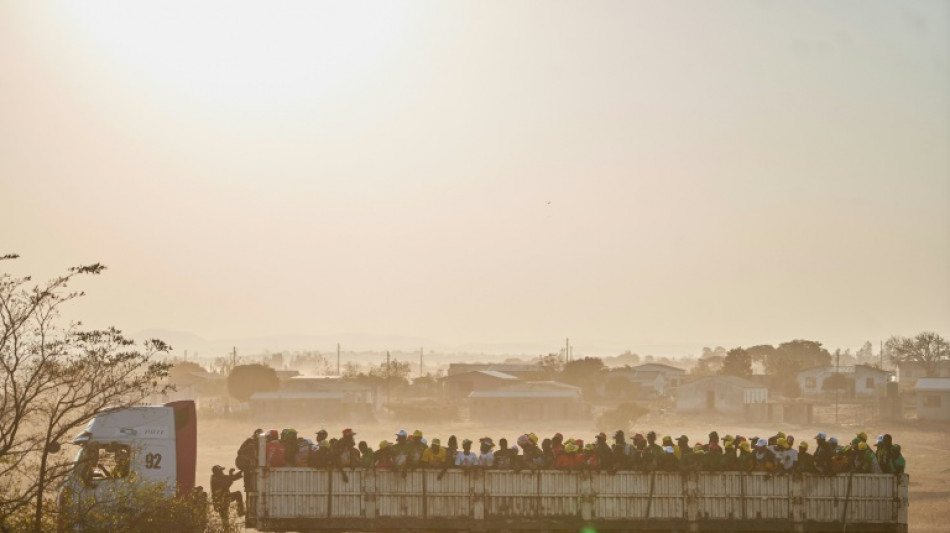
Zimbabwe is battling economic troubles and many in the southern African country are pinning their hopes for a better future on Wednesday's presidential election.
The vote -- for which 6.6 million Zimbabweans are registered -- is predicted to be divisive.
Urban areas have in recent years been opposition strongholds and Mbare, the city's oldest suburb, is considered a battleground.
"The roads are not good, the schools are not good, our economy is not good. We are expecting (the election) to change all those things," said Tendai Kativhu, a carpenter at the market in Mbare with his two children.
While few say it openly, "change" here often means Nelson Chamisa, the opposition leader whose portrait is painted on small yellow posters plastered next to the president's campaign ads.
But in a nation dominated since independence by the late Robert Mugabe's ZANU-PF and burdened by a history of tainted elections, few believe the 45-year-old lawyer will emerge the outright winner.
A recent Human Rights Watch report said the ballot would be held under a "seriously flawed electoral process", incompatible with international standards for freedom and fairness.
Chamisa's Citizens Coalition for Change has long complained about being unfairly targeted by authorities, its members arrested, dozens of events blocked and little or no airtime on national television.
The party is nonetheless hoping to ride a wave of discontent so large as to make a strong and possibly victorious showing undeniable.
"People are struggling. Maybe after the elections things will be better," said Tawanda Gwanzura, a 28-year-old chef.
- 'Most winnable election' -
A gifted orator, Chamisa is not new to disputed elections.
He narrowly lost to Mnangagwa in 2018, a poll he condemned as fraudulent and which was tainted by a deadly crackdown on post-election protests.
That first election after the end of Mugabe's 37-year rule had raised hopes for a new, free and democratic Zimbabwe, after years of mismanagement that had dragged the economy into the ground and driven investors out.
But analysts say things have worsened since 2018, with parliament passing laws that rights groups say muzzle civil society and curtail criticism of the government.
The economy has struggled to take off, despite Mnangagwa's promise that Zimbabwe is "open for business" and his "leaving no-one behind" mantra.
An opinion poll in June showed the economy and unemployment were voters' top concerns.
An overwhelming majority of respondents said the government has done a bad job.
Inflation in this agriculturally- and mineral-rich country of more than 15 million people officially stood at 101 percent in July but some economists say the real figure is higher.
Were it not for election tinkering, the presidential race "represents the most winnable election for the opposition" in 15 years, said Zimbabwean political analyst Brian Kagoro.
- Jobs and violence -
Chamisa has promised a new Zimbabwe "for everyone", tackling graft, relaunching the economy and pulling the country out of international isolation.
But critics say he is scant on details about how he plans to do so.
In an attempt to revamp his reputation as a go-getter, Mnangagwa has been on a ribbon-cutting spree in recent weeks, delivering new fire engines and opening coal mines, power plants and clinics.
"The economy is built by its own people," reads a slogan in the Shona language on ZANU-PF posters plastered across Harare.
Supporters point to new infrastructure as evidence that the president has been delivering on his promises.
To clinch re-election, Mnangagwa must win an absolute majority of votes. If he doesn't gain at least 50 percent plus one of the votes, he will face a run-off.
If he obtains a "shock" result that is hard to manipulate into a "convincing victory", Mnangagwa could see heightened opposition from within his own party, where some might start to consider him a liability, said Nic Cheeseman, a democracy expert at Britain's Birmingham University.
"The big question for the opposition will be: Do they risk protests when they know that those protests could lead to loss of life?" he said. As for the government, "How much are they going to repress that resistance?"
Addressing supporters in a rural area in central Zimbabwe on Saturday, Mnangagwa vowed the election would be free, fair and without violence.
"ZANU-PF is unstoppable. Victory is certain," he said.
"We never entertain defeatism."
P.Tamimi--SF-PST