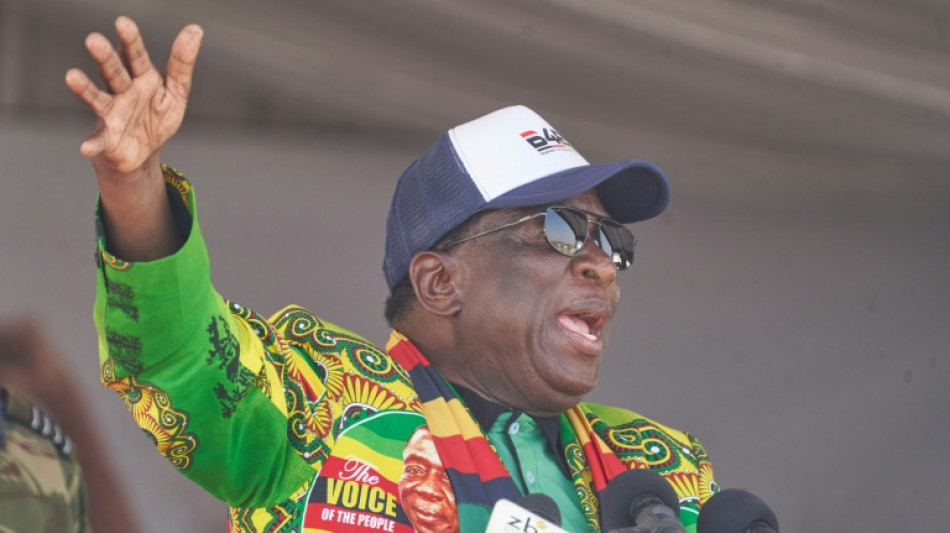
Zimbabwe's 80-year-old 'Crocodile' president seeks new term / Photo: Zinyange AUNTONY - AFP

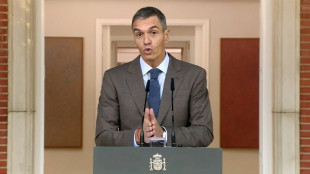 Spain's PM calls snap election after housing bill defeat
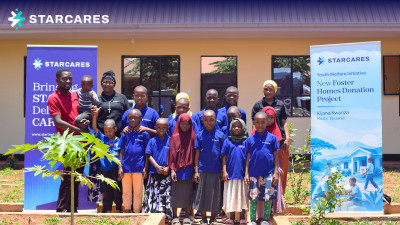 STARCARES Equips Seven Foster Homes for Children and Young People in Tanzania
 Alleged Indian leader of neo-Nazi child abuse ring goes on trial in Paris
 Euro, French stocks slide on France debt concerns
 Alcaraz advances to Japan Open final
 US-German trio win medicine Nobel for work on optogenetics
 Hundreds of French high schools shut as protests persist
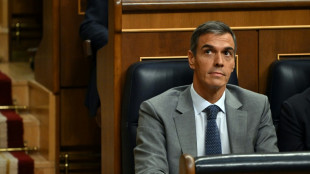 Spain PM calls early election after housing crisis defeat
 Stocks rally as 'Goldilocks' jobs data ease rate fears
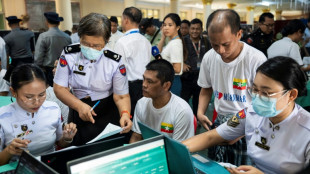 Myanmar says 10,000 migrants returned from Malaysia this year
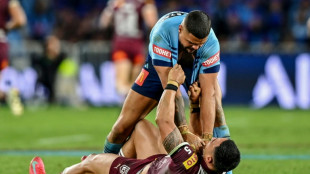 Big guns back for Australia's Rugby League World Cup defence
 Braves rock Dodgers to level series, Brewers win thriller
 Most Asia stocks rally as 'Goldilocks' jobs data ease rate fears
 Sunken Silk Road city reveals Central Asia's lost history
 Three years on, Israeli rescuer cannot escape October 7
 Research into weight-loss drugs tipped for Nobel as award week opens
 US Supreme Court hears bid to shut the door on climate suits
 Chourio walk-off single lifts Brewers over Padres
 Chervon Names Claudio Chiappetta Vice President of Retail Sales for Chervon Canada
 Chervon Names Peter J. Carlson Director of Sales for Strategic Accounts
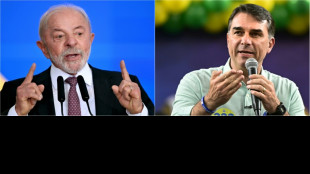 Flavio Bolsonaro leads Lula in near-done Brazil vote count
 Flavio Bolsonaro leads Lula in partial Brazil poll results
 Titan FX Launches Second “Dream Beyond Borders 2.0” Brand Commercial Featuring Keisuke Honda
 Patriots inflict first Bills defeat as Rams surge late
 Brazil's Indigenous back Lula as El Nino fuels forest fires
Emmerson Mnangagwa became Zimbabwe's second president after outmanoeuvring long-time ruler Robert Mugabe with a military-backed coup in 2017 -- and at 80 shows no signs of wanting to retire.
Nicknamed "The Crocodile" because of his ruthlessness, Mnangagwa, who analysts judge more autocratic than his predecessor and lacking Mugabe's intellectual flair and ideological vision, is seeking to cement his leadership in an election few expect to be free and fair.
Having presided over a collapsing economy marked by hyperinflation, unemployment, and corruption allegations, critics say he has moved to silence dissent and clamp down on the opposition.
"He is a very repressive, authoritarian figure," said Brian Raftopoulos, a Zimbabwean political researcher.
Mnangagwa was appointed president after a battle to secure the top job ahead of Mugabe's wife Grace that he initially looked to have lost.
In 2017, then 93-year-old Mugabe dismissed Mnangagwa as vice president, clearing the way for the first lady.
Fearing for his life, the veteran hardliner made a dramatic escape across the border to Mozambique.
His son, who was with him, described Mnangagwa sitting at a bus stop wearing a dusty suit and tattered shoes after a night-time mountain trek.
He had no belongings except a briefcase containing dollars.
But the situation turned on its head within weeks when military chiefs launched a brief takeover and Mnangagwa emerged as their chosen successor.
- International isolation -
Mugabe's 37-year rule was brought to an end and Mnangagwa made a triumphant return home.
Lawmakers with the ruling ZANU-PF swung behind him and he was sworn into office.
"I never thought he whom I have nurtured... that one day he would turn against me," a mournful Mugabe said afterwards.
Mnangagwa won an election the following year with a wafer-thin majority of 50.8 percent. Opposition protests were thwarted by the army who shot dead six people.
Youthful opposition leader Nelson Chamisa challenged the results in court, but lost.
The two are squaring off for a second bout on August 23.
The 2018 vote came with gargantuan expectations of more freedom and economic revival, but these were swiftly dispelled.
Zimbabwe remains internationally isolated, its leadership targeted by Western sanctions.
Mnangagwa blames the sanctions for the country's woes.
His supporters credit him for infrastructure projects including building schools, bridges and repairing roads.
Mnangagwa's rise to the presidency came after decades of working closely with Mugabe after Zimbabwe won independence from Britain in 1980.
In 2008, he allegedly supervised a wave of violence that forced the opposition to pull out of a run-off vote.
He then became defence minister in a troubled power-sharing government formed with the opposition in 2009, and vice president in 2014.
- Scarves and massacres -
Since taking office, he has tried to fashion himself as a down-to-earth politician.
Often wearing a suit, he always sports a striped scarf in Zimbabwe's national colours at public appearances.
He has been the target of several apparent assassination attempts including a blast at a 2018 rally that killed two people.
In 2017 he was flown to South Africa for emergency treatment after eating ice cream from a dairy company owned by his arch-rival Grace Mugabe that his allies said was laced with poison.
Laconic, thick-set and with dyed black hair, Mnangagwa describes himself as a born-again Christian. He says he abstains from alcohol for six months each year.
Born in 1942, as Emmerson Dambudzo Mnangagwa (his middle name means "adversity" in the Shona language), he completed his early education in Zimbabwe before his family relocated to neighbouring Zambia.
In 1966, he joined the struggle for independence from British colonial rule, becoming one of the young combatants who helped direct the war after undergoing training in China and Egypt.
His nickname can be traced back to his ferocious "Crocodile Gang" guerrilla unit.
After blowing up a train, he was arrested in 1964 and sentenced to death, later commuted to 10 years in prison because of his young age -- leaving him a life-long vocal opponent of the death penalty.
Following independence, he was allegedly partially responsible for a brutal crackdown on opposition supporters that claimed thousands of lives of mainly the minority Ndebele ethnic group in what is commonly known as the "Gukurahundi massacre".
The massacre remains one of the biggest stains on his reputation. Mnangagwa has admitted it was "a bad patch" in Zimbabwe's history.
Since taking power he has held talks with tribal chiefs in a bid to settle the long-standing grievances.
Two years ago he set up a panel of chiefs to probe the massacres which the Zimbabwe Catholic Commission for Justice and Peace estimate claimed 20,000 lives.
But the hearings are yet to open.
X.Habash--SF-PST