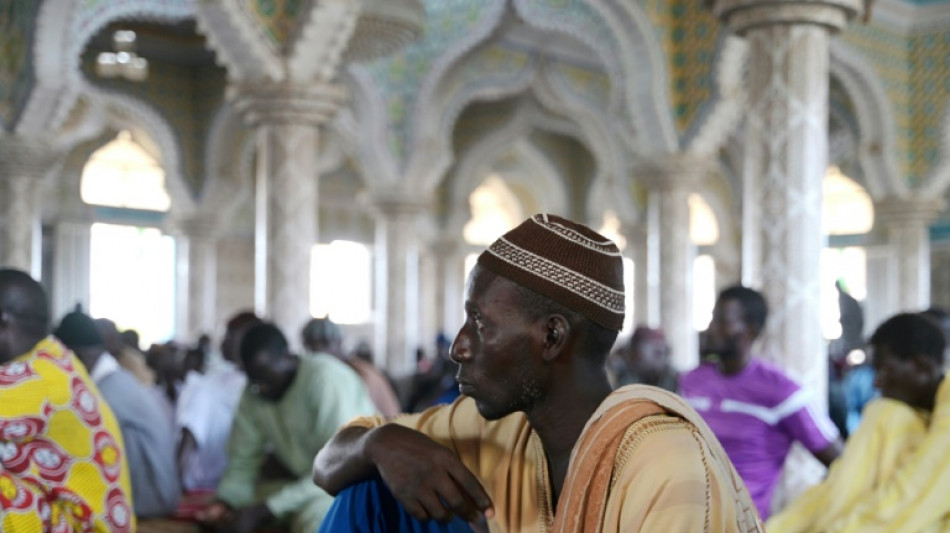
In Senegal, a village mourns its sons dead at sea in migrant tragedy / Photo: SEYLLOU - AFP

 Land Rover Defender EV Confirmed for 2027; Mercedes 'Baby G' Spied Testing

 Sixers Weekend Preview: Maxey and Brown Status Uncertain Ahead of Bucks Game

 San Ġiljan Defeat Paredes 20-12 in Challenger Cup Opener

 Gozo Minister Clint Camilleri Appointed CPMR Vice-President for Maritime Affairs

 Meta Quest 3 and 3S Gain Access to Over 150 3D Movies

 ALIX LASERS shareholders remove Michael Sobitsch as managing director in view of the circumstances
Under a cloudy sky in the coastal Senegalese village of Fass Boye, the local chief's voice resounds over a loudspeaker, calling villagers to pray for the souls of their lost loved ones.
Dozens of residents from the village of about 20,000 people, around 120 kilometres (75 miles) north of the capital Dakar, died at sea after their migrant boat set off more than a month ago.
The long wooden fishing vessel, known as a pirogue, was spotted on Monday in the Atlantic Ocean about 275 kilometres from the Cape Verdean island of Sal, police said.
More than 60 people are believed to have died, according to the International Organization for Migration (IOM).
Only 38 people survived, it said. Cape Verdean authorities have said six remain in hospital.
The boat had been adrift since July 10, according to Senegal's foreign minister. The trip normally takes about 10 days.
"Those who are gone are gone and they will never come back -- it is our duty to pray for them," chief Madiop Boye said Thursday as villagers touched their prayer beads and murmured religious verses.
"Our young people have been leaving by the sea for 100 years, but this is the first time Fass Boye has experienced something like this."
- Heartbreak and anger -
"We ask the Senegalese government to do everything possible to repatriate our sons who are still alive, and to bring us the bodies of those who have been found dead," said Boye, who said he has been communicating with survivors via WhatsApp.
According to residents and a municipal official, most of those aboard lived in the village and surrounding area.
Senegal's foreign ministry has said it is working to repatriate them as quickly as possible.
Outside the village mosque, a passer-by murmured "God is great" as goats and roosters roamed the dirt road that line the building.
On Wednesday night, sadness turned to anger for some.
Young people burned tires and blocked the main road with tree trunks, accusing authorities of not doing enough to find the boat in time to save all the passengers.
Tension remained palpable on Thursday morning, with police vehicles parked at the edge of town.
"Young people spend months at sea, only to return empty-handed," said Amedi Dieye, 53, who said he lost his two brothers-in-law who were in the pirogue.
"The authorities have sold off all our resources, so they are responsible for this tragedy".
- 'He wanted the same' -
For many Senegalese, the risks of dying at sea are no match for the dream of reaching Europe.
"Many of the youths in this village who have made it to Europe buy cars and build houses when they come back," said Abdou Aziz Sene.
"My son also wanted the same thing," he said, his voice shaking -- his 25-year-old son is among those missing.
Senegal has seen a succession of migrant tragedies in recent years: 16 people died on July 24 when their ship capsized off Dakar, and at least 13 died a few days earlier off the coast of Morocco.
Late last month, the government unveiled a ten-year plan to stem departures and human trafficking with the help of domestic and external financing.
It includes funds for the repatriation of those who leave, and their reintegration in Senegal.
Despite government efforts, each year the regular departures of friends and neighbours leaving on the perilous voyages have become part of daily life for Senegal's coastal villages.
On Sunday, residents of Fass Boye will gather for a final tribute to the dead.
W.AbuLaban--SF-PST