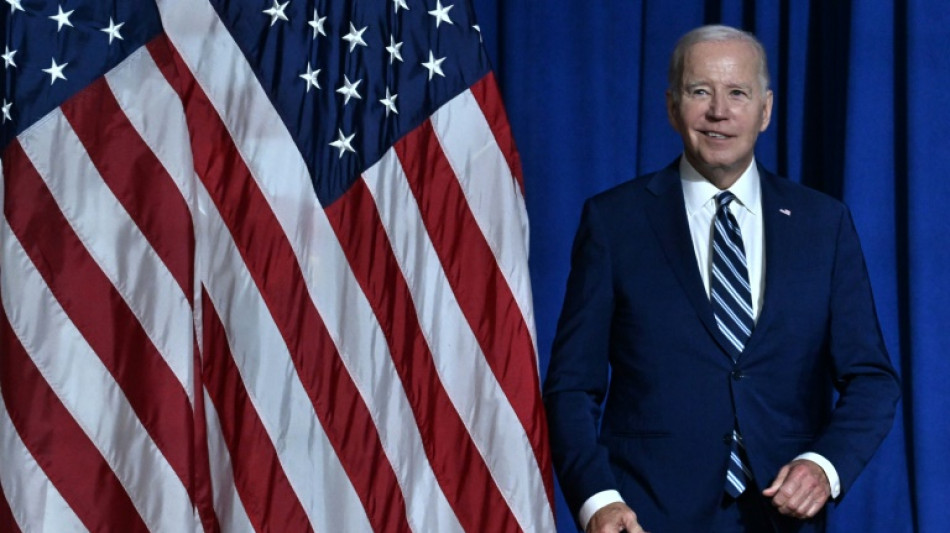
One year on: How has US climate plan affected trade ties? / Photo: Jim WATSON - AFP/File

 ICC unseals arrest warrants for Taliban education ministers

 Modric hopes fans back Croatia against Spain after England shame
 Bolsonaro rides right-wing surge into Brazil's election runoff
 Turkey blocks X account of British reporter

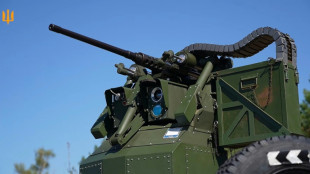 Ukraine says using AI robot guns to shoot down new Russian drones
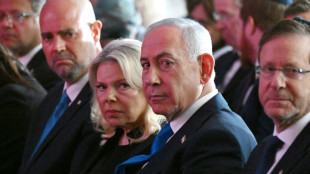 At Oct 7 memorial, Netanyahu says will be no Hamas rule in Gaza

 Ukraine blames Russia for deadly sinking of Turkish ship in Black Sea
 UN rights council slams Taliban's 'oppression' of women

 Norway eyes partial ban of smart glasses

 Two dead after ship catches fire, sinks in Black Sea

 Spain's PM calls snap election after housing bill defeat

 STARCARES Equips Seven Foster Homes for Children and Young People in Tanzania

 Alleged Indian leader of neo-Nazi child abuse ring goes on trial in Paris

 Euro, French stocks slide on France debt concerns

 Alcaraz advances to Japan Open final

 US-German trio win medicine Nobel for work on optogenetics

 Hundreds of French high schools shut as protests persist

 Spain PM calls early election after housing crisis defeat

 Stocks rally as 'Goldilocks' jobs data ease rate fears

 Myanmar says 10,000 migrants returned from Malaysia this year

 Big guns back for Australia's Rugby League World Cup defence

 Braves rock Dodgers to level series, Brewers win thriller

 Most Asia stocks rally as 'Goldilocks' jobs data ease rate fears
 Sunken Silk Road city reveals Central Asia's lost history

 Three years on, Israeli rescuer cannot escape October 7
US President Joe Biden's landmark climate action plan may have been trailed by billions of dollars in clean energy investment, but its potential to reshape trade lines has strained ties with allies.
The Inflation Reduction Act (IRA), signed into law on August 16 last year, directs some $370 billion in subsidies toward America's energy transition, including tax breaks for US-made electric vehicles and batteries.
But the incentives, which boost American manufacturing after years of offshoring, have triggered fears that they could draw businesses out of other countries.
"This was really the United States coming into the game in a big way," said Joshua Meltzer, senior fellow at the Brookings Institution.
Europe had been subsidizing the development of clean technologies since before the IRA, as had China and others, Meltzer noted.
But Washington's entry "meant that for these subsidies to remain competitive they had to be continued or raised," he told AFP.
- 'Unintended consequences' -
The legislation had some "unintended consequences" in constraining trade with key US allies, said Jeffrey Schott, senior fellow at the Peterson Institute for International Economics.
A sticking point was a consumer tax credit of up to $7,500 for the purchase of electric vehicles (EVs) assembled in North America.
To qualify for the full credit, vehicle batteries should also have a percentage of critical minerals sourced from America or countries with which it has free-trade pacts, leaving the European Union and, initially, Japan in the cold.
This drew ire from those countries, and US officials eventually expanded access to the clean vehicle subsidies, noting in March that the free trade agreement requirement could also include newly negotiated critical minerals deals.
This includes one that Japan had inked with the United States just shortly earlier -- opening doors to benefits from some subsidies.
"Part of the initial friction was because... the last revisions of the IRA were done in haste and in secret," said Schott.
There appeared to be a "lack of understanding that US allies were not all US free-trade partners," he added, leading to some "creative accounting" by the Treasury Department in defining how the law would be implemented.
Meltzer said that the United States "quite quickly tried to respond to these concerns by negotiating these kind of bilateral deals," referring to Japan's pact and the EU's efforts toward a similar accord.
This alleviated many concerns, he said.
- Partnerships and relocations -
Canada, which warned about the risks of a subsidy war, has since responded by matching certain IRA incentives with those of its own.
In April, it announced up to 13.2 billion Canadian dollars ($9.8 billion) in subsidies over 10 years for Volkswagen's first overseas battery plant in Ontario.
Elsewhere, South Korea's largest automaker Hyundai is hoping to produce US-assembled electric cars eligible for subsidies at a site under construction in Georgia.
Other South Korean companies have forged partnerships with US ones to build assembly lines meeting IRA requirements, such as battery maker Samsung SDI's joint venture with General Motors to build an EV battery plant in the US.
"The IRA would benefit the US through additional output and lower strategic dependence vis-a-vis China," said an analysis by three European Central Bank economists in July.
"The US would gain from positive relocation effects, increasing production by six percent to 30 percent in electrical and optical equipment," the economists said in a column on the Centre for Economic Policy Research's policy portal.
This comes mainly at China's expense, and to a smaller degree the EU's, the economists said.
While the relocation involves a relatively small share of total output, losses in specific sectors can be more substantial.
Since the climate law was signed, at least $75 billion in new manufacturing investments has been announced, according to policy analyst Jack Conness of think tank Energy Innovation: Policy and Technology.
IRA green subsidies may be "of similar size" to those available in the EU, but the US clean-tech subsidies are "simpler and less fragmented," said European think tank Bruegel in a report this year.
Such factors could make the US subsidies more attractive to businesses, at a time when Europe also faces rising energy costs following Russia's invasion of Ukraine.
"If you're in an energy-intensive sector such as chemicals... the US looks increasingly attractive," Meltzer said.
"It's a broader set of factors, I think, that are creating competitive challenges in Europe," he said. "The IRA is a part of that... but it's not everything."
Y.Zaher--SF-PST