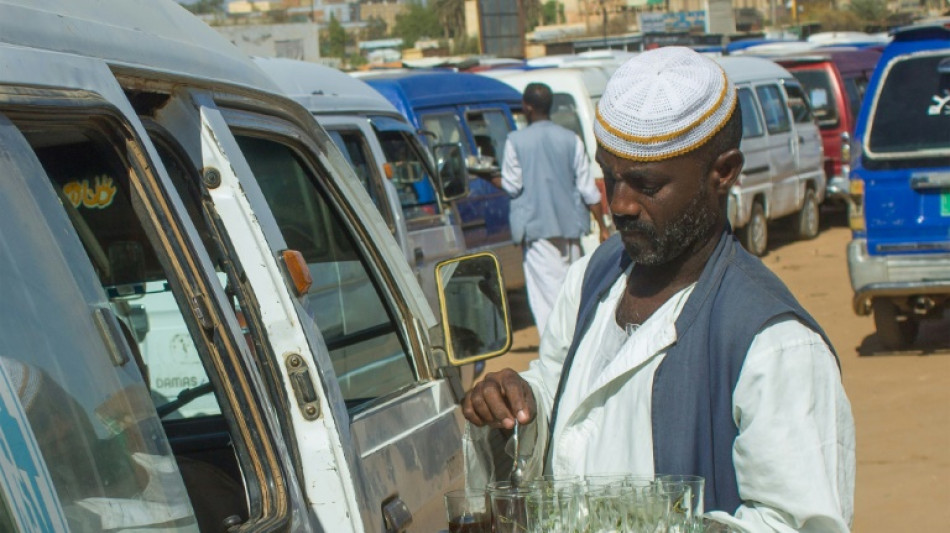
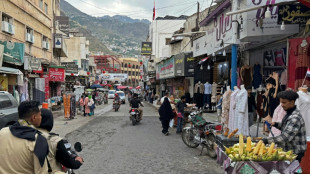
Sudanese start small businesses to survive war / Photo: - - AFP

 ICC unseals arrest warrants for Taliban education ministers
 Modric hopes fans back Croatia against Spain after England shame

 Bolsonaro rides right-wing surge into Brazil's election runoff

 Turkey blocks X account of British reporter

 Ukraine says using AI robot guns to shoot down new Russian drones
 At Oct 7 memorial, Netanyahu says will be no Hamas rule in Gaza

 Ukraine blames Russia for deadly sinking of Turkish ship in Black Sea
 UN rights council slams Taliban's 'oppression' of women
 Norway eyes partial ban of smart glasses
 Two dead after ship catches fire, sinks in Black Sea

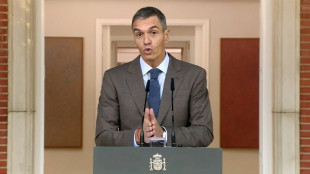 Spain's PM calls snap election after housing bill defeat

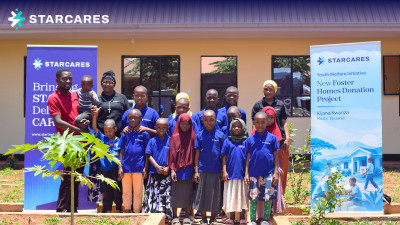 STARCARES Equips Seven Foster Homes for Children and Young People in Tanzania

 Alleged Indian leader of neo-Nazi child abuse ring goes on trial in Paris
 Euro, French stocks slide on France debt concerns
 Alcaraz advances to Japan Open final
 US-German trio win medicine Nobel for work on optogenetics
 Hundreds of French high schools shut as protests persist

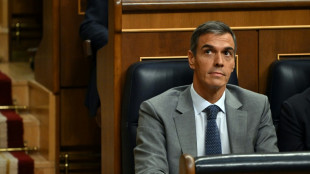 Spain PM calls early election after housing crisis defeat

 Stocks rally as 'Goldilocks' jobs data ease rate fears
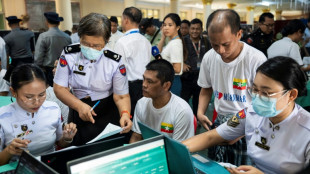 Myanmar says 10,000 migrants returned from Malaysia this year
 Big guns back for Australia's Rugby League World Cup defence
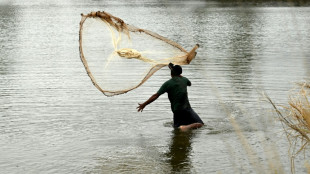
 Braves rock Dodgers to level series, Brewers win thriller

 Most Asia stocks rally as 'Goldilocks' jobs data ease rate fears

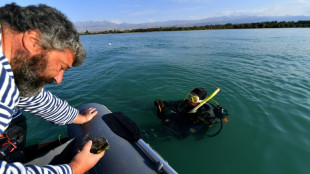 Sunken Silk Road city reveals Central Asia's lost history

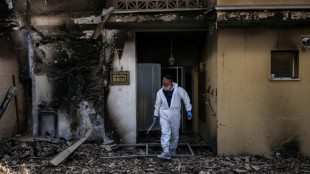 Three years on, Israeli rescuer cannot escape October 7

Sudan's war has left university lecturer Ali Seif without pay for months. To make ends meet, he has turned to making soap in his room at a makeshift displacement camp.
Out of work as fighting rages between the forces of rival generals, many Sudanese have been forced to find creative ways to support themselves and their families.
Until April 15, when the conflict erupted between the army headed by General Abdel Fattah al-Burhan and Mohamed Hamdan Daglo's paramilitary Rapid Support Forces, Seif had worked at a Khartoum university.
Now the engineering lecturer and his family live in Wad Madani, a city where most of the nearly three million people displaced from the capital fled for safety with the few belongings they could bring.
Wad Madani has been spared the violence so far, but air strikes and fighting are taking place around 150 kilometres (95 miles) to the north.
Like many others, Seif said his house was "robbed" by paramilitaries, and he told AFP he has not received a salary since March with banks closed.
In order to survive, he has started selling soap.
"Misfortune makes you creative," said Seif.
"I noticed there was no soap left on the market even though everyone wanted some, so I decided to make soap bars," he recalled, surrounded by plastic pots he uses to mix soap paste before pouring it into ice cube trays to mould the bars.
- 'No choice' -
Like Seif, Michelle Elia Moussa used to stand in front of a classroom full of students.
But since the war turned her life and country upside down, she has spent her days standing in front of a stall at Al-Hasaheisa market, halfway between Khartoum and Wad Madani.
"I've given up hope and shelved my ambitions of being a brilliant teacher," she said, glasses on her nose and apron around her waist, as she looks over her cakes.
"Without a job, I can't support myself," she said, in a poverty-stricken country where the spectres of famine, epidemics and widespread war crimes now loom large.
"It's the first time I've worked in a market," she told AFP.
"I'm not comfortable, I'm ashamed, but it's a war. I have no choice," she added, expertly spreading a light dough on cast-iron plates to make thin wafers with holes.
Eshraqa Mousa, another woman who fled Khartoum, has opened a small stall to sell tea. Without it, she said, she could "only provide one meal a day" for her children.
- Leaving 'everything behind' -
Her family's hasty departure from the capital at the start of a war that has killed at least 3,900 people and displaced four million is still fresh in Mousa's memory.
"We left everything behind... so I came here and bought this little stall to sell tea," she said, draped in her long, multicoloured veil.
In a conservative society where tea sellers, though numerous, are often stigmatised and harassed, the move was an act of bravery she had never imagined she would achieve.
But with the war, such taboos were shattered, and survival and resourcefulness took over.
"We were forced to find alternatives," said Mohammed Ali.
A former civil servant in the capital, he "teamed up with some colleagues to open a small mobile food stall", he said.
Made of white sheet metal and powered by a generator, it's "in the style of those you find in Khartoum, which don't exist in Wad Madani."
Every day, he now sells mashed beans, falafel and other snacks loved by his compatriots, and he makes enough to feed his family.
That is, until the next storm: the streets of Wad Madani are buzzing with speculation that the war could soon come to this city.
M.Qasim--SF-PST