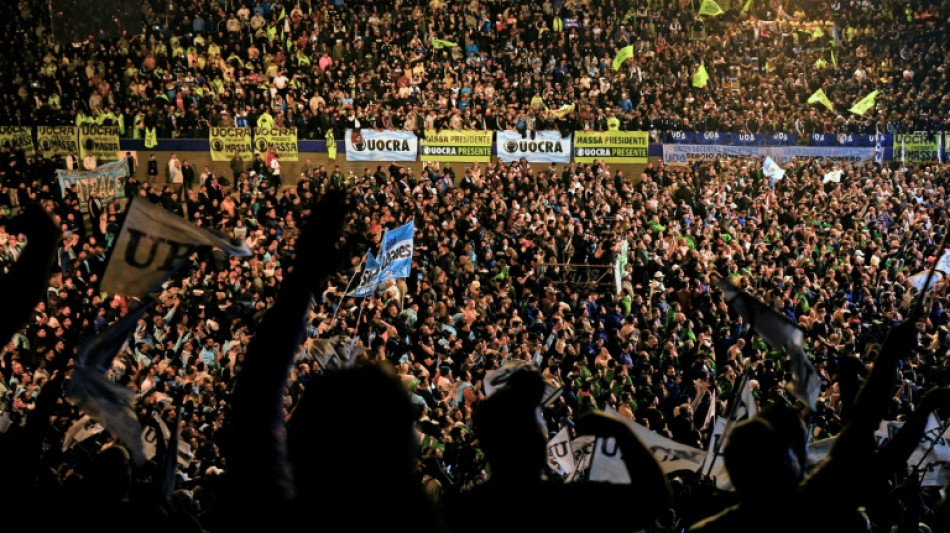
What to know about Argentina's primary elections / Photo: LUIS ROBAYO - AFP

 ICC unseals arrest warrants for Taliban education ministers
 Modric hopes fans back Croatia against Spain after England shame

 Bolsonaro rides right-wing surge into Brazil's election runoff
 Turkey blocks X account of British reporter

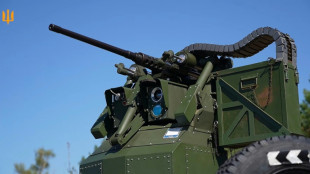 Ukraine says using AI robot guns to shoot down new Russian drones
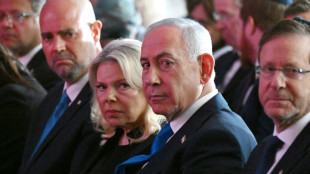 At Oct 7 memorial, Netanyahu says will be no Hamas rule in Gaza
 Ukraine blames Russia for deadly sinking of Turkish ship in Black Sea
 UN rights council slams Taliban's 'oppression' of women
 Norway eyes partial ban of smart glasses

 Two dead after ship catches fire, sinks in Black Sea

 Spain's PM calls snap election after housing bill defeat

 STARCARES Equips Seven Foster Homes for Children and Young People in Tanzania

 Alleged Indian leader of neo-Nazi child abuse ring goes on trial in Paris
 Euro, French stocks slide on France debt concerns

 Alcaraz advances to Japan Open final

 US-German trio win medicine Nobel for work on optogenetics
 Hundreds of French high schools shut as protests persist

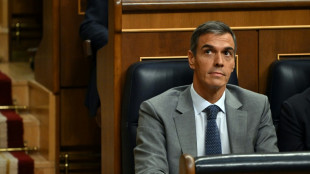 Spain PM calls early election after housing crisis defeat

 Stocks rally as 'Goldilocks' jobs data ease rate fears
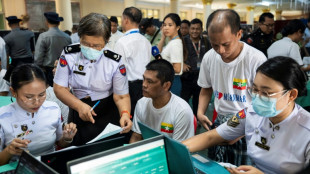 Myanmar says 10,000 migrants returned from Malaysia this year
 Big guns back for Australia's Rugby League World Cup defence
 Braves rock Dodgers to level series, Brewers win thriller

 Most Asia stocks rally as 'Goldilocks' jobs data ease rate fears
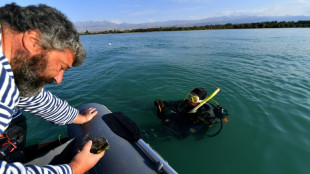 Sunken Silk Road city reveals Central Asia's lost history

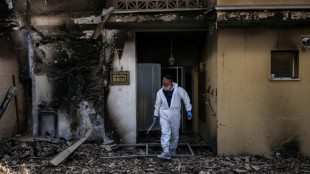 Three years on, Israeli rescuer cannot escape October 7
Argentines will vote in a primary election on Sunday, a bellwether for who could be the next president, and what this could mean for an economy clobbered by triple-digit inflation.
This is what you need to know about the vote:
- How does the election work? -
In a unique format in the region, Argentines will on the same day vote for their favorite among 22 potential presidential candidates.
The outcome determines which parties will take part, and who their presidential candidates will be in the general election on October 22.
With 35.4 million Argentines eligible to vote, the primary can be a strong predictor of who will win the election if one candidate soars above the rest.
Not voting incurs a fine, but analysts expect to see lower turnout than usual amid increased voter apathy.
"The inflation is unbearable, but I don't trust anyone to fix an economy like this overnight," said Santiago Matos, 18.
- Why is the primary election important?-
The Latin American giant is gripped by deep economic malaise, fueled by years of debt defaults, currency crises, and hyperinflation.
Year-on-year inflation has hit 115 percent, poverty has soared, and the value of the peso has plummeted. The government, battling dwindling foreign reserves, has imposed strict currency controls and slapped businesses with higher import taxes to shore up dollars.
The leading candidates could indicate prospects of more fiscal discipline as well as how turbulent relations could evolve with the International Monetary Fund, to whom Argentina owes $44 billion.
"A high number of votes for the opposition, a sign of a possible change in government, could appease the markets," said Juan Negri, a political science professor at the Torcuato di Tella University.
However if populist Peronism -- heavy on state intervention, subsidies, and welfare programs -- comes out on top, "there will be a strong shock."
- Who is in the running?-
President Alberto Fernandez is not seeking re-election.
Economy Minister Sergio Massa is seen as a shoo-in as the presidential candidate for the center-left Peronist coalition currently in power.
However, social leader Juan Grabois is challenging him, representing the more leftist bloc within the Union for the Homeland coalition.
A tight race is predicted for the right-wing Juntos por el Cambio (Together for Change) coalition.
Buenos Aires mayor Horacio Rodriguez Larreta, considered a moderate, is facing off against former security minister Patricia Bullrich.
Heading to the presidential election unchallenged, as his party's only candidate, is Javier Milei, a libertarian and far-right lawmaker with a soft spot for former US President Donald Trump and Brazil's ex-leader Javier Bolsonaro.
Primary candidates must garner more than 1.5 percent of the vote to advance to the presidential election, and the primary will show how much support Milei -- a high-profile Buenos Aires lawmaker -- commands nationwide.
F.AbuShamala--SF-PST