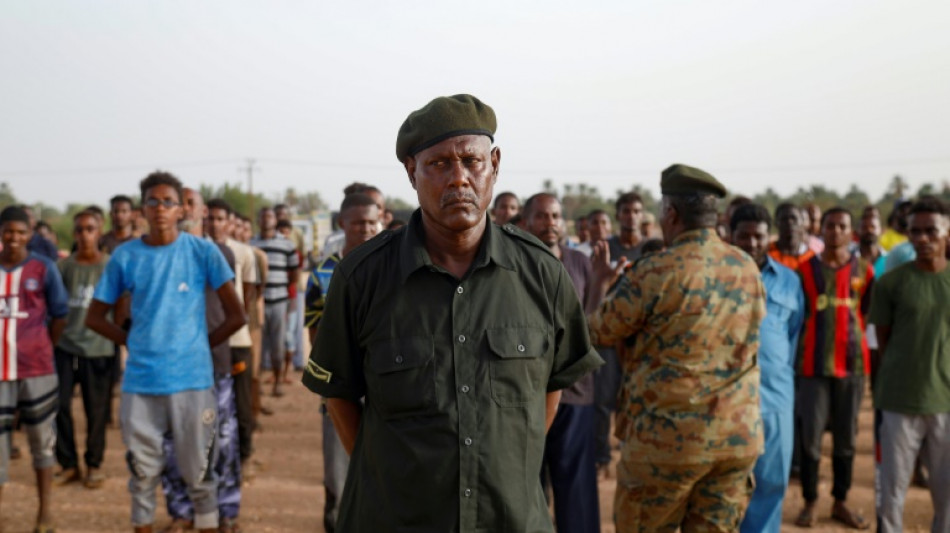
After 4 months, Sudan war stalemated and plagued by abuses / Photo: - - AFP

 Nigeria's Tinubu confirms 32 dead after military plane crash

 'Reckless' AI firms can't control models, says whistleblower
 Switching on brain cells: the Nobel-winning science of optogenetics
 Quebec votes as separatist surge poses test for Canada PM

 Euro slides as concerns about French debt mount
 Former Trump press secretary Leavitt joins Fox News

 Djokovic advances to China Open final as Medvedev out for hitting fan with ball
 Disgraced former US House speaker dies at 84
 Euro slides as worries about French debt grow
 US withdraws all bomber aircraft from UK airbase
 Drone hits Ethiopia IDP camp as fears grow of regional war

 US-German trio wins medicine Nobel for illuminating the brain
 England captain Kane driven by desire for records says Tuchel
 N.Irish court hears challenge to disputed Orangemen parade

 Talking points from the Bahrain Grand Prix in Malaysia

 Yemen, Saudi Arabia target Houthis in new campaign as war escalates

 US-German trio wins medicine Nobel for work on optogenetics
 Swiatek, Zheng survive three-set tests in China Open third round

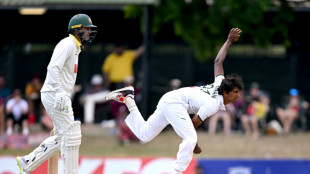 Hasan says Test cricket momentum turning for Bangladesh

 Intense heat puts births in jeopardy, UN tells Fiji talks
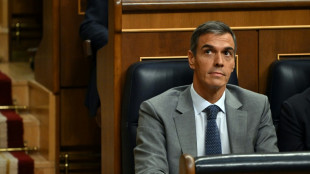
 US arrests woman accused of spying for China on Taiwan leader's family

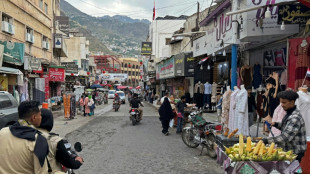 Yemen military announces broad strikes against Houthis
 Zuckerberg skewered again on screen in 'The Social Reckoning'
 Fiji urges 'just' climate transition, financing at pre-COP gathering

 Thailand's Jeeno overcomes late wobble to win Lotte Championship

Four months into a battle both believed they would win, Sudan's army has lost its grip on Khartoum to paramilitaries, who are unable to declare victory and instead are accused of waging war on civilians.
When fighting began on April 15, Sudan's army chief Abdel Fattah al-Burhan was certain it would be over "within two weeks".
His former deputy, turned enemy, Mohamed Hamdan Daglo, has sworn his Rapid Support Forces will achieve "victory".
Yet neither has been able to gain a decisive advantage, while fighting has killed at least 3,900 people, uprooted more than four million, worsened food shortages and sparked war crimes allegations.
"The army thought it knew the exact military capacity of the RSF," said military expert Mohammed Abdelkarim.
But the RSF realised "they could be in for a long war" and immediately "seized the entry points to Khartoum and secured their supply lines", a former army officer said, requesting anonymity for security reasons.
The army in July announced the closure of the highway linking Khartoum and Darfur -- a paramilitary stronghold -- but that did little to stem their flow of troops and weaponry, residents and analysts said.
Sanctions by the United States and Britain on companies linked to both sides also seem to have done little to slow the fighting.
While the armed forces try to hold key Khartoum bases, they dominate the skies, raining regular air strikes on the capital.
But they lack the RSF's infantry power, which is "essential given the urban nature of the war", Abdelkarim told AFP.
Sudan's army has all but ceded the streets to the RSF.
- 'Appalling abuses' -
"The army has for years neglected its infantry," the former officer said, choosing to instead contract out its many wars -- including, ironically, to the RSF which previously fought in the Darfur region and South Kordofan state.
Sudan's army long relied on the Popular Defence Forces Islamist militia, and in Darfur, where a rebellion began in 2003, then-president Omar al-Bashir unleashed the Janjaweed militia, which later evolved into the RSF.
Their campaign led to war crimes charges against Bashir and others by the International Criminal Court.
Bashir's overthrow in 2019 ushered in a transition to civilian rule but that was derailed when Burhan, the country's de facto leader, carried out a coup with Daglo in 2021.
Through its inability to control Khartoum, the army's "claim to represent the government was in question", said Sudan expert Alex de Waal.
But "what it gained on the battlefield, the RSF lost in the political arena", he said, decisively eliminating any sympathies among city dwellers "through the appalling abuses" its fighters committed.
The US-supported Sudan Conflict Observatory said the RSF's positions in civilian-occupied neighbourhoods and buildings are "a potential violation of the Geneva Conventions".
A separate Observatory report issued August 2 found that, in Darfur, RSF and "aligned forces" had destroyed at least 27 towns.
And on August 4, Britain, Norway and the United States condemned "reports of killings based on ethnicity and widespread sexual violence" in Darfur by the RSF and allied militias.
The army has also been accused of abuses, including a July 8 air strike that killed around two dozen civilians.
Burhan retains "the political upper hand" but only "by default", de Waal said.
De Waal said Burhan had "shown neither political profile nor leadership, and it is unclear if he can manage his cabal of quarrelsome lieutenants".
- Diplomatic impasse -
What initially appeared as a fight between two generals has since threatened to broaden into "full-scale civil war", the United Nations has warned.
On the army side, "it has opened the door to the Islamists, because they're the most prepared, but that would prolong the war and complicate Sudan's diplomatic relations", the former officer said.
The RSF "has mobilised Arab tribes from Darfur in addition to our traditional forces", said a paramilitary source speaking on condition of anonymity because he was not authorised to talk to the media.
"Some fight to support their brothers," the RSF source said, "while others fight for money", a resource Daglo appears to have in abundance through his reputed ties to the country's gold mines.
Before the war, Washington sanctioned companies that it said served as a cover for Russian mercenary force Wagner and were also linked to Sudan's gold.
The United Arab Emirates is the largest buyer of Sudanese gold and, "according to some reports, is still supplying him with weapons", de Waal said of Daglo.
Backing the army are Egypt's President Abdel Fattah al-Sisi and his Turkish counterpart Turkey's Recep Tayipp Erdogan.
These allies, according to de Waal, "are talking peace even while they are arming their favoured clients".
In July, Cairo hosted a summit of Sudan's neighbours but this had "the aim of blocking IGAD," the East African bloc whose mediation efforts Burhan accused of bias, the analyst said.
That adds a diplomatic impasse to political stalemate and military quagmire.
"It could last for years," one Western diplomat warned, speaking on condition of anonymity because of the sensitivity of the matter.
M.Qasim--SF-PST