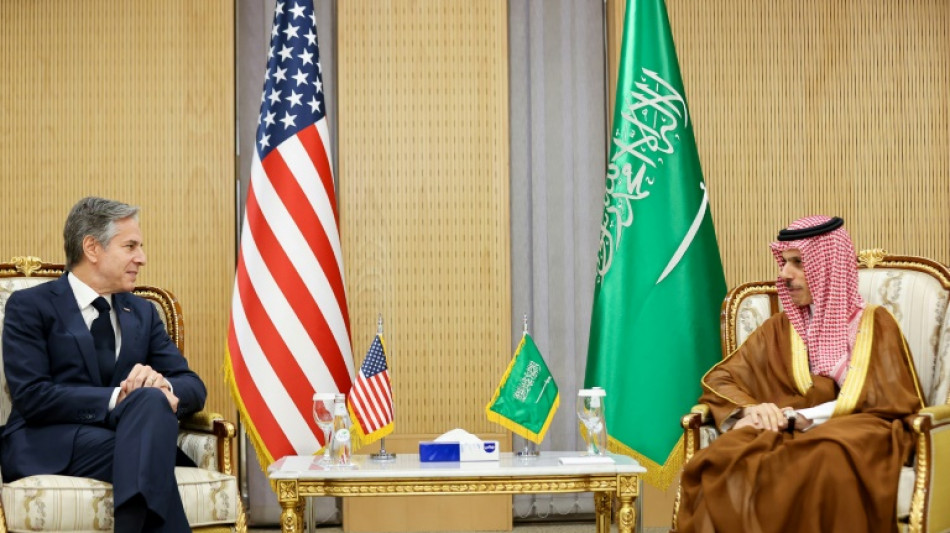
Rocky US-Saudi bond boosted by Israel normalisation push / Photo: AHMED YOSRI - POOL/AFP

 Nigeria's Tinubu confirms 32 dead after military plane crash

 'Reckless' AI firms can't control models, says whistleblower
 Switching on brain cells: the Nobel-winning science of optogenetics
 Quebec votes as separatist surge poses test for Canada PM

 Euro slides as concerns about French debt mount
 Former Trump press secretary Leavitt joins Fox News

 Djokovic advances to China Open final as Medvedev out for hitting fan with ball
 Disgraced former US House speaker dies at 84
 Euro slides as worries about French debt grow
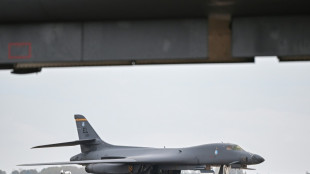 US withdraws all bomber aircraft from UK airbase
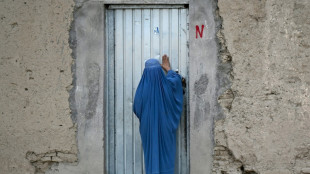
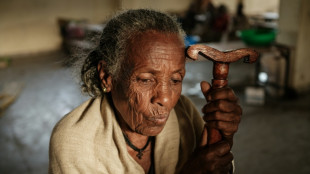 Drone hits Ethiopia IDP camp as fears grow of regional war

 US-German trio wins medicine Nobel for illuminating the brain
 England captain Kane driven by desire for records says Tuchel
 N.Irish court hears challenge to disputed Orangemen parade

 Talking points from the Bahrain Grand Prix in Malaysia

 Yemen, Saudi Arabia target Houthis in new campaign as war escalates

 US-German trio wins medicine Nobel for work on optogenetics
 Swiatek, Zheng survive three-set tests in China Open third round

 Hasan says Test cricket momentum turning for Bangladesh
 Intense heat puts births in jeopardy, UN tells Fiji talks
 US arrests woman accused of spying for China on Taiwan leader's family

 Yemen military announces broad strikes against Houthis
 Zuckerberg skewered again on screen in 'The Social Reckoning'
 Fiji urges 'just' climate transition, financing at pre-COP gathering

 Thailand's Jeeno overcomes late wobble to win Lotte Championship

A spate of high-profile visits by US officials to Saudi Arabia underscores how ties have warmed amid talks over a potential deal that would see the Gulf kingdom recognise Israel, analysts say.
Less than a year after US President Joe Biden warned of unspecified "consequences" for Riyadh during a dispute over oil supply, he is dispatching top aides to meet Saudi royals at a rapid clip.
Over the weekend, his national security adviser, Jake Sullivan, landed in Jeddah for a summit on Ukraine –- his third visit to Saudi Arabia in just a few months.
While bilateral sessions –- including during a three-day tour by US Secretary of State Antony Blinken in June -– have touched on topics from terrorism to Yemen, the prospect of normalising Saudi-Israeli ties has been a mainstay agenda item, fuelling rosier exchanges even if it is still seen as a long shot.
"US-Saudi ties have warmed unquestionably in recent months," said Ali Shihabi, a Saudi analyst close to the government.
"Dialogue has just gotten much more extensive and friendly and this subject is driving that."
The hurdles to an actual deal remain high: Riyadh is reportedly bargaining hard for benefits like security guarantees and assistance with a civilian nuclear programme with uranium enrichment capacity.
And Saudi officials have long vowed not to normalise relations with Israel before the conflict with the Palestinians has been resolved.
All the same, coordination between Washington and Riyadh is today "better now than at any point in the last two years", said Hesham Alghannam of the Naif Arab University for Security Sciences in Riyadh.
"It's much warmer and closer. It's not perfect, but it's the best moment since President Biden came into office."
- Familiar friction -
The issues bedevilling the decades-old relationship are well-known, from flare-ups over human rights to Saudi concerns about Washington's reliability as a security partner.
Those concerns took on new importance after attacks on Saudi oil facilities in 2019, claimed by Yemen's Huthi rebels but widely attributed to Iran, temporarily halved crude output.
Saudi officials were deeply disappointed by the tepid response of then-US president Donald Trump's administration, which they believed undermined their traditional oil-for-security trade-off.
Growing cooperation with Moscow and Beijing highlights how, as Alghannam put it, Riyadh is no longer content to place "all the eggs in the American basket".
The Saudis also leaned on China to broker a landmark rapprochement with Iran announced in March, something the Biden administration was in no position to do.
Yet it is important not to exaggerate any slip in Washington's status, Alghannam added.
"No major power has a significant military presence in the region other than the US, and this will be the case for many years to come," he said, a point driven home by the recent deployment of 3,000 US military personnel to the Red Sea, part of a beefed-up response after tanker seizures by Iran.
- 'Onus on Israel' -
During last October's dust-up over oil production, both sides were rankled by the stern exchanges that ensued, said John Hannah, a former US senior foreign policy official who has been visiting the kingdom for three decades.
"It extended to the point of very senior (Saudi officials) saying, 'OK, you may be re-evaluating the relationship and may have questions about the future of this partnership, but let us tell you we do as well,'" Hannah recalled.
Even then, though, a genuine rupture was never seriously considered, as the Saudis were simultaneously pitching normalisation terms that would lock in long-term cooperation with Washington.
The recent flurry of visits and "serious discussions aimed at taking security ties to new levels" indicate "a much improved atmosphere between top decision makers", said Hannah, now with the Jewish Institute for National Security of America.
The new US-Saudi closeness has not gone unnoticed elsewhere, including among Palestinian officials who hope Riyadh will insist on an independent Palestinian state.
"I hope that the Saudis will stick to that position and not yield to any kind of pressure, intimidation, coming from the Biden administration or any other power outside of that," Palestinian foreign minister Riyad al-Maliki said last week.
Alghannam said Riyadh needs to know whether the Israelis are "actively working towards making tangible progress on resolving the Palestinian-Israeli conflict".
He added: "The onus now lies not on Saudi Arabia, but on Israel, to demonstrate its readiness for peace with the kingdom."
A.AbuSaada--SF-PST