In post-coup Niger, many salute 'liberation' despite outcry / Photo: - - AFP

 Nigeria's Tinubu confirms 32 dead after military plane crash

 'Reckless' AI firms can't control models, says whistleblower

 Switching on brain cells: the Nobel-winning science of optogenetics
 Quebec votes as separatist surge poses test for Canada PM

 Euro slides as concerns about French debt mount
 Former Trump press secretary Leavitt joins Fox News

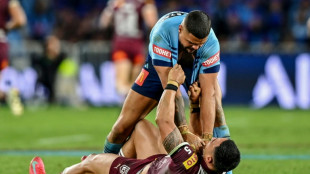
 Djokovic advances to China Open final as Medvedev out for hitting fan with ball
 Disgraced former US House speaker dies at 84
 Euro slides as worries about French debt grow
 US withdraws all bomber aircraft from UK airbase
 Drone hits Ethiopia IDP camp as fears grow of regional war

 US-German trio wins medicine Nobel for illuminating the brain
 England captain Kane driven by desire for records says Tuchel
 N.Irish court hears challenge to disputed Orangemen parade

 Talking points from the Bahrain Grand Prix in Malaysia

 Yemen, Saudi Arabia target Houthis in new campaign as war escalates
 US-German trio wins medicine Nobel for work on optogenetics
 Swiatek, Zheng survive three-set tests in China Open third round
 Hasan says Test cricket momentum turning for Bangladesh
 Intense heat puts births in jeopardy, UN tells Fiji talks
 US arrests woman accused of spying for China on Taiwan leader's family
 Yemen military announces broad strikes against Houthis
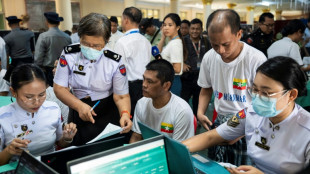
 Zuckerberg skewered again on screen in 'The Social Reckoning'
 Fiji urges 'just' climate transition, financing at pre-COP gathering

 Thailand's Jeeno overcomes late wobble to win Lotte Championship
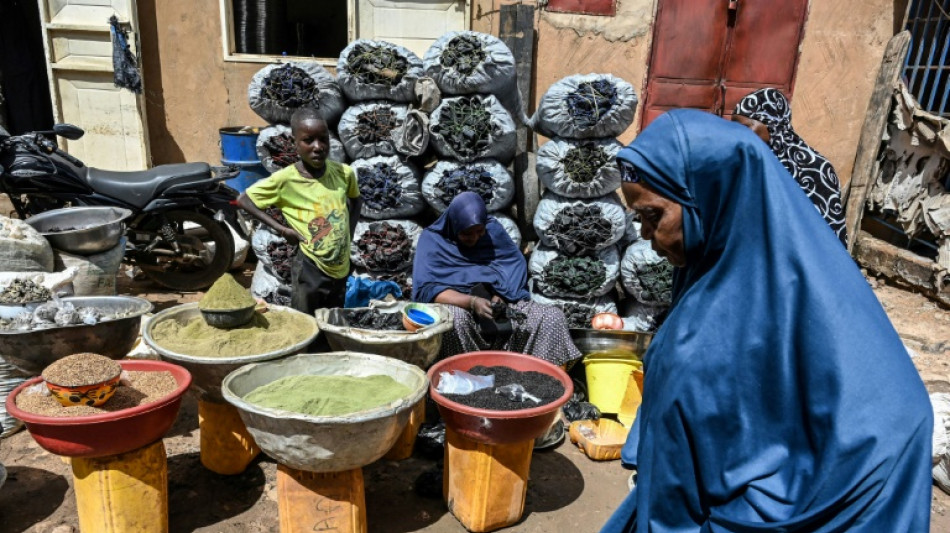
The coup that shook Niger nearly two weeks ago triggered an international outcry and curbs on domestic freedoms, yet many people in the capital say the change is a breath of fresh air.
Around 30,000 people turned out on Sunday for a rally in a Niamey stadium to support the soldiers who on July 26 toppled Niger's elected president, Mohamed Bazoum.
For foreign and local critics, the event was a stage-managed show, designed to back the coup leaders in their faceoff with the West African bloc ECOWAS, which is waving the threat of force to reinstate Bazoum.
But within the stadium, and on the streets of Niamey, there were plenty of people who seemed genuinely relieved to see the end of 12 years in government by Bazoum's Nigerien Party for Democracy and Socialism (PNDS).
"It's liberation!" said Ousseini Tinni, a mechanic.
"Given the situation that this country has been in for decades, we feel free," said Alhassane Adamou, an office administrator in the private sector.
Niamey has long been known as a stronghold of the opposition, and domestic critics of the coup and its impact on rights have kept their heads down.
The coup leaders have also announced the suspension of the constitution, banned demonstrations and arrested several of Bazoum's ministers, although there have not been mass arrests.
In this context, many of the people who spoke to AFP said democracy under the PNDS had been a sham.
"I support the soldiers 100 percent," said Samaila Abdourahim, a trader.
"Under the old regime, they talked about democracy but it was merely words. We weren't experiencing a democracy but a dictatorship."
- Different view -
Bazoum is feted abroad for his election in 2021 that ushered in Niger's first-ever peaceful transition of power since gaining independence from France in 1960.
But there is often a different view of Bazoum in Niamey, where many people nurse bitterness or disappointment.
They point to the condemnation of opposition leader Hama Amadou to a one-year jail term on charges of child trafficking -- a sentence that made him ineligible for the election.
Riots broke out in the capital after Bazoum's victory that led to two deaths and 468 arrests.
In its 2022 Democracy Index, the Economist Intelligence Unit placed Niger among countries with "authoritarian regimes."
"We were afraid of expressing ourselves. As soon as you expressed your opinion, they came and arrested you," said Tinni.
Others spoke out about cronyism, corruption and insecurity that they said had flourished under the PNDS.
"This is what prompted the public to support the putsch," said Adamou, whose words drew nodding heads of support among the onlookers surrounding him.
Part of the hostility is directed towards France, whose support for Bazoum -- a key ally in the French anti-jihadist strategy in the Sahel -- is deemed to be proof of complicity.
Ken Opalo, an associate professor at Georgetown University in Washington, drew a parallel between the coup in Niger and military takeovers in neighbouring Mali in 2020 and Burkina Faso in 2022.
Foreign allies prioritised "stemming the flows of migrants, accessing natural resources, fighting jihadist(s) in the Sahel so they don't have to fight them in Western cities, and maintaining overall geopolitical influence in the region," he wrote in a blog.
"Democracy and economic development have mostly been subordinated to these larger objectives."
- 'Tolerate the military' -
"President Bazoum launched a sincere effort to reform institutions and governance... but his capacity for changing the real practices of the state and its representatives was restricted by the need to balance the political forces that brought him to power," the International Crisis Group (ICG) think tank said in a report on Monday.
The question is whether General Abdourahamane Tiani, Niger's latest strongman and a reputed confidant of former president Mahamadou Issoufou, will change things.
According to an opinion poll published in March 2022 by the survey firm Afrobarometer, more than half of the Nigeriens interviewed said they were dissatisfied with the functioning of democracy.
However, 61 percent said they preferred democracy to other forms of government -- and 84 percent opposed dictatorship.
"If the military start to turn into politicians, we will rise up against them," said Abdourahim.
"If we tolerate them today, it's because it's in our interest for them to be there. Because now, it's us, the people, who will be making the decisions."
C.Hamad--SF-PST