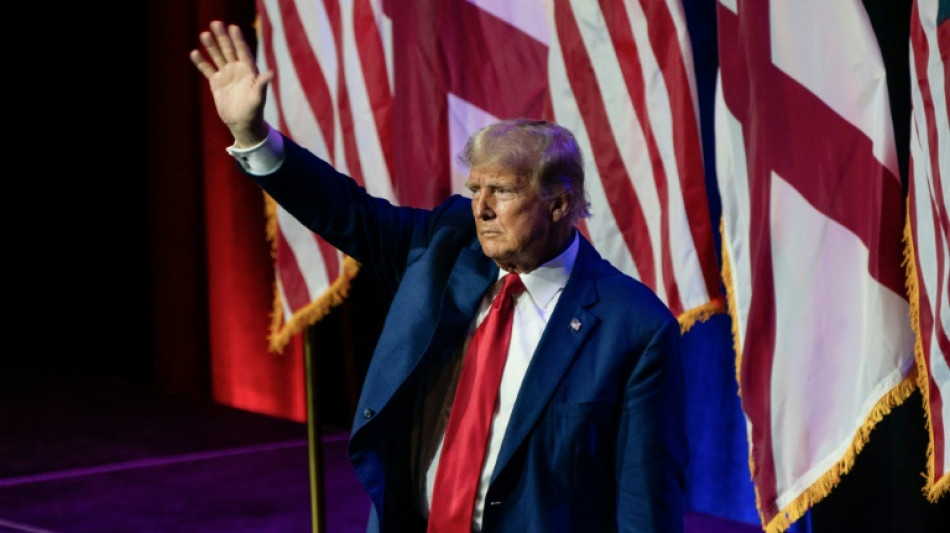
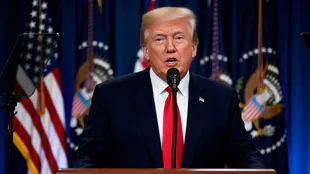
Civics lesson or reality TV? Calls grow to broadcast Trump trial / Photo: Elijah Nouvelage - AFP

 England vs New Zealand Nations Championship 2026: Viewing Guide and Kick-off Time
 تصعيد إسرائيلي في الجنوب اللبناني وسط مباحثات حول ترتيبات ما بعد «اليونيفيل»

 Land Rover Defender EV Confirmed for 2027; Mercedes 'Baby G' Spied Testing
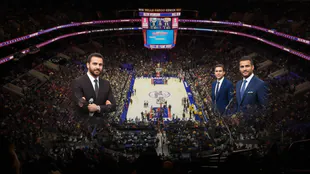 Sixers Weekend Preview: Maxey and Brown Status Uncertain Ahead of Bucks Game
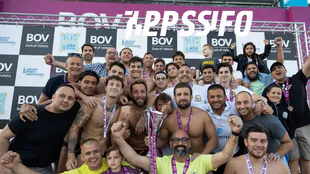 San Ġiljan Defeat Paredes 20-12 in Challenger Cup Opener
 Gozo Minister Clint Camilleri Appointed CPMR Vice-President for Maritime Affairs
 Meta Quest 3 and 3S Gain Access to Over 150 3D Movies
Calls are growing for Donald Trump's criminal trials to be broadcast live, as the United States grapples with the prospect of seeing a former -- and possibly future -- president in the dock.
Lawyers and politicians are lining up to urge that cameras be allowed inside the courtroom, particularly when the one-time reality TV star faces a jury on charges that he tried to overturn the 2020 presidential election.
"Given the historic nature of the charges brought forth in these cases, it is hard to imagine a more powerful circumstance for televised proceedings," read a letter signed Thursday by the California congressman Adam Schiff and dozens of his Democratic Party colleagues.
"If the public is to fully accept the outcome, it will be vitally important for it to witness, as directly as possible, how the trials are conducted, the strength of the evidence adduced and the credibility of witnesses."
Trump has now been charged in three separate criminal cases: lying about hush-money payments to a porn star, mishandling secret documents, and trying to subvert the election.
An indictment looms in a fourth, related to a phone call to a Georgia election official in which Trump pressured the man to "find" the 11,780 votes that would reverse his defeat to Joe Biden in the southern state.
Despite extensive and detailed media coverage of Trump's alleged crimes, an overwhelming majority of Republican voters -- 74 percent -- and a third of all voters believe he has done no wrong, according to a poll by the New York Times and Sienna College.
Trump himself insists he is innocent, the victim of a "witch hunt" by an establishment desperate to silence him as he runs again for the White House.
Busting this myth and exposing the depth of his malfeasance is a prime reason to show the trial to a wide audience, said Alan Dershowitz, a constitutional law specialist.
"If the Trump trial is not televised, the public will learn about the events through the extremely biased reporting of today’s media," he wrote in The Hill.
"It will be as if there were two trials: one observed by reporters for MSNBC, CNN, the New York Times and other liberal media, the other through the prism of reporters for Fox, Newsmax and other conservative outlets.
"There will be nowhere to go to learn the objective reality of what occurred at trial."
- The OJ Simpson precedent -
While some state-level proceedings have been shown on US television -- OJ Simpson's nation-stopping murder trial was a ratings blockbuster -- federal trials cannot be photographed or broadcast, courtesy of rules dating to 1946.
Neal Katyal, a law professor at Georgetown University, argued in the Washington Post that it was time to update this "antiquated" edict.
"We live in a digital age, where people think visually and are accustomed to seeing things with their own eyes," he wrote.
The decision on whether to allow cameras into the courtroom will ultimately rest with the Judicial Conference -- the policy-making body of the federal court system, which is run by the nation's chief justice, John Roberts.
Alternatively, Congress could change the law.
Katyal, who was a prosecutor in the murder trial of Derek Chauvin, the white Minnesota police officer who killed George Floyd, a Black man, said that the broadcasting of those proceedings had helped a highly divided public to accept the guilty verdict when it came.
The same would be true of the Trump trial, Katyal maintained.
"This criminal trial is being conducted in the name of the people of the United States. It is our tax dollars at work," he wrote.
"We have a right to see it. And we have the right to ensure that rumormongers and conspiracy theorists don’t control the narrative."
- The risk in broadcasting -
The problem with putting it all on the small screen, said Christina Bellantoni, an expert in media and political journalism at the University of Southern California, is Trump's formidable ability to dominate the discourse and bend the narrative.
"My prediction... would be that his public opinion ratings would go up, no matter what evidence is presented," she told AFP.
The risk is that a trial about an alleged attempt to overthrow democracy becomes little more than an entertainment, where no one's mind is changed.
"I think people aren't on the fence about this individual in either direction," she said.
"People will hate-watch it; people will rally and root for him. And there's not gonna be anybody that's like, 'Gee, I think I'll watch this and see how justice plays out.'"
G.AbuHamad--SF-PST